A targeted pharmacological approach designed to enhance dopamine signaling within specialized compartments of the neostriatum demonstrated substantial, long-term reductions in motor and vocal tics as well as obsessive-compulsive manifestations among adult patients, according to findings from an open-label clinical pilot study published in Frontiers in Human Neuroscience. Conducted by an interdisciplinary research team from the Osaka Neurological Institute, Mukogawa Women’s University, and Tokushima University, the investigation tracked ten adult participants diagnosed with tic-related obsessive-compulsive disorder over a twelve-month maintenance timeline. By combining low dosages of the dopamine precursor levodopa with carbidopa and the dopamine receptor antagonist chlorpromazine-phenolphthalinate, the researchers sought to selectively stimulate dopamine D1-type receptors located predominantly on striosomal medium spiny neurons. Over the one-year evaluation span, participants exhibited average symptom reductions exceeding seventy percent on standardized tic severity ratings and more than eighty-five percent on established clinical metrics measuring obsessive-compulsive severity, without experiencing adverse neuropsychiatric, neurological, or gastrointestinal reactions.
Tic-related obsessive-compulsive disorder represents a clinically distinct subcategory falling within the broader conceptual umbrella of impulsive-compulsive spectrum disorders, a group of conditions defined by profound disruptions in self-regulation and impulse suppression. As detailed by established diagnostic criteria in the Diagnostic and Statistical Manual of Mental Disorders, Fifth Edition, up to thirty percent of people diagnosed with obsessive-compulsive disorder report a lifetime history of chronic motor or vocal tic disorders such as Tourette syndrome. Both Tourette syndrome and obsessive-compulsive disorder share prominent clinical hallmarks consisting of repetitive, stereotyped thoughts and behaviors, ranging from involuntary motor twitches and vocalizations preceded by uncomfortable premonitory urges to intrusive mental images and ritualistic compulsions. Neurobiological models attribute these shared clinical manifestations to inhibitory control deficits arising from disrupted structural and functional communications connecting the frontal cortex and the basal ganglia across cortico-striato-thalamo-cortical loops. Investigating tic-related obsessive-compulsive disorder provides an informative clinical framework to untangle the underlying neurobiological mechanisms that govern these interconnected cognitive and motor control deficits.
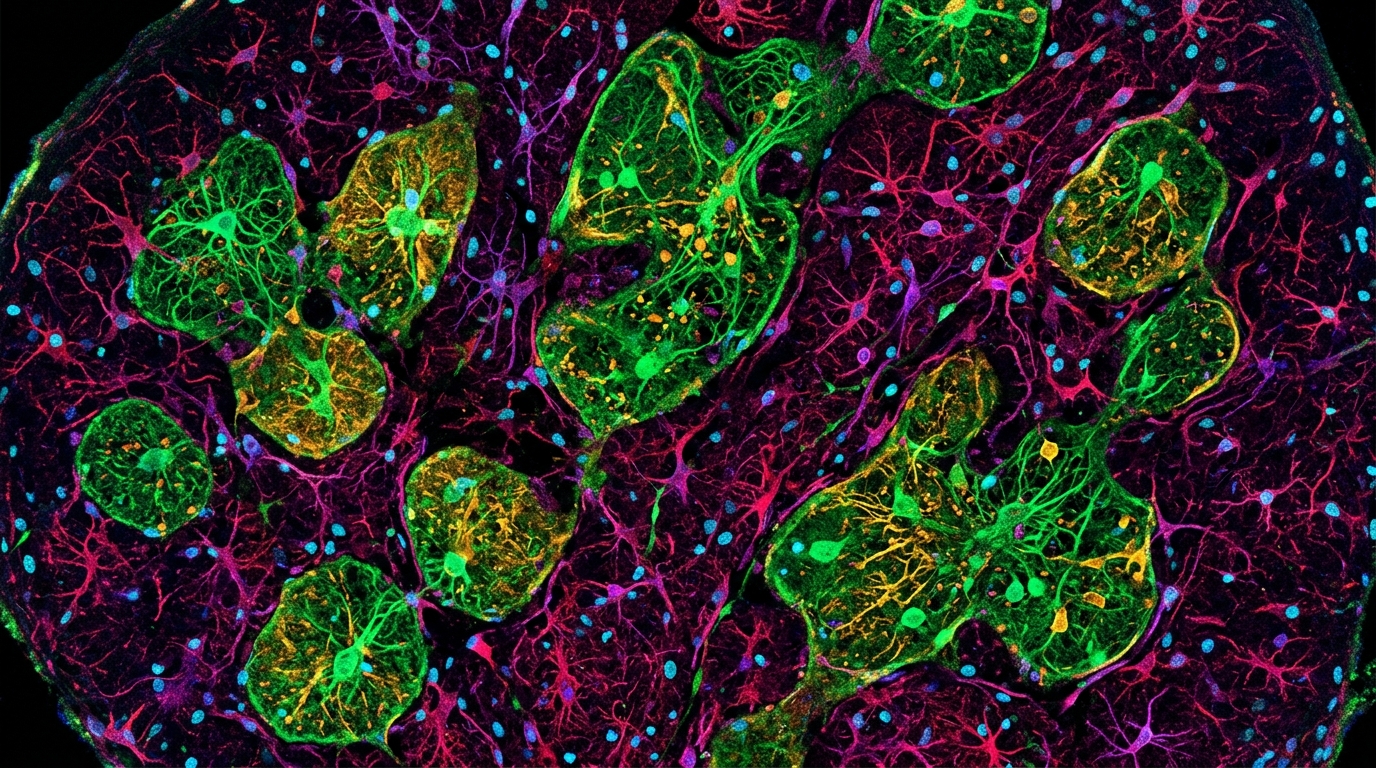
Within the human neostriatum, neural architecture is segregated into two primary neurochemically and functionally distinct subcompartments designated as the striosome and the surrounding matrix or matrisome. Histological and neuroanatomical mapping reveals that striosomes comprise approximately twenty percent of the striatal volume, organizing into labyrinthine, three-dimensional branched networks interspersed throughout the dominant matrix compartment. While matrix-based pathways integrate sensorimotor and associative processes, striosomes receive dense glutamatergic projections originating from the prefrontal and limbic cortices, forming specialized prefronto-striosomal pathways that interface directly with mesostriatal dopaminergic projections. Striosomes serve as a critical neurobiological regulatory hub for reinforcement learning, cost-benefit evaluation, and the selection of adaptive cognitive-motor behaviors based on past experiences and predicted outcomes. Researchers have long hypothesized that structural or signaling dysfunctions within striosomal microcircuits contribute directly to the repetitive and stereotyped actions seen in Tourette syndrome and obsessive-compulsive disorder, making this specialized striatal compartment an attractive therapeutic target.
Pharmacologically targeting striosomal signaling has remained exceptionally challenging due to the delicate balance of dopamine receptors regulating basal ganglia circuits. In the human striatum, dopamine D1-type receptors are markedly concentrated within striosomal compartments while being sparsely distributed throughout the larger surrounding matrix. Medium spiny projection neurons expressing D1 receptors in striosomes play an indispensable role in concert with prefrontal afferents to coordinate executive decisions and suppress automatic behaviors. The clinical regimen evaluated in this pilot study utilized a dual-action pharmacological mechanism to stimulate these striosomal D1 receptors while preventing non-specific overactivation elsewhere in the brain. Levodopa, co-administered with the peripheral decarboxylase inhibitor carbidopa, provides the metabolic substrate to elevate central dopamine availability, exerting preferential agonistic actions on striosomal D1-expressing medium spiny neurons at low concentrations. Concurrently, low-dose chlorpromazine-phenolphthalinate acts as a dopamine D2-type receptor antagonist, specifically engaging presynaptic D2 autoreceptors situated on dopamine axon terminals.
The synergistic therapeutic rationale behind combining low-dose levodopa with chlorpromazine hinges upon an autoreceptor-mediated feedback mechanism governed by balanced dopamine receptor occupancy. Presynaptic D2 autoreceptors normally function as inhibitory sensors that suppress endogenous dopamine release when activated by rising extracellular dopamine concentrations. Because low doses of D2 antagonists preferentially occupy these presynaptic autoreceptors on mesostriatal terminal fields without significantly blocking postsynaptic D2 receptors on striatal matrix neurons, chlorpromazine disinhibits local dopamine release, amplifying the primary D1-agonistic impact of levodopa within the D1-rich striosomal labyrinth. Furthermore, because mesocortical dopamine projections lack these presynaptic D2 autoreceptors, this localized amplification remains largely confined to striatal terminals, avoiding unwanted dopaminergic alterations across the cerebral cortex. This distinct pharmacodynamic mechanism supports incremental, gradual dose escalation, enabling clinicians to enhance striosomal D1 signal processing without triggering the postsynaptic D2 receptor blockade that typically causes motor blunting or neuroleptic-induced movement complications.
To rigorously test this therapeutic strategy, the clinical team designed an open-label, one-year prospective trial approved by the Institutional Ethics Committee of Osaka Neurological Institute and registered with the UMIN Clinical Trial Registry under identifier UMIN000055582. The cohort comprised ten adult participants diagnosed with tic-related obsessive-compulsive disorder under DSM-5 criteria, three of whom were male and seven female, with a group mean age of 40.5 years and a standard deviation of 20.1 years. All ten participants presented with a persistent clinical profile characterized by co-occurring motor or vocal tics and obsessive-compulsive symptoms, both originating in early childhood at a mean onset age of 9.2 years with an average illness duration of 31.3 years. Participants had no prior history of formal cognitive-behavioral therapy and no documented family history of tic disorders or obsessive-compulsive conditions. Brain magnetic resonance imaging was conducted at baseline to confirm the absence of intracranial abnormalities and rule out secondary forms of tic or compulsive spectrum disorders.
The study protocol established a structured, stepwise titration schedule to optimize striosomal stimulation while minimizing pharmacological intolerance. Each patient initially received one commercial tablet of Dopacol, supplying fifty milligrams of levodopa and five milligrams of carbidopa, paired with Wintermin fine granules containing five milligrams of chlorpromazine-phenolphthalinate once daily for two consecutive weeks. At week three, the dosage was doubled to two daily administrations of fifty milligrams of levodopa/carbidopa and five milligrams of chlorpromazine-phenolphthalinate for another two-week span. Beginning at week five, dosing was advanced to the target maintenance level of fifty milligrams of levodopa/carbidopa and five milligrams of chlorpromazine-phenolphthalinate administered three times daily, reaching a cumulative daily intake of one hundred fifty milligrams of levodopa and fifteen milligrams of chlorpromazine-phenolphthalinate over the subsequent four weeks. Following this eight-week induction and escalation period, the fixed three-times-daily dosing regimen was maintained without alteration through the full one-year study completion, while any concurrent non-study medications documented at baseline were held constant.
Clinical assessments were conducted at prospectively defined intervals, including baseline one day prior to initiating treatment, at two, four, and eight weeks of active titration, and at the final one-year endpoint. Symptom severity was quantified using two primary validated instruments: the Yale Global Tic Severity Scale, utilizing its Total Tic Severity Scale subscore, and the ten-item Yale-Brown Obsessive-Compulsive Scale, which generates distinct obsession and compulsion subscores across a total score range spanning zero to forty. To establish active clinical impairment, study eligibility mandated a baseline Yale-Brown Obsessive-Compulsive Scale score of eight or greater, intentionally excluding subclinical presentations. In addition, depressive symptom severity was monitored longitudinally using the Self-rating Depression Scale. Statistical significance across the multiple assessment time points was determined using repeated-measures analysis of variance paired with Dunnett’s post hoc tests for comparisons against baseline values, alongside calculations of partial eta squared to quantify standardized effect sizes.
Longitudinal evaluation revealed statistically significant and clinically pronounced improvements in both symptom domains, with zero participant dropouts, missing data points, dose adjustments, or treatment interruptions recorded across the twelve-month investigation. On the Yale Global Tic Severity Scale Total Tic Severity Scale, mean baseline scores fell from 15.00 to 4.30 at eight weeks, reflecting a 71.3 percent symptom reduction, and reached 4.00 at the one-year follow-up, representing an overall 73.3 percent reduction with a large effect size. Concurrently, total Yale-Brown Obsessive-Compulsive Scale scores declined from a baseline average of 15.40 down to 3.40 at eight weeks, representing a 77.9 percent decrease, and dropped further to 2.30 at one year, achieving an overall 85.1 percent symptom decrease with a partial eta squared of 0.639. Categorical response analysis demonstrated that all ten enrolled participants achieved at least a twenty-five percent reduction in both tic and compulsive measures by one year, with seventy percent achieving at least a fifty percent reduction in tics and ninety percent achieving at least a fifty percent reduction in compulsive symptoms.
Subscale assessments provided deeper insight into the targeted effects of the pharmacological combination across distinct behavioral domains. Obsession scores on the Yale-Brown scale dropped from an initial baseline mean of 9.80 to 2.50 at eight weeks and 1.50 at the one-year follow-up, reflecting an 84.7 percent long-term decrease. Compulsion subscale scores decreased from a baseline mean of 5.60 down to 0.90 at eight weeks and 0.80 at one year, representing an 85.7 percent long-term decline. By contrast, longitudinal measurements using the Self-rating Depression Scale demonstrated no significant shifts, moving from a baseline mean of 51.10 to 49.60 at eight weeks and 49.20 at one year. The selective alleviation of motor tics, obsessions, and compulsions without altering depressive status aligns with neuroanatomical models, as affective and depressive dimensions are governed primarily by ventral striatal and nucleus accumbens circuits rather than the striosomal networks modulating cognitive-motor action selection.
Safety and tolerability monitoring throughout the one-year intervention documented an absence of treatment-emergent adverse effects across the entire cohort. Participants reported no neurological complications, psychiatric worsening, or gastrointestinal disturbances, echoing earlier pilot findings evaluating this combination in individuals diagnosed with idiopathic obsessive-compulsive disorder and dystonia. Conventional pharmacological approaches for tic disorders and obsessive-compulsive conditions often employ high-dose dopamine receptor antagonists or serotonergic reuptake inhibitors, but these standard regimens frequently carry burdensome adverse effect profiles and demonstrate incomplete therapeutic efficacy. Protracted treatment with conventional neuroleptic D2 antagonists carries substantial long-term risks, particularly tardive movement syndromes resulting from excessive postsynaptic D2 receptor antagonism on striatal medium spiny neurons. The authors noted that the low-dose strategy used here appears to circumvent these risks by leveraging presynaptic autoreceptor feedback to amplify endogenous neurotransmission rather than shutting down postsynaptic receptor pathways.
Despite these encouraging therapeutic signals, the study investigators explicitly emphasized substantial methodological constraints that restrict the broader clinical generalizability of the reported findings. The investigation operated as an open-label, non-randomized pilot study without a parallel placebo control group or blinding procedures, leaving treatment outcomes vulnerable to open-label expectation biases. Furthermore, the cohort was confined to ten adult participants recruited from a single specialized neurological center, underscoring the preliminary nature of the evidence. While the results indicate that pharmacologic modulation of striosomal D1 dopamine signaling may offer durable symptom relief in childhood-onset tic-related obsessive-compulsive disorder, the researchers stressed that definitive therapeutic conclusions require rigorous confirmation through larger, multicenter, randomized, and double-blind clinical trials incorporating comprehensive safety surveillance and high-resolution neuroimaging.
Subject of Research: Striosomal dopaminergic modulation for symptom relief in tic-related obsessive-compulsive disorder
Article Title: Response of tic and obsessive-compulsive symptoms to striosomal dopaminergic modulation in tic-related OCD: an open-label pilot study
Article References: Matsumoto, S., Shimazu, H., & Goto, S. (2026). Response of tic and obsessive-compulsive symptoms to striosomal dopaminergic modulation in tic-related OCD: an open-label pilot study. Frontiers in Human Neuroscience, 20, 2018962. https://doi.org/10.3389/fnhum.2026.2018962
Image Credits: AI Generated
DOI: 10.3389/fnhum.2026.2018962
Keywords: Tic-Related OCD, Striosomes, Dopamine Signaling, D1 Receptors, L-DOPA, Chlorpromazine, Basal Ganglia, Tourette Syndrome, Open-Label Pilot Study, Yale Global Tic Severity Scale, Yale-Brown Obsessive-Compulsive Scale, Cortico-Striato-Thalamo-Cortical Circuits, Medium Spiny Neurons, Presynaptic D2 Autoreceptors, Neuropsychiatry, Motor Tics, Obsessions and Compulsions
News Source: Ophelia Keating. (November 19, 2026). Pilot Study Finds Striosomal Dopamine Therapy Eases Tics and Compulsive Symptoms. Scienmag.