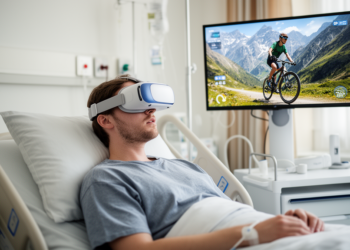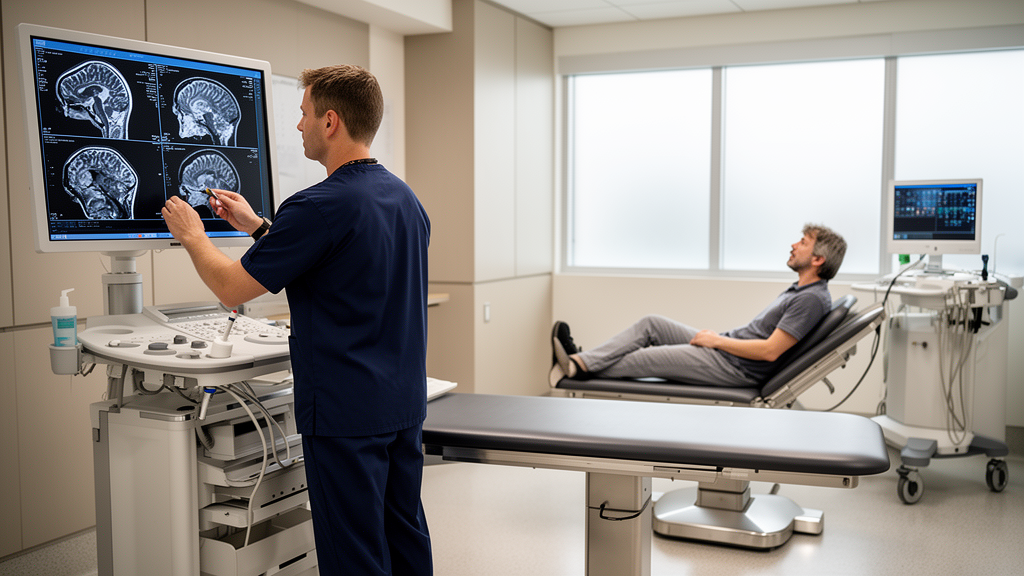
Emergency department practices for managing benign paroxysmal positional vertigo (BPPV) have undergone scrutiny following the implementation of the Emergency VESTibular Algorithm (EVESTA) at Wyong Hospital. A recent retrospective, uncontrolled, repeated cross-sectional study aimed to evaluate how these diagnostic and treatment pathways changed as the hospital transitioned from usual care to a paper-based algorithm, and subsequently to a digitally integrated clinical workflow. The researchers investigated the documentation of essential bedside assessments—specifically the Dix–Hallpike maneuver (DHP) and the canalith repositioning technique (CRT)—alongside the utilization rates of computed tomography angiography (CTA) in these patients.
The study spanned three sequential phases at Wyong Hospital, involving a total of 230 patients: 87 in the usual-care period, 75 during the paper-based EVESTA implementation, and 68 after the algorithm was fully integrated into the digital clinical workflow. To provide a comparative snapshot of current practices, the authors also included an exploratory cohort of 59 patients treated at Gosford Hospital following the digital implementation phase.
Data analysis revealed a nuanced progression in documentation practices. Regarding the Dix–Hallpike maneuver, the proportion of presentations lacking documented performance shifted from 40.2% during the usual-care phase to 13.3% during the paper-based period, before rising again to 26.5% following digital integration. Statistical modeling indicated that while the odds of missing DHP documentation were lower during the paper-EVESTA phase compared to usual care, the digital-EVESTA period showed no significant difference. This suggests that the initial improvements observed with paper-based tools were not consistently maintained after shifting to the electronic system.
The documentation of canalith repositioning techniques showed a similar trend. The proportion of encounters without a documented CRT fell from 69.0% at baseline to 36.0% during the paper-based implementation, subsequently increasing to 51.5% in the digital phase. When compared to the usual-care reference group, the odds of failing to document a CRT remained lower during both the paper-based and digital implementation periods. This indicates that while the digital integration was associated with improved CRT documentation relative to the initial baseline, the gains were less pronounced than those recorded during the paper-based intervention.
Computed tomography angiography (CTA) utilization displayed a more consistent downward trajectory. Rates declined progressively from 40.2% in the usual-care phase to 24.0% during the paper-based phase, ultimately reaching 13.2% in the digital implementation period. Logistic regression models confirmed that the odds of CTA utilization were significantly lower during both the paper-based and digital periods when compared to usual care.
The exploratory comparison between Wyong and Gosford Hospitals during the digital period revealed further variations in clinical care.
The study authors emphasize that these temporal changes in documented care processes and CTA usage cannot be directly attributed to the EVESTA intervention alone. Because of the uncontrolled pre–post design and the possibility of secular confounding, it is impossible to isolate the specific impact of the algorithm from other concurrent shifts in clinical practice. The results indicate that while some improvements in documented assessment and treatment were evident, they were only partially sustained following the integration of the algorithm into the digital clinical workflow.
Subject of Research: Evaluation of emergency department care and documentation practices for benign paroxysmal positional vertigo (BPPV) across different algorithm implementation phases.
Article Title: Changes in documented emergency care for benign paroxysmal positional vertigo across paper-based and digital implementation of EVESTA: a retrospective uncontrolled pre–post study
Article References: Neely, P., Chia, J., Garg, G., Chen, R., Fang, Q. H., Knox, M., Reyneke, E., Evans, J., Rattan, R., Ayling, K., Dolja Gore, X., Parsons, M. W., Wellings, T. P., & Patel, H. (2026). Changes in documented emergency care for benign paroxysmal positional vertigo across paper-based and digital implementation of EVESTA: a retrospective uncontrolled pre–post study. Frontiers in Audiology and Otology, 4, 1993412. https://doi.org/10.3389/fauot.2026.1993412
Image Credits: AI Generated
DOI: 10.3389/fauot.2026.1993412
Keywords: Benign paroxysmal positional vertigo, BPPV, Emergency department, Clinical decision support, Neuroimaging, Computed tomography angiography, Dix-Hallpike maneuver, Canalith repositioning technique, Health services research, Digital health, Implementation science, Retrospective study, Wyong Hospital, Gosford Hospital, Vestibular disorders, Clinical documentation, Healthcare quality
News Source: Ophelia Keating. (November 19, 2026). Clinical Documentation and Imaging Practices for Positional Vertigo Vary After Implementation. Scienmag.