• HOME
  • NEWS
  • EXPLORE
    • CAREER
      • Companies
      • Jobs
    • EVENTS
    • iGEM
      • News
      • Team
    • PHOTOS
    • VIDEO
    • WIKI
  • BLOG
  • COMMUNITY
    • FACEBOOK
    • INSTAGRAM
    • TWITTER
Monday, October 5, 2026
BIOENGINEER.ORG
No Result
View All Result
  • Login
  • HOME
  • NEWS
  • EXPLORE
    • CAREER
      • Companies
      • Jobs
        • Lecturer
        • PhD Studentship
        • Postdoc
        • Research Assistant
    • EVENTS
    • iGEM
      • News
      • Team
    • PHOTOS
    • VIDEO
    • WIKI
  • BLOG
  • COMMUNITY
    • FACEBOOK
    • INSTAGRAM
    • TWITTER
  • HOME
  • NEWS
  • EXPLORE
    • CAREER
      • Companies
      • Jobs
        • Lecturer
        • PhD Studentship
        • Postdoc
        • Research Assistant
    • EVENTS
    • iGEM
      • News
      • Team
    • PHOTOS
    • VIDEO
    • WIKI
  • BLOG
  • COMMUNITY
    • FACEBOOK
    • INSTAGRAM
    • TWITTER
No Result
View All Result
Bioengineer.org
No Result
View All Result
Home NEWS Science News

Piece of mind

Bioengineer by Bioengineer
March 20, 2017
in Science News
Reading Time: 2 mins read
0
Share on FacebookShare on TwitterShare on LinkedinShare on RedditShare on Telegram
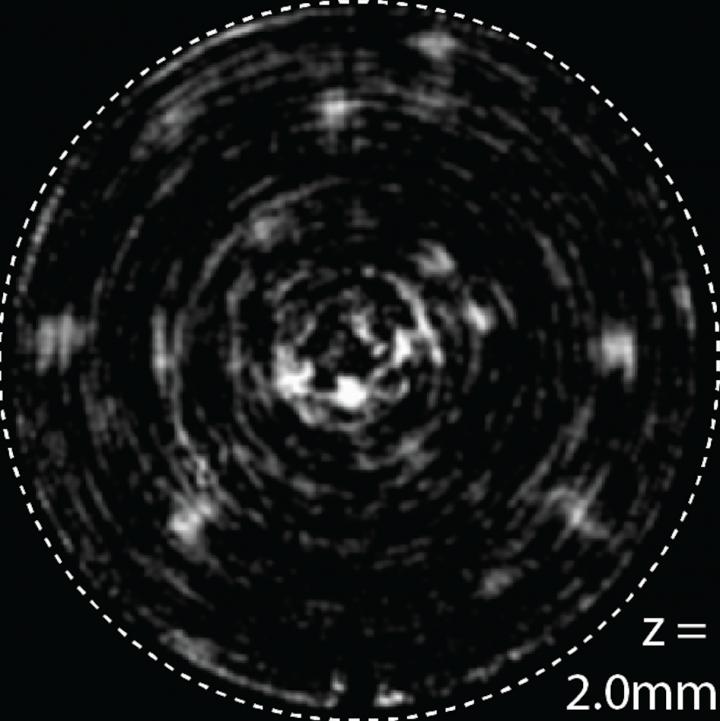
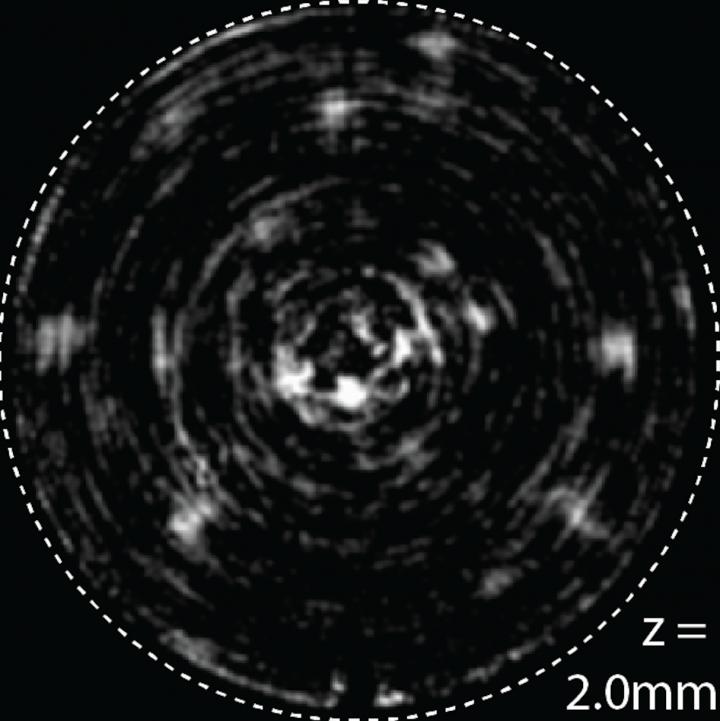
IMAGE

Credit: Rajesh Menon

With just an inexpensive micro-thin surgical needle and laser light, University of Utah engineers have discovered a minimally invasive, inexpensive way to take high-resolution pictures of an animal brain, a process that also could lead to a much less invasive method for humans.

A team led by University of Utah electrical and computer engineering associate professor Rajesh Menon has now proven the process works on mice for the benefit of medical researchers studying neurological disorders such as depression, obsessive-compulsive disorder and aggression. Menon and his team have been working with the U. of U.'s renowned Nobel-winning researcher, Distinguished Professor of Biology and Human Genetics Mario Capecchi, and Jason Shepherd, assistant professor of neurobiology and anatomy.

The group has documented its process in a paper titled, "Deep-brain imaging via epifluorescence Computational Cannula Microscopy," in the latest issue of Scientific Reports. The paper's lead author is doctoral student Ganghun Kim.

The process, called "computational cannula microscopy," involves taking a needle about a quarter-millimeter in diameter and inserting it into the brain. Laser light shines through the needle and into the brain, illuminating certain cells "like a flashlight," Menon says. In the case of mice, researchers genetically modify the animals so that only the cells they want to see glow under this laser light.

The light from the glowing cells then is captured by the needle and recorded by a standard camera. The captured light is run through a sophisticated algorithm developed by Menon and his team, which assembles the scattered light waves into a 2D or potentially, even a 3D picture.

Typically, researchers must surgically take a sample of the animal's brain to examine the cells under a microscope, or they use an endoscope that can be anywhere from 10 to 100 times thicker than a needle.

"That's very damaging," Menon says of previous methods of examining the brain. "What we have done is to take a surgical needle that's really tiny and easily put it into the brain as deep as we want and see very clear high-resolution images. This technique is particularly useful for looking deep inside the brain where other techniques fail."

Now that the process has been proven to work in animals, Menon believes it can potentially be developed for human patients, creating a simpler, less expensive and invasive method than endoscopes.

"Although its much more complex from a regulatory standpoint, it can be done in humans, and not just in the brain, but for other organs as well," he says. "But our motivation for this project right now is to look inside the brain of the mouse and further develop the technique to understand fundamental neuroscience in the mouse brain."

###

The paper's co-authors include doctoral student Kyle Jenks and postdoctoral researchers Naveen Nagarajan and Elissa Pastuzyn.

Media Contact

Vince Horiuchi
[email protected]
801-585-7499
@uofunews

http://www.unews.utah.edu/

############

Story Source: Materials provided by Scienmag

Share12Tweet8Share2ShareShareShare2

Related Posts

Hidden Tick- and Flea-Borne Probes in HIV Patients Reveal High Bartonella Exposure but No Active Infection

Hidden Tick- and Flea-Borne Probes in HIV Patients Reveal High Bartonella Exposure but No Active Infection

October 5, 2026
Neural Networks Trained on a 24-Dimensional Lattice Could Shrink AI to 0.76 Bits per Weight

Neural Networks Trained on a 24-Dimensional Lattice Could Shrink AI to 0.76 Bits per Weight

October 5, 2026

Childhood Adversity Linked to Modest Rise in Heart Disease Risk Across Four Ageing Cohorts

October 5, 2026

Apathy and Personality Changes Drive Early Disability in Frontotemporal Dementia

October 5, 2026
Please login to join discussion

POPULAR NEWS

  • Alloys That Shrink Their Own Grains: New PIX Mechanism Refines Metals With Heat Alone

    Alloys That Shrink Their Own Grains: New PIX Mechanism Refines Metals With Heat Alone

    29 shares
    Share 12 Tweet 7
  • Endurance Exercise Reshapes the Liver in Males and Females Through Distinct Molecular Routes

    29 shares
    Share 12 Tweet 7
  • Single Transcription Factor PU.1 Rapidly Converts Fibroblasts into Macrophage-Lineage Cells

    29 shares
    Share 12 Tweet 7
  • New Scale Measures How Ready Nurse Educators Really Are for the AI Era

    29 shares
    Share 12 Tweet 7

About

We bring you the latest biotechnology news from best research centers and universities around the world. Check our website.

Follow us

Recent News

Alloys That Shrink Their Own Grains: New PIX Mechanism Refines Metals With Heat Alone

Endurance Exercise Reshapes the Liver in Males and Females Through Distinct Molecular Routes

Single Transcription Factor PU.1 Rapidly Converts Fibroblasts into Macrophage-Lineage Cells

Subscribe to Blog via Email

Success! An email was just sent to confirm your subscription. Please find the email now and click 'Confirm' to start subscribing.

Join 85 other subscribers
  • Contact Us

Bioengineer.org © Copyright 2023 All Rights Reserved.

Welcome Back!

Login to your account below

Forgotten Password?

Retrieve your password

Please enter your username or email address to reset your password.

Log In
No Result
View All Result
  • Homepages
    • Home Page 1
    • Home Page 2
  • News
  • National
  • Business
  • Health
  • Lifestyle
  • Science

Bioengineer.org © Copyright 2023 All Rights Reserved.