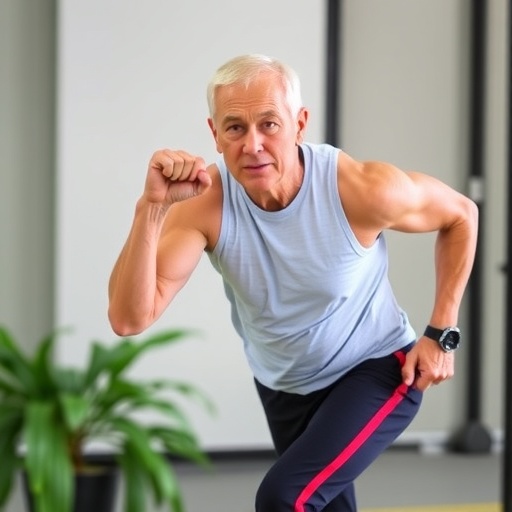
A new cohort study of older adults suggests that physical fitness may be a powerful and measurable indicator of longevity. Published in JAMA Network Open, the research found that people with stronger performance across several objective fitness domains—including balance and agility, lower-body strength, and cardiorespiratory fitness—had lower risks of death from any cause. The relationship followed a graded pattern: as fitness improved, mortality risk declined.
The findings add weight to a growing body of evidence that physical capability is more than a marker of independence in later life. It may also reflect the body’s overall ability to withstand illness, recover from physiological stress, and maintain essential functions. Unlike many risk factors assessed through questionnaires, the fitness measures examined in the study were objectively recorded, offering clinicians a potentially more consistent way to evaluate health vulnerability among older patients.
Balance and agility appeared to be particularly important components of the fitness profile. These abilities depend on the coordinated function of the nervous system, muscles, joints, vision, and cardiovascular control. They are also closely related to the capacity to avoid falls, change direction, rise from a chair, and respond to unexpected disturbances. A decline in these skills can signal neurological impairment, muscle deterioration, reduced reaction speed, or a loss of functional reserve, all of which may increase susceptibility to serious health complications.
Lower-body strength was another central factor associated with survival. The legs and hips provide the power required for walking, climbing stairs, standing up, and maintaining posture. When lower-body strength weakens, older adults may become less active, creating a feedback loop in which inactivity accelerates muscle loss, reduces balance, and further limits mobility. This process, often linked to sarcopenia and physical frailty, can make relatively minor illnesses or injuries more difficult to overcome.
Cardiorespiratory fitness also showed a favorable relationship with all-cause mortality. This form of fitness reflects how effectively the heart, lungs, blood vessels, and muscles deliver and use oxygen during exertion. It is influenced by cardiovascular and respiratory health, mitochondrial function, muscle efficiency, and habitual physical activity. Higher cardiorespiratory capacity generally indicates that the body can perform physical work with less physiological strain, a reserve that may become especially important during infection, surgery, hospitalization, or other periods of acute stress.
The study’s graded associations are particularly notable because they suggest that mortality risk may not be divided into simple categories of “fit” and “unfit.” Instead, incremental differences in physical performance could correspond to meaningful differences in long-term health. This pattern supports the idea that even modest improvements in strength, balance, agility, or aerobic capacity might be relevant, although the study itself does not establish that improving a specific fitness measure will directly prevent death.
Because the investigation was observational, the researchers cannot prove that higher fitness caused the lower mortality risk. People who perform better on fitness tests may also differ in other ways: they may have fewer chronic diseases, better nutrition, greater access to medical care, stronger social support, or higher levels of daily activity. Researchers can statistically account for some of these factors, but no cohort study can eliminate every possible source of confounding. Reverse causation is also possible, since undiagnosed illness may reduce physical performance before it becomes clinically apparent.
Li-Lin Liang, of the Institute of Public Health at National Yang Ming Chiao Tung University, and Chen-Te Hsu, of the Department of Sport Management at National Taiwan University of Sport, are the corresponding authors. Their findings point toward a more function-oriented approach to risk assessment in older adults. A short battery of standardized tests could potentially complement conventional measurements such as blood pressure, cholesterol levels, smoking history, and disease diagnoses, helping clinicians identify patients whose physiological reserve is declining even when routine clinical indicators appear relatively stable.
The practical implications extend beyond the clinic. Exercises designed to improve leg strength, balance, coordination, and aerobic capacity are already widely used in rehabilitation and healthy aging programs. Resistance training can stimulate muscle adaptation, while walking, cycling, swimming, and other endurance activities can support cardiorespiratory function. Balance-focused activities may improve postural control and confidence, particularly when tailored to an individual’s ability and medical status. Experts emphasize that exercise plans for older adults should be introduced progressively and adapted to safety, existing disease, and functional limitations.
The researchers’ broader message is that aging should not be assessed solely by chronological age or by the presence of diagnosed disease. Objective fitness testing may reveal differences in biological resilience that are otherwise difficult to capture. If future research confirms these associations across diverse populations and determines which interventions produce the greatest benefits, physical fitness assessments could become a routine part of preventive care. For now, the study offers a clear and highly shareable conclusion: in later life, the ability to move, stabilize the body, generate force, and use oxygen efficiently is closely linked with the likelihood of living longer.
Subject of Research: The association between objectively measured physical fitness and all-cause mortality in older adults.
Web References: https://doi.org/10.1001/jamanetworkopen.2026.28227
References: Liang LL, Hsu CT, et al. Study published in JAMA Network Open. DOI: 10.1001/jamanetworkopen.2026.28227.
Keywords: Physical exercise; mortality rates; older adults; cardiology; respiratory system; disease intervention; risk factors.
Tags: age-related decline in physical functionsbalance and agility in older adultsfalls prevention and mobilitylong-term health outcomes in older populationsmeasuring health vulnerability in seniorsneurological health and fitnessobjective fitness assessment in seniorsolder adult mortality riskphysical capability as health markerphysical fitness and longevityphysiological stress recovery in elderlystrength and cardiovascular fitness in aging