• HOME
  • NEWS
  • EXPLORE
    • CAREER
      • Companies
      • Jobs
    • EVENTS
    • iGEM
      • News
      • Team
    • PHOTOS
    • VIDEO
    • WIKI
  • BLOG
  • COMMUNITY
    • FACEBOOK
    • INSTAGRAM
    • TWITTER
Saturday, May 16, 2026
BIOENGINEER.ORG
No Result
View All Result
  • Login
  • HOME
  • NEWS
  • EXPLORE
    • CAREER
      • Companies
      • Jobs
        • Lecturer
        • PhD Studentship
        • Postdoc
        • Research Assistant
    • EVENTS
    • iGEM
      • News
      • Team
    • PHOTOS
    • VIDEO
    • WIKI
  • BLOG
  • COMMUNITY
    • FACEBOOK
    • INSTAGRAM
    • TWITTER
  • HOME
  • NEWS
  • EXPLORE
    • CAREER
      • Companies
      • Jobs
        • Lecturer
        • PhD Studentship
        • Postdoc
        • Research Assistant
    • EVENTS
    • iGEM
      • News
      • Team
    • PHOTOS
    • VIDEO
    • WIKI
  • BLOG
  • COMMUNITY
    • FACEBOOK
    • INSTAGRAM
    • TWITTER
No Result
View All Result
Bioengineer.org
No Result
View All Result
Home Headlines

Photo-responsive protein hydrogels as agent for controlled stem…

Bioengineer.org by Bioengineer.org
January 20, 2018
in Headlines, Health, Science News
Reading Time: 2 mins read
0
Share on FacebookShare on TwitterShare on LinkedinShare on RedditShare on Telegram
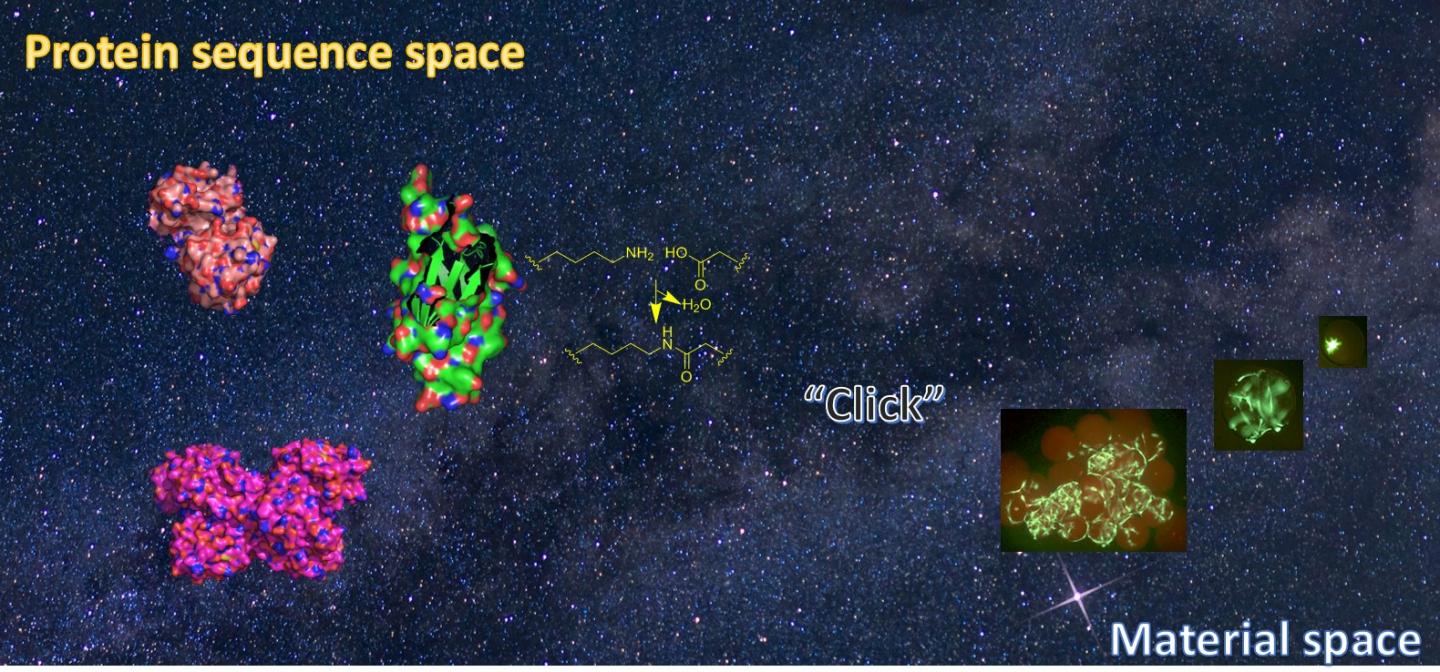
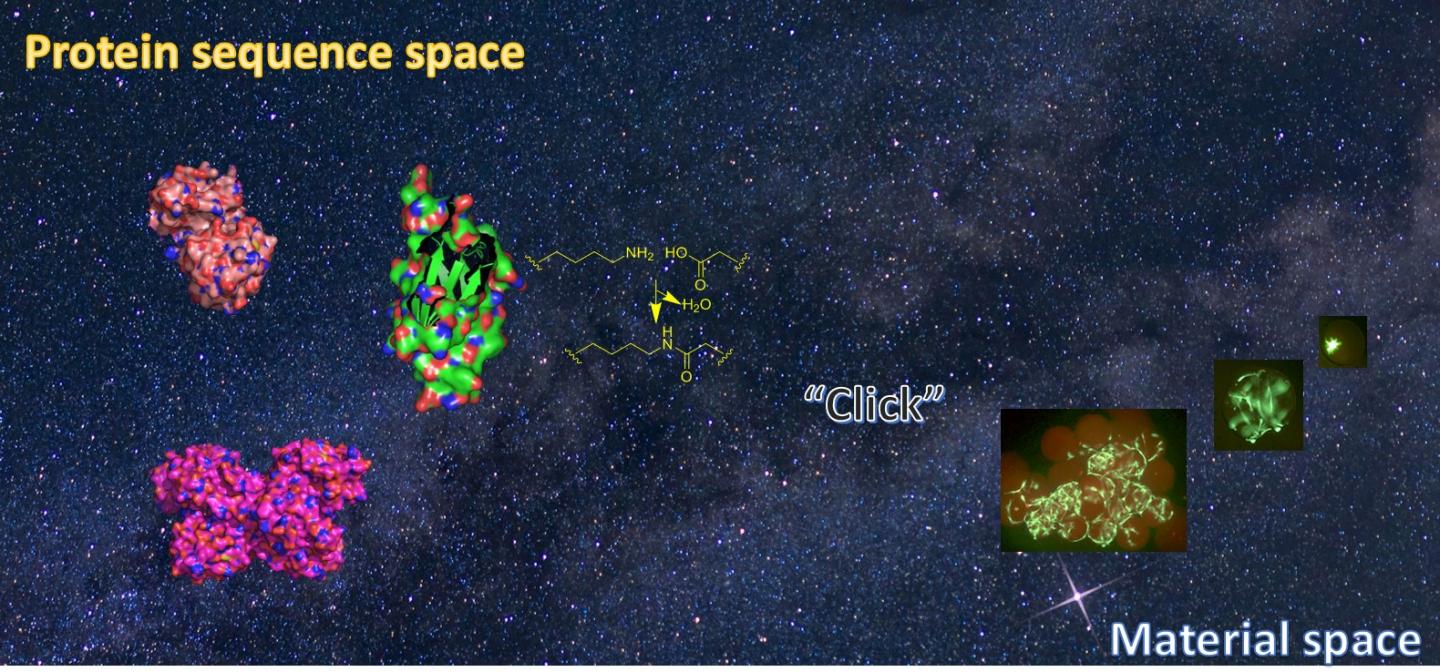
IMAGE

Credit: Department of Chemical and Biological Engineering, HKUST

Hydrogels, noted for their biomimetic properties, are the leading materials for biomedical applications, such as drug delivery and stem cell therapy. Traditional hydrogels made up of either synthetic polymers or natural biomolecules often serve as passive scaffolds for molecular or cellular species, which render these materials unable to fully recapitulate the dynamic signaling involved in biological processes, such as cell/tissue development.

Photo-responsive hydrogels are of particular interest to material scientists, because light is regarded as an ideal tool to control molecules or cell behavior with high spatiotemporal precision and little invasiveness. The major challenge for scientist is how to assemble these complex globular proteins into supramolecular architectures efficiently while preserving their function.

In a recent research, a group of scientists from The Hong Kong University of Science and Technology created a B12-dependent light-sensing hydrogel by covalently stitching together the photoreceptor C-terminal adenosylcobalamin binding domain (CarHC) proteins under mild conditions. This direct assembly of stimuli-responsive proteins into hydrogels represents a versatile solution for designing "smart" materials and opens up enormous opportunities for future material biology.

The findings were published in the journal PNAS on June 6, 2017 (doi: 10.1073/pnas.1621350114).

"In our research, we were able to create an entirely recombinant protein-based light-sensitive hydrogels by covalently assembling the CarHC photoreceptor proteins using genetically encoded SpyTag-SpyCatcher chemistry," said Fei Sun, author of the paper and assistant professor at HKUST's department of chemical and biomolecular engineering. "The AdoB12-dependent CarHC tetramerization has been shown to be essential for the formation of an elastic hydrogel in the dark, which can undergo a rapid gel-sol transition caused by light-induced CarHC disassembly."

"The resulting hydrogel composed of physically self-assembled CarHC polymers exhibited a rapid gel-sol transition on light exposure, which enabled the facile release/recovery of 3T3 fibroblasts and human mesenchymal stem cells (hMSCs) from 3D cultures while maintaining their viability." Sun added. "Given the growing demand for creating stimuli-responsive "smart" hydrogels, the direct assembly of stimuli-responsive proteins into hydrogels represents a versatile strategy for designing dynamically tunable materials."

###

Media Contact

Clare Chan
[email protected]
852-235-86306

http://www.ust.hk

Related Journal Article

http://dx.doi.org/10.1073/pnas.1621350114

Share12Tweet8Share2ShareShareShare2

Related Posts

Uncovering C. elegans Immunity via Genetic Screens — Biology

Uncovering C. elegans Immunity via Genetic Screens

May 16, 2026
Congenital Heart Disease’s Lasting Impact on Brain Health — Technology and Engineering

Congenital Heart Disease’s Lasting Impact on Brain Health

May 16, 2026

Metabolic Stress Worsens Parkinson’s via Mitochondrial Ferroptosis

May 16, 2026

Four New Hydroxyl Fatty Acids from Bacillus sp.

May 16, 2026
Please login to join discussion

POPULAR NEWS

  • Research Indicates Potential Connection Between Prenatal Medication Exposure and Elevated Autism Risk

    844 shares
    Share 338 Tweet 211
  • New Study Reveals Plants Can Detect the Sound of Rain

    730 shares
    Share 291 Tweet 182
  • Salmonella Haem Blocks Macrophages, Boosts Infection

    62 shares
    Share 25 Tweet 16
  • Breastmilk Balances E. coli and Beneficial Bacteria in Infant Gut Microbiomes

    58 shares
    Share 23 Tweet 15

About

We bring you the latest biotechnology news from best research centers and universities around the world. Check our website.

Follow us

Recent News

Uncovering C. elegans Immunity via Genetic Screens

Congenital Heart Disease’s Lasting Impact on Brain Health

Metabolic Stress Worsens Parkinson’s via Mitochondrial Ferroptosis

Subscribe to Blog via Email

Enter your email address to subscribe to this blog and receive notifications of new posts by email.

Join 82 other subscribers
  • Contact Us

Bioengineer.org © Copyright 2023 All Rights Reserved.

Welcome Back!

Login to your account below

Forgotten Password?

Retrieve your password

Please enter your username or email address to reset your password.

Log In
No Result
View All Result
  • Homepages
    • Home Page 1
    • Home Page 2
  • News
  • National
  • Business
  • Health
  • Lifestyle
  • Science

Bioengineer.org © Copyright 2023 All Rights Reserved.