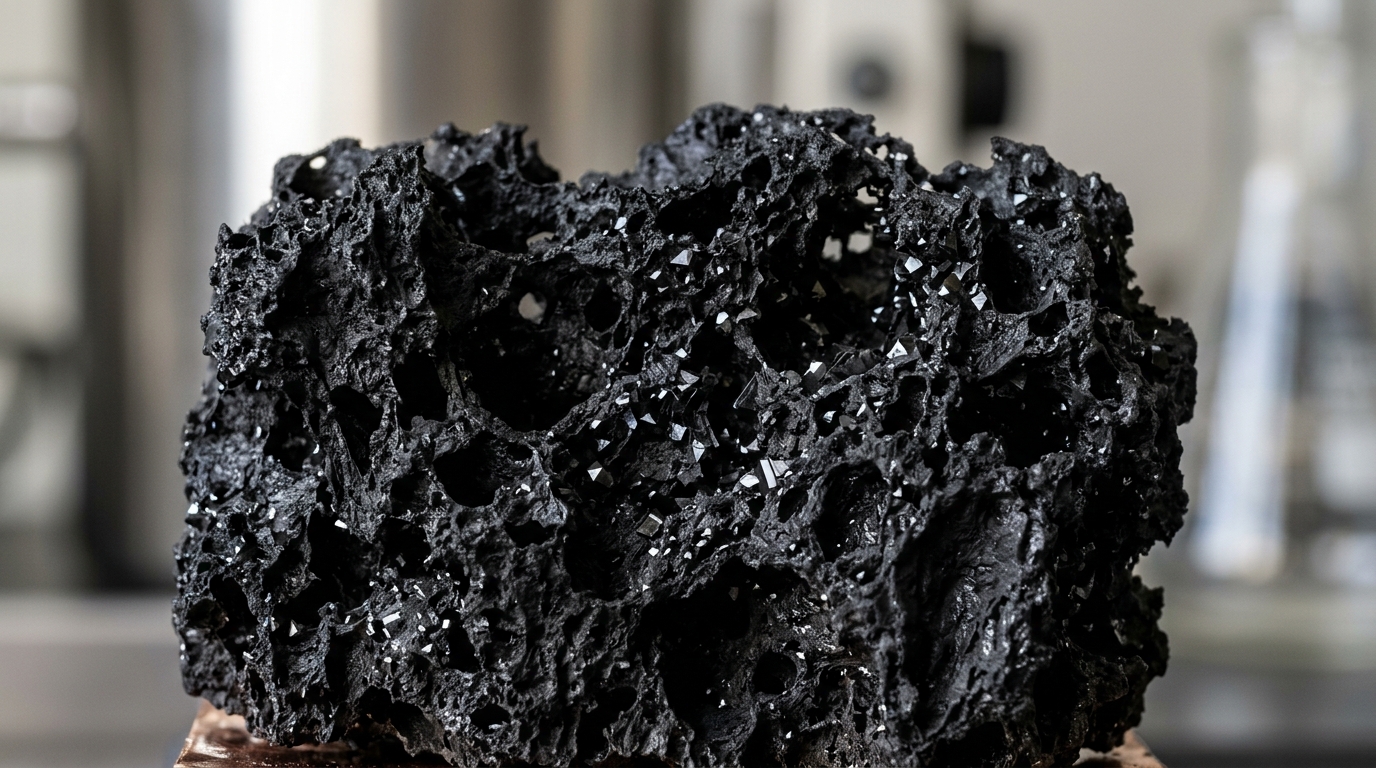
A material modification strategy using diammonium hydrogen phosphate allows sweet potato starch to be converted into high-performing hard carbon anodes for sodium-ion batteries, according to experimental findings reported in the Journal of Materials Science. The researchers developed this method to address the ongoing challenge of creating effective anode materials for sodium-ion energy storage systems, which represent a promising alternative to conventional lithium-ion batteries.
In the reported synthesis, diammonium hydrogen phosphate serves a dual purpose as an esterification crosslinker and a pore-forming agent during the preparation of the hard carbons. When sweet potato starch undergoes thermal pyrolysis, the chemical additive effectively suppresses structural collapse and foaming. This chemical intervention enables the resulting carbonaceous material to maintain the original particle morphology of the precursor starch granules rather than breaking down into distorted structural forms.
Alongside the suppression of pyrolysis foaming, the thermal decomposition of the phosphate compound generates gaseous byproducts, specifically ammonia and water vapor. These escaping gases actively tailor the internal pore architecture of the carbon matrix throughout the carbonization process. By creating an engineered porous network, this chemical treatment introduces additional accessible active sites designed specifically for sodium storage within the hard carbon framework.
Through systematic structural characterization across a synthesized series of modified carbons designated as PHC-x, the study identified the PHC-8 formulation as the optimal material. The PHC-8 sample demonstrated the most effective retention of original granule morphology among the prepared specimens. Analytical evaluations further revealed that this sample possesses a highly disordered microcrystalline structure, characterized by expanded interlayer spacing and a thoroughly balanced porous network.
Electrochemical evaluations demonstrated that the structural modifications in PHC-8 yield notable improvements in battery operation compared to unmodified hard carbon. In performance assessments, the PHC-8 anode delivered an initial Coulombic efficiency of 78.5 percent. Under prolonged galvanostatic cycling at a current density of 0.05 amperes per gram, the optimized material retained a high reversible capacity of 293.6 milliampere-hours per gram after 200 cycles, significantly outperforming the untreated hard carbon baseline.
Kinetic analyses conducted using cyclic voltammetry and electrochemical impedance spectroscopy revealed that this enhanced performance stems from a favorable balance between interfacial charge transfer and bulk ionic diffusion. The authors concluded that their crosslinking and carbonization procedure establishes a straightforward pathway for converting low-cost agricultural biomass into functional hard carbon anodes for advanced sodium-ion battery applications.
Subject of Research: Sweet potato starch-derived hard carbon anodes for sodium-ion batteries
Article Title: Dual-function diammonium hydrogen phosphate enabling foam suppression and pore engineering in sweet potato starch-derived hard carbons for enhanced sodium storage
Article References: Lv, Z., Liu, M., Cao, S., Cui, Y., Wang, D., Yang, M., Sun, J., & Ren, M. (2026). Dual-function diammonium hydrogen phosphate enabling foam suppression and pore engineering in sweet potato starch-derived hard carbons for enhanced sodium storage. Journal of Materials Science. https://doi.org/10.1007/s10853-026-14074-z
Image Credits: AI Generated
DOI: 10.1007/s10853-026-14074-z
Keywords: sodium-ion batteries, hard carbon, sweet potato starch, diammonium hydrogen phosphate, anode materials, pore engineering, foam suppression, biomass carbonization, crosslinking, pyrolysis, initial Coulombic efficiency, reversible capacity, cyclic voltammetry, electrochemical impedance spectroscopy, interlayer spacing, interfacial charge transfer, bulk ionic diffusion
News Source: Denise Maddox. (November 17, 2026). Phosphate Additive Improves Sweet Potato Starch Anodes for Sodium Batteries. Scienmag.