Researchers developing molecular protocols for ancient tool analysis have successfully extracted and sequenced genetic material from viscous resin adhesives used in experimental harvesting sickles. In a methodological study published in BMC Methods, Luis Victoria Nogales and Katharina Dulias addressed the persistent technical challenges of extracting DNA preserved in resin-like, viscous matrices. Because these complex substances contain abundant chemical inhibitors that interfere with enzymatic reactions, standardized extraction protocols have remained scarce. Resinous materials nonetheless offer substantial scientific potential for preserving ecological and biological information in both modern and archaeological contexts. To resolve these challenges, the investigators evaluated three extraction strategies based on a phenol-chloroform-isoamyl alcohol organic phase separation approach. Applying this methodology to experimental sickle replicas modeled after early European agricultural implements, the team demonstrated that genetic material from harvested cereal crops and their associated agricultural microbiota binds directly to the adhesive matrix during tool operation and can be reliably recovered for high-throughput metagenomic shotgun sequencing.
Extracting amplifiable genetic material from viscous substances has long posed severe technical hurdles, as reduced fragment sizes, degradation, and inhibitory compounds jeopardize polymerase chain reaction amplification. Previous experimental investigations attempted DNA isolation from biological matrices such as propolis, beeswax, and honey by adapting diverse methodological approaches. For instance, the commercial TRIzol reagent has previously been applied to recover DNA from propolis, while modified cetyltrimethylammonium bromide protocols have yielded genetic material from propolis, honey, and cannabis resin. Furthermore, commercial kits such as the DNeasy Plant Pro Kit and DNeasy Blood and Tissue Kit from Qiagen, alongside phenol-chloroform-isoamyl alcohol approaches, have been tested on honey. In 2019, researchers sequenced a human genome and oral microbiome from a 5,700-year-old chewed birch pitch used as hafting adhesive since the Middle Pleistocene, using proteinase K preparation followed by phenol-chloroform extraction. Birch pitch, a viscous substance obtained by heating birch bark, demonstrated the long-term preservative capacity of sticky prehistoric hafting adhesives.
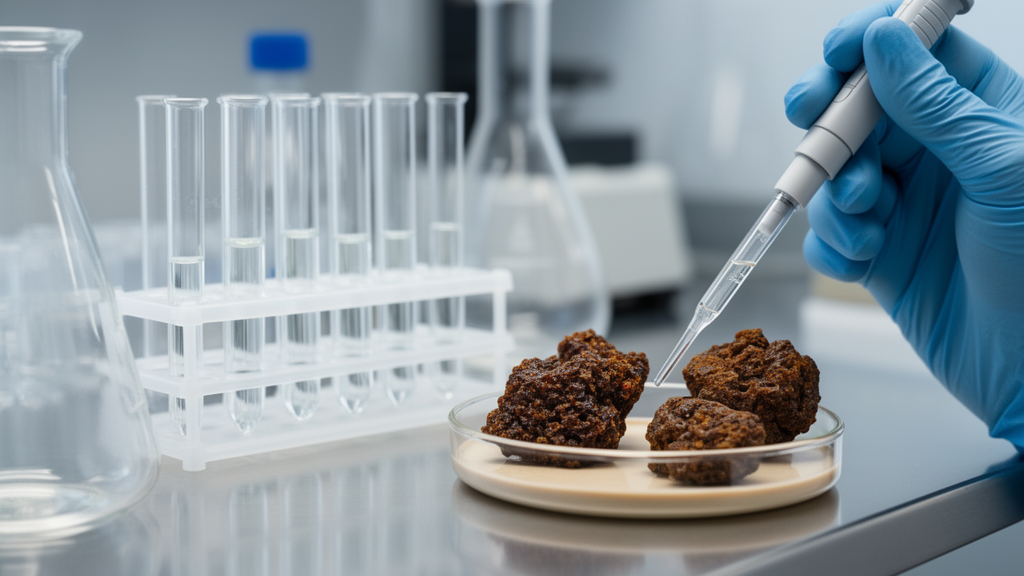
Building upon these precedents, the authors evaluated how resin adhesives capture environmental DNA during active agricultural harvesting. The study utilized replica harvesting sickles modeled on original Neolithic artifacts from the La Marmotta site at Lake Bracciano in Italy, where resin served to attach flint blades to wooden sickle bodies. Experimental resin was manufactured from pine resin, crushed pine charcoal, and beeswax. The replicas were tested harvesting Triticum aestivum cultivar Gentil Rosso in Tuscany, Italy. Samples of 30 to 50 milligrams of resin were collected across stages of tool use and resin depths, comparing unharvested resin against the outer superficial layer and the inner layer sampled after harvesting. The primary goals were establishing a dependable laboratory method to extract DNA from resinous adhesives and assessing the capacity of such adhesives to acquire and preserve genetic material following physical contact with crops and ambient organisms during sickle use.
The chemical extraction protocol relied on an organic phenol-chloroform-isoamyl alcohol workflow chosen for its ability to separate inhibitory substances, crystalline particles, cellular debris, proteins, and lipids into an organic phase while retaining nucleic acids. Resin samples of 30 to 50 milligrams were incubated with 1200 microliters of lysis buffer containing 1 M Tris-HCl at pH 8.0, 5 M sodium chloride, 10 percent sodium dodecyl sulfate, 1 M calcium chloride, 0.5 M ethylenediaminetetraacetic acid at pH 8.0, dithiothreitol, HPLC water, and 20 milligrams per milliliter of proteinase K. Lysis was performed overnight at 55 degrees Celsius under constant agitation. Following equilibration to room temperature and five minutes of maximum-speed centrifugation, the supernatant was recovered without disturbing undissolved resin. The supernatant was treated with 900 microliters of phenol-chloroform-isoamyl alcohol for five minutes under slow rotation, followed by centrifugation for five minutes at maximum speed to separate the aqueous and organic phases, a purification step repeated twice.
For binding and silica column purification, the collected aqueous DNA-containing phase was treated either with a thirteen-fold Dabney binding buffer or with commercial Binding Buffer PB from the Qiagen MinElute PCR Purification Kit. The homemade Dabney buffer was formulated with 23.883 grams of guanidine hydrochloride at 5 M final concentration, 20 milliliters of 100 percent isopropanol, 25 microliters of 100 percent Tween-20, 1.5 milliliters of 3 M sodium acetate at pH 5.2, and HPLC water for a total volume of 50 milliliters. The mixture was passed through Zymo reservoirs mounted onto Qiagen MinElute columns placed in 50-milliliter tubes and centrifuged for four minutes. The spin columns were washed twice with PE cleaning buffer, centrifuged for one minute at maximum speed after each wash, and dried with an additional spin. Elution was evaluated using standard 35-microliter volumes of Elution Buffer EB alongside an optimized protocol D utilizing a reduced 12-microliter elution volume to concentrate recovered DNA.
To assess decontamination methods commonly used in ancient genomics, the researchers also tested pre-lysis washing with 1000 microliters of 5 percent bleach solution, vortexing briefly, centrifuging for two minutes, and completing three consecutive rinses with HPLC water. Quantifying DNA on a Qubit 4.0 Fluorometer using the Qubit dsDNA HS Assay Kit revealed that bleach treatment severely diminished recovery. Only a minimal trace of DNA was recovered from bleach-treated sample LM002, while all other bleach-treated samples failed entirely. In ancient bone and tooth analyses, bleach eliminates exogenous surface contaminants, but in sticky resin adhesives, it destroyed the target genetic material acquired during agricultural harvesting. This outcome indicated that target DNA resided primarily on the exposed surface of the adhesive matrix. Furthermore, resin sampled before harvesting showed virtually no DNA across trials, with only sample LM001D_B yielding 0.1 nanograms per microliter while other trials failed, confirming that DNA introduced from sickle fabrication or raw ingredients was negligible.
Quantification across post-harvest extractions demonstrated that reducing elution volume to 12 microliters in protocol D served as the critical turning point for recovering concentrated DNA. Replicate trials from outer layer sample LM002 under protocol D achieved the highest yields, reaching 39.0 nanograms per microliter in replicate LM002D_A and 49.2 nanograms per microliter in replicate LM002D_B. Between binding reagents, no significant performance differences were detected between homemade Dabney buffer and commercial Qiagen PB buffer, consistent with their shared reliance on guanidine hydrochloride binding chemistry. When comparing resin layers after harvesting, outer layers consistently yielded higher analyte quantities than deeper layers. However, when the authors conducted a Mann-Whitney U test comparing outer sample LM002 and inner sample LM003, the test yielded a U value of 18.5 and a p-value of 0.309. This demonstrated no statistically significant difference at a 95 percent confidence level, which the authors explained as a power limitation stemming from small sample size and physical cross-mixing along poorly defined layer boundaries during mechanical sampling.
Because replicates LM002D_A and LM002D_B produced the highest DNA concentrations, they were selected for downstream metagenomic sequencing. Due to library preparation requirements demanding a minimum volume of 20 microliters, the extracts were diluted to working concentrations of 10.5 and 19.5 nanograms per microliter. Macrogen Europe B.V. prepared sequencing libraries using the TruSeq Nano DNA Kit with 350-base-pair inserts, followed by 150-base-pair paired-end high-throughput sequencing on an Illumina NovaSeq X platform generating 10 gigabase pairs of throughput per sample. Bioinformatic analysis utilized Cutadapt version 4.6 to trim adapter sequences, NGmerge version 0.3 to merge paired-end read files, and FastQC version 0.12.1 for quality control. Taxonomic inference was executed through the ancient metagenomic pipeline aMeta, initiating with k-mer taxonomic pre-screening via KrakenUniq version 1.0.4-2 visualized with Krona against the NCBI non-redundant NT database containing all available genomes. A project-specific reference database was compiled from organisms meeting thresholds of 1000 unique k-mers and 200 assigned reads, followed by mapping with the Lowest Common Ancestor aligner MALT and visualization in MEGAN version 6.25.10.
Taxonomic classification confirmed that agricultural harvesting transferred abundant crop and microbial DNA onto the resin. In KrakenUniq pre-screening of sample LM002D_A, the harvested cereal Triticum aestivum dominated the classified reads with 890,571 assignments, making up 23 percent of classified sequences. Other abundant flora included Lolium perenne and Medicago truncatula, alongside tree taxa such as Pinus taeda with 11,125 reads and Quercus with 6,963 reads. Bacteria represented 28 percent of total reads with 3,280,584 assignments, including Rathayibacter festucae, Frigoribacterium, Curtobacterium flaccumfaciens, and Sphingomonas aerolata. Fungi accounted for 10 percent of the assemblage with 1,029,317 reads, featuring Zymoseptoria tritici and Fusarium. Human DNA accounted for 96,428 reads, originating from experimenters who manufactured and handled the sickles, while Apis bees yielded 153 reads. Secondary mapping with MALT identified 851,346 reads mapped to Triticum aestivum, accompanied by related wheat species including Triticum monococcum with 42,461 reads, Triticum turgidum with 35,300 reads, Triticum urartu with 40,149 reads, and Aegilops tauschii with 53,393 reads, while the genus Avena accumulated 193,324 reads.
MALT alignment further delineated associated fungal and bacterial communities, identifying Alternaria as the most abundant fungal genus with 430,785 reads, predominantly Alternaria alternata and Alternaria solani, alongside Parastagonospora nodorum with 54,527 reads, Ramularia collo-cygni with 51,398 reads, and Cladosporium cladosporioides with 54,558 reads. Additional fungal associates included Bipolaris sorokiniana with 22,531 reads and Coniothyrium glycines with 14,429 reads. Among bacteria, Rathayibacter festucae remained the leading species with 312,800 reads, accompanied by Microbacteriaceae taxa including Leifsonia xyli, Microbacterium foliorum, and Microterricola viridarii, while human reads totaled 92,435. Authentication analysis with PMDtools revealed no significant post-mortem deamination patterns, confirming modern origins. These findings align with previous microbotanical analyses from La Marmotta sickles that identified wild grass pollen and phytoliths on superficial resin surfaces. Demonstrating that organic phenol-chloroform extraction retrieves host crop and microbial DNA from complex resin matrices, this study establishes a standardized foundation for analyzing ancient hafting adhesives, with sequencing data deposited in the European Nucleotide Archive under project accession PRJEB88184.
Subject of Research: DNA extraction and metagenomic analysis of experimental resin-preserved Neolithic sickle adhesives
Article Title: Advancing DNA extraction from experimental resin-preserved specimens
Article References: Victoria Nogales, L., & Dulias, K. (2026). Advancing DNA extraction from experimental resin-preserved specimens. BMC Methods, 3(1), Article 1. https://doi.org/10.1186/s44330-025-00053-4
Image Credits: AI Generated
DOI: 10.1186/s44330-025-00053-4
Keywords: DNA extraction, resin adhesive, Neolithic sickles, La Marmotta, phenol chloroform extraction, Triticum aestivum, metagenomics, KrakenUniq, MALT aligner, Dabney buffer, MinElute, Qubit fluorometer, NovaSeq X, post-mortem deamination, Rathayibacter festucae, Zymoseptoria tritici, bleach treatment
News Source: Morgan Morrow. (November 12, 2026). Phenol-Chloroform Method Extracts Crop and Microbial DNA from Experimental Neolithic Resin. Scienmag.