Pharmaceuticals Persist in Waterways as Conventional Wastewater Treatment Falls Short
Conventional municipal wastewater treatment plants, foundational to urban sewage management globally, are increasingly proving ineffective in filtering out common pharmaceuticals, including antidepressants such as fluoxetine (commercially known as Prozac). A revealing study led by Paulina Chaber-Jarlachowicz and her team at the Institute of Environmental Protection – National Research Institute in Warsaw, Poland, highlights the alarming persistence of these compounds despite the biological and mechanical treatment processes designed to remove organic pollutants. Published recently in the open-access journal PLOS One, the research underscores a significant environmental challenge—pharmaceutical pollution in freshwater ecosystems stemming from urban treatment facilities.
Municipal wastewater treatment commonly relies on activated sludge processes, utilizing microbial communities to degrade organic compounds before releasing treated water back into the environment. However, the biochemical pathways and process conditions that efficiently break down typical organic waste appear insufficient for many pharmaceutical substances, which are chemically and structurally resilient. Due to their partial degradation or persistence, these compounds can pass through treatment plants and enter rivers, lakes, and streams, where they accumulate and may exert ecological effects even at minuscule concentrations.
In their comprehensive study, Chaber-Jarlachowicz’s team sampled influent, activated sludge, and treated effluent from six different wastewater treatment plants across Poland. Their aim was to quantify the removal rates of over a dozen frequently detected pharmaceuticals, including antidepressants, antibiotics, analgesics, antihistamines, and anticonvulsants. Their analysis focused not only on concentration changes but also on estimating the associated ecological risks posed by residual pharmaceutical loads discharged into the aquatic environment after treatment.
Results demonstrated that conventional treatment facilities uniformly failed to eliminate a wide spectrum of pharmaceutical compounds effectively. While some medications such as naproxen and ketoprofen, both non-steroidal anti-inflammatory drugs, and the antihistamine salicylic acid exhibited relatively high removal efficiencies, many others were barely reduced or even experienced concentration increases in treated effluent. Notably, fluoxetine, diclofenac (a pain reliever), and carbamazepine (an anti-seizure medication) were detected at higher levels post-treatment, indicating potential transformation or release mechanisms inherent in the treatment processes themselves.
The presence of elevated concentrations of fluoxetine and loratadine (an allergy medication) in the treated water is particularly concerning due to the compounds’ ability to disrupt endocrine systems and developmental processes in aquatic organisms. These pharmaceuticals tend to mimic or interfere with hormone signaling pathways, which can lead to long-term harmful effects on fish, amphibians, and invertebrates, potentially destabilizing freshwater ecosystems and food webs. Such environmental concentrations, although low, are biologically active and represent a chronic exposure risk that is poorly addressed by current wastewater treatment strategies.
This investigation adds critical evidence confirming previous findings that conventional activated sludge systems are inadequate for pharmaceutical removal. The high emissions—estimated at a minimum of 40 megagrams annually within the studied region—underscore the role of these treatment plants as consistent sources of pharmaceutical contamination. Ketoprofen, sulfamethoxazole (an antibiotic), carbamazepine, and fluoxetine were identified as the dominant contributors to these pharmaceutical loads and subsequent environmental emissions, reinforcing the need for improved technological interventions.
The study’s implications extend beyond local or regional environmental concerns, highlighting a global environmental health crisis linked to the proliferation of pharmaceuticals in natural waters. Current treatment protocols primarily designed for organic waste decomposition lack the specificity and robustness to address synthetic pharmaceutical compounds, many of which possess complex chemical structures resistant to microbial breakdown and standard physicochemical treatment processes.
Moving forward, these findings advocate urgent research into advanced wastewater treatment technologies capable of pharmaceutical compound inactivation and degradation. Emerging approaches such as advanced oxidation processes, membrane filtration, enzyme-based degradation, and bioaugmentation with specialized microbial consortia present promising avenues for reducing pharmaceutical residues in treated wastewater and sludge. However, these methods must be evaluated for feasibility, energy requirements, cost-effectiveness, and secondary environmental impacts to ensure sustainable implementation.
The research also calls for enhanced regulatory frameworks and monitoring protocols to detect and control pharmaceutical pollution more effectively. Identifying priority substances, setting discharge limits, and promoting source control measures—including responsible pharmaceutical disposal and reducing unnecessary medication usage—are essential complementary strategies in mitigating this growing environmental hazard.
The inability to effectively remove pharmaceuticals during conventional municipal wastewater treatment presents an ongoing threat to freshwater ecosystems, aquatic biodiversity, and ultimately human health through contaminated water supplies. These new insights from Poland underscore a pressing need for innovation and policy action to address pharmaceutical emissions, safeguard environmental quality, and ensure the resilience of water resources in the face of increasing pharmaceutical consumption worldwide.
As urban populations and pharmaceutical use continue to grow, the findings by Chaber-Jarlachowicz and colleagues compel renewed attention to one of the less visible but profoundly consequential dimensions of wastewater management—the silent contamination of water bodies with active pharmaceutical ingredients that persist beyond conventional treatment boundaries.
Subject of Research: People
Article Title: Removal efficiency of pharmaceuticals during the wastewater treatment process: Emission and environmental risk assessment
News Publication Date: 24-Sep-2025
Web References: http://dx.doi.org/10.1371/journal.pone.0331211
References: Chaber-Jarlachowicz P, Gworek B, Kalinowski R (2025) Removal efficiency of pharmaceuticals during the wastewater treatment process: Emission and environmental risk assessment. PLoS One 20(9): e0331211.
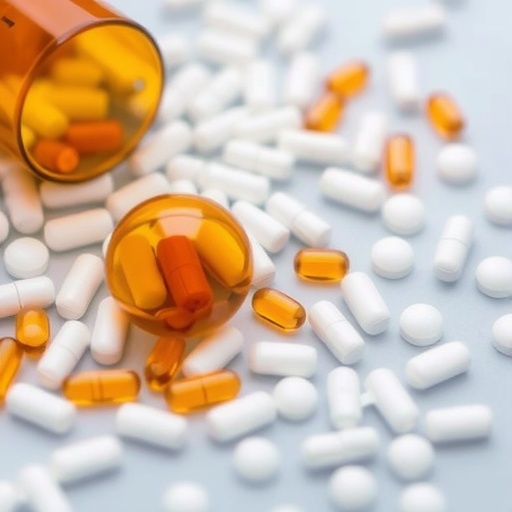
Image Credits: freestocks, Unsplash, CC0
Keywords: pharmaceutical pollution, wastewater treatment, fluoxetine, carbamazepine, diclofenac, aquatic toxicity, environmental risk, conventional treatment, activated sludge, pharmaceutical persistence
Tags: activated sludge process limitationschemical resilience of pharmaceuticalsecological effects of wastewater contaminantsenvironmental impact of pharmaceuticalsfreshwater ecosystem contaminationineffective wastewater treatment methodsmunicipal wastewater treatment failurespersistence of antidepressants in waterpharmaceutical pollution in wastewaterpharmaceutical residues in rivers and lakesPLOS One environmental researchurban sewage management challenges