• HOME
  • NEWS
  • EXPLORE
    • CAREER
      • Companies
      • Jobs
    • EVENTS
    • iGEM
      • News
      • Team
    • PHOTOS
    • VIDEO
    • WIKI
  • BLOG
  • COMMUNITY
    • FACEBOOK
    • INSTAGRAM
    • TWITTER
Tuesday, July 14, 2026
BIOENGINEER.ORG
No Result
View All Result
  • Login
  • HOME
  • NEWS
  • EXPLORE
    • CAREER
      • Companies
      • Jobs
        • Lecturer
        • PhD Studentship
        • Postdoc
        • Research Assistant
    • EVENTS
    • iGEM
      • News
      • Team
    • PHOTOS
    • VIDEO
    • WIKI
  • BLOG
  • COMMUNITY
    • FACEBOOK
    • INSTAGRAM
    • TWITTER
  • HOME
  • NEWS
  • EXPLORE
    • CAREER
      • Companies
      • Jobs
        • Lecturer
        • PhD Studentship
        • Postdoc
        • Research Assistant
    • EVENTS
    • iGEM
      • News
      • Team
    • PHOTOS
    • VIDEO
    • WIKI
  • BLOG
  • COMMUNITY
    • FACEBOOK
    • INSTAGRAM
    • TWITTER
No Result
View All Result
Bioengineer.org
No Result
View All Result
Home NEWS Science News Chemistry

PFAS, PFAS everywhere: how pristine are laboratory materials?

Bioengineer by Bioengineer
June 13, 2023
in Chemistry
Reading Time: 3 mins read
0
Model Organism: Fathead Minnows
Share on FacebookShare on TwitterShare on LinkedinShare on RedditShare on Telegram

How do you study the effects of exposure to per- and polyfluoroalkyl substances (PFAS), when it is in everything?! To study the effect of a chemical, toxicologists typically expose animals to various doses of the chemical over a period of time so that they could then study the dose versus effect relationship. Such toxicology studies often employee several types of “blanks” for quality control. Blanks are experiments where the test animals are not given any dose of the chemical being studied (sort of like a placebo in human drug testing). Also, researchers often examine the amount of the substance under study in the blanks to also include it in the evaluation of the dose versus effect relationship. For example, if the study is in water, they may get water from a pristine site to use in the test and not add any chemical dose to it, but they would still analyze the water in order to detect any trace amounts of the study substance. Researchers would also analyze feed for the same reason.
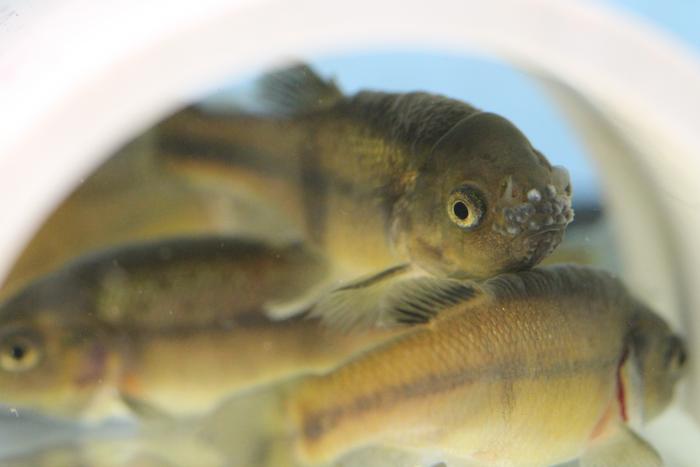
Model Organism: Fathead Minnows

Credit: Matt Simick

How do you study the effects of exposure to per- and polyfluoroalkyl substances (PFAS), when it is in everything?! To study the effect of a chemical, toxicologists typically expose animals to various doses of the chemical over a period of time so that they could then study the dose versus effect relationship. Such toxicology studies often employee several types of “blanks” for quality control. Blanks are experiments where the test animals are not given any dose of the chemical being studied (sort of like a placebo in human drug testing). Also, researchers often examine the amount of the substance under study in the blanks to also include it in the evaluation of the dose versus effect relationship. For example, if the study is in water, they may get water from a pristine site to use in the test and not add any chemical dose to it, but they would still analyze the water in order to detect any trace amounts of the study substance. Researchers would also analyze feed for the same reason.

One research group sought to examine how the presence of PFAS in test animal feed, test materials, and the animal subjects themselves may thwart the toxicology studies of the effect of PFAS and could lead to inaccurate results.

Matt Simick and co-authors sampled minnows raised in aquaculture facilities (used for toxicity testing), as well as different types of fish food: flakes, freeze-dried brine shrimp, freeze-dried blood worms and frozen brine shrimp, for PFAS. Both fish and fish feed were found to be contain PFAS at varying levels. The study documents the differences between food type, brand, and aquaculture practices, but ultimately recommends that any all feed and organisms should be tested for PFAS contamination prior to conducting basic or translational experiments.


Journal

Environmental Toxicology and Chemistry

DOI

10.1992/etc.5624

Method of Research

Experimental study

Subject of Research

Animals

Article Title

Occurrence of Per- and Pollyfluoroalkyl Substance Contamination of Food Sources and Aquaculture Organisms Used in Aquatic Laboratory Experiments

Article Publication Date

13-Jun-2023

COI Statement

The authors had no conflict to declare.

Share12Tweet8Share2ShareShareShare2

Related Posts

3D-Printed Contact Lenses Made in Just 20 Minutes

3D-Printed Contact Lenses Made in Just 20 Minutes

July 14, 2026
Acidic Cross-Linking Boosts One-Bath Dyeing of Polyester-Cotton Blends

Acidic Cross-Linking Boosts One-Bath Dyeing of Polyester-Cotton Blends

July 14, 2026

New Catalytic Method Converts Polystyrene Waste into Pure Toluene

July 14, 2026

New Catalytic Method Converts Polystyrene Waste into Pure Toluene Efficiently

July 14, 2026

POPULAR NEWS

  • New Drug Candidate Developed at McMaster Shows Potential for Treating Brain Cancer

    58 shares
    Share 23 Tweet 15
  • Detection of EDCs in Breast Milk and Infant Urine Up to Six Months Highlights Early Exposure Risks

    77 shares
    Share 31 Tweet 19
  • Experimental Therapy Simultaneously Destroys Prostate Tumor Cells and Reactivates Antitumor Immunity

    46 shares
    Share 18 Tweet 12
  • 高齢者の骨粗鬆症治療の持続性比較

    51 shares
    Share 20 Tweet 13

About

We bring you the latest biotechnology news from best research centers and universities around the world. Check our website.

Follow us

Recent News

New Catalysts Boost Sustainable Aviation Fuel Production from Butyl Butyrate

Tri-layer substrates enable stress-free fabrication of stretchable integrated systems

Plant-Based Dressing Prevents Wound Infections Effectively

Subscribe to Blog via Email

Enter your email address to subscribe to this blog and receive notifications of new posts by email.

Join 85 other subscribers
  • Contact Us

Bioengineer.org © Copyright 2023 All Rights Reserved.

Welcome Back!

Login to your account below

Forgotten Password?

Retrieve your password

Please enter your username or email address to reset your password.

Log In
No Result
View All Result
  • Homepages
    • Home Page 1
    • Home Page 2
  • News
  • National
  • Business
  • Health
  • Lifestyle
  • Science

Bioengineer.org © Copyright 2023 All Rights Reserved.