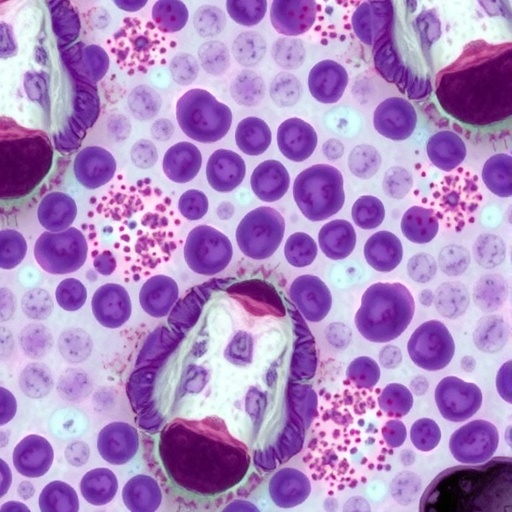
Peyer’s patches, the immune outposts embedded in the lining of the small intestine, may be more than passive sentinels waiting for microbial intruders. A study published in Nature Immunology describes how specialized epithelial cells known as microfold cells, or M cells, organize a local niche that supports group 3 innate lymphoid cells and the immune-signaling molecule interleukin-22. The work places these two cell types in the same biological story: M cells, best known for sampling material from the intestinal surface, appear to help structure an epithelial environment in which ILC3s can persist and maintain IL-22 production. That connection offers a new way to think about how the gut coordinates surveillance, barrier maintenance and communication with the microbial world. Rather than treating the intestinal epithelium as a simple wall, the findings depict it as an actively organized immune habitat, assembled in part by cells specialized for transporting information from the gut lumen into underlying lymphoid tissue.
M cells are unusual epithelial cells found primarily over organized lymphoid structures such as Peyer’s patches. Their defining function is transcytosis: they capture particles, proteins and microorganisms at the intestinal surface and ferry them across the epithelial layer to immune cells below. This process gives the immune system access to samples of the gut environment without requiring widespread disruption of the barrier. M cells have a distinctive architecture that helps them perform this task. Compared with neighboring absorptive epithelial cells, they possess a thinner apical surface and a pocket-like basolateral compartment where immune cells can gather. These features make them gateways between the intestinal lumen and the immune tissue beneath it. The study by Cao, You, Wang and colleagues focuses attention on an additional possibility—that M cells are not merely delivery points. By organizing an epithelial niche, they may also influence which immune cells are maintained nearby and which molecular signals those cells produce.
Group 3 innate lymphoid cells, or ILC3s, are strategically suited to life at mucosal surfaces. They do not use antigen-specific receptors in the same way as T cells, but they can respond rapidly to cytokines and environmental cues. A major product of ILC3 activity is IL-22, a cytokine that acts primarily on epithelial and stromal cells rather than directly on most immune cells. When IL-22 binds to its receptor on epithelial cells, it can activate intracellular signaling pathways that alter barrier-associated gene expression, stimulate production of antimicrobial proteins and promote tissue repair. In the intestine, this creates a feedback system in which immune cells help epithelial cells withstand constant exposure to food molecules, resident microbes and potential pathogens. The biological importance of this circuit means that the location of ILC3s matters. Cells positioned close to the epithelium can deliver IL-22 where it is most useful, while epithelial cells can provide signals that influence ILC3 maintenance and function.
The new report is significant because it links that IL-22-producing immune compartment to the specialized epithelial landscape created by M cells. The title of the study identifies the central relationship: Peyer’s patch M cells “organize an epithelial niche” that sustains ILC3s and IL-22. In biological terms, a niche is not simply a physical location. It is a combination of neighboring cells, signaling molecules, extracellular structures and local nutrients that allows a cell population to survive, renew itself or retain a particular functional state. By describing an M-cell-organized niche, the researchers frame the intestinal epithelium as an active participant in immune organization. The implication is that M cells may help define the conditions under which ILC3s remain present and continue producing IL-22, thereby connecting luminal sampling with the epithelial defenses that protect the intestinal surface.
This concept could help resolve a longstanding problem in mucosal immunology: how the gut maintains a barrier that is both protective and permeable enough to support essential interactions with microbes. The intestine must exclude invasive organisms while tolerating an enormous community of beneficial bacteria and processing nutrients from the outside world. Peyer’s patches are central to this balancing act because they bring environmental sampling into close contact with organized immune tissue. M cells help initiate that sampling, while ILC3s and IL-22 contribute to the epithelial response. Putting these elements into one cellular framework suggests that immune surveillance and barrier defense are not separate operations. They may be coordinated through specialized microenvironments in which epithelial cells determine the placement and behavior of nearby innate immune cells. The finding therefore has relevance beyond one cell type: it illustrates how tissue architecture can shape immunity.
The study’s focus also highlights a broader principle in modern immunology. Immune cells are often discussed as if they operate independently, releasing cytokines in response to danger signals and then disappearing when the threat is gone. In living tissues, however, immune function depends heavily on cellular neighborhoods. Epithelial cells can present ligands, release growth and survival factors, alter metabolic conditions and create physical structures that guide immune-cell behavior. ILC3s are especially dependent on such local information because their rapid responses are governed by tissue-derived signals as well as by inflammatory cytokines. If M cells help establish the niche that sustains them, then changes in M-cell abundance, maturation or activity could potentially affect the local supply of IL-22. The supplied study identifies this relationship, but its broader importance lies in directing attention toward the tissue-level mechanisms that maintain mucosal immunity rather than focusing only on isolated molecular pathways.
The findings may eventually inform research into disorders in which epithelial defense and immune regulation become uncoupled. Excessive or poorly controlled IL-22 activity has been associated broadly with inflammatory processes in mucosal tissues, while inadequate IL-22 responses can leave epithelial surfaces more vulnerable to damage and infection. Any attempt to translate the new biology into therapies would require caution, because strengthening or suppressing one part of the circuit could have opposing effects depending on the disease context. Manipulating M cells, the signals that sustain ILC3s or the epithelial response to IL-22 might alter antigen sampling as well as barrier protection. The paper does not, on the basis of the supplied information, establish a treatment or demonstrate a clinical intervention. Its immediate contribution is mechanistic: it identifies an epithelial niche organized by M cells as a relevant setting for the persistence of ILC3s and IL-22 production, creating a framework for future work on intestinal immune balance.
The discovery also gives Peyer’s patches a more dynamic role in the public imagination. These structures are often introduced as sites where immune cells encounter material transported from the gut, but the reported relationship suggests that they are also carefully engineered interfaces. M cells can be viewed as sensors and couriers, moving material across the epithelium; ILC3s act as rapid-response regulators; and IL-22 functions as a molecular message that instructs epithelial cells to reinforce their defenses. The power of the system comes from proximity. Signals can be delivered rapidly because the relevant cells occupy the same specialized environment. As scientists continue mapping the cellular neighborhoods that govern immunity, such arrangements may prove common across the body’s barrier tissues. The study by Cao and colleagues makes the intestinal epithelium a striking example of that principle, showing how a cell built to sample the outside world may also help preserve the immune machinery needed to keep that world at bay.
Cao, W. H. J., You, Y., Wang, N., et al. (2026). Peyer’s patch M cells organize an epithelial niche that sustains group 3 innate lymphoid cells and IL-22. Nature Immunology, 27, 1829–1841. https://doi.org/10.1038/s41590-026-02606-3
Subject of Research: Peyer’s patch M cells, group 3 innate lymphoid cells, epithelial niches, and IL-22 in intestinal immunity
Subject of Research: Biology
Article Title: Peyer’s patch M cells organize an epithelial niche that sustains group 3 innate lymphoid cells and IL-22
Article References: Cao, W. H. J., You, Y., Wang, N., Chaudhry, M. Z., Yu, H., Bell, P. T., Noye, E. C., Denman, R., Lee, B., Waddington, A., Ye, J., Schreuder, J., Huang, Q., Tellier, J., Curio, S., Santiago, J., Amann-Zalcenstein, D., Jacquelot, N., Hickey, P., … Belz, G. T. (2026). Peyer’s patch M cells organize an epithelial niche that sustains group 3 innate lymphoid cells and IL-22. Nature Immunology, 27(9), 1829-1841. https://doi.org/10.1038/s41590-026-02606-3
Image Credits: AI Generated
DOI: 10.1038/s41590-026-02606-3
Keywords: Peyer’s patches, M cells, group 3 innate lymphoid cells, IL-22, intestinal epithelium, mucosal immunity, epithelial niche, gut immune surveillance
Cite Scienmag News
APA MLA Chicago
Cedric L. (August 28, 2026). Peyer’s patch M cells sustain epithelial group 3 innate lymphoid cells, IL-22. Scienmag. https://scienmag.com/peyers-patch-m-cells-sustain-epithelial-group-3-innate-lymphoid-cells-il-22/
Cedric L. “Peyer’s patch M cells sustain epithelial group 3 innate lymphoid cells, IL-22.” Scienmag, 28 August 2026, https://scienmag.com/peyers-patch-m-cells-sustain-epithelial-group-3-innate-lymphoid-cells-il-22/. Accessed 28 August 2026.
Cedric L. “Peyer’s patch M cells sustain epithelial group 3 innate lymphoid cells, IL-22.” Scienmag. August 28, 2026. https://scienmag.com/peyers-patch-m-cells-sustain-epithelial-group-3-innate-lymphoid-cells-il-22/
Copy citation Download RIS
Tags: epithelial cell organization in intestineepithelial immune nicheepithelial-immune cell interactions in gutgroup 3 innate lymphoid cells IL-22gut immune surveillancegut microbial communication and immune regulationgut mucosal immune surveillancegut-microbe communicationIL-22 productionimmune cell organization in gutimmune microenvironment in Peyer’s patchesinnate lymphoid cellsintestinal barrier maintenancelymphoid tissue in small intestinelymphoid tissue organization in small intestineM cellsM cells in gut immunityPeyer’s patchesPeyer’s patches immune functionrole of microfold cells in immune regulationrole of microfold cells in immune responsetranscytosis in intestinal epithelium