
• HOME
  • NEWS
  • EXPLORE
    • CAREER
      • Companies
      • Jobs
    • EVENTS
    • iGEM
      • News
      • Team
    • PHOTOS
    • VIDEO
    • WIKI
  • BLOG
  • COMMUNITY
    • FACEBOOK
    • INSTAGRAM
    • TWITTER
Tuesday, November 17, 2026
BIOENGINEER.ORG
No Result
View All Result
  • Login
  • HOME
  • NEWS
  • EXPLORE
    • CAREER
      • Companies
      • Jobs
        • Lecturer
        • PhD Studentship
        • Postdoc
        • Research Assistant
    • EVENTS
    • iGEM
      • News
      • Team
    • PHOTOS
    • VIDEO
    • WIKI
  • BLOG
  • COMMUNITY
    • FACEBOOK
    • INSTAGRAM
    • TWITTER
No Result
View All Result
Bioengineer.org
No Result
View All Result
Home NEWS Science News Health

Perspective Proposes Cannabis Modulates Lived Time and Disrupts Temporal Self-Experience

by
November 13, 2026
in Health
Reading Time: 2 mins read
0
Perspective Proposes Cannabis Modulates Lived Time and Disrupts Temporal Self-Experience

Perspective Proposes Cannabis Modulates Lived Time and Disrupts Temporal Self-Experience

Share on FacebookShare on TwitterShare on LinkedinShare on RedditShare on Telegram

In a perspective article published in Frontiers in Psychiatry, researchers propose that cannabis operates as a temporal modulator whose disruptive action impacts ipseity, or the minimal self, which is itself temporally constituted. Authors Valerio Ricci, Domenico De Berardis, Giuseppe Maina, and Giovanni Martinotti argue that the relationship between cannabis use and psychopathology cannot be fully understood without attending directly to the phenomenology of this temporal disturbance.

To build their conceptual framework, the authors draw on the phenomenological tradition, empirical literature addressing cannabis and time perception, and clinical studies of self-disorder evaluated through the Examination of Anomalous Self-Experience, known as EASE. Situated within the journal’s psychopathology section, the paper integrates these clinical and theoretical traditions to evaluate how disruptions in temporal continuity influence self-experience.

The authors explicitly characterize their synthesis of a phenomenological vocabulary with empirical dose-response literature as a deliberate and contestable interpretive choice. Rather than assuming the validity of bridging these frameworks, the authors state this conceptual integration openly as an explicit premise of their analysis.

The perspective contextualizes this model within documented acute effects of cannabis, identifying it as the most widely used psychoactive substance subject to legal restriction worldwide. The authors note that cannabis users reliably report distortions in their lived sense of time, observing that time slows, fragments, or loses ordinary continuity, an effect documented since early controlled studies of marijuana intoxication and confirmed across subsequent decades of empirical research.

Because cannabis is consumed across the lifespan, its subjective effects depend substantially on dose, frequency, user expectation, and context. Rather than treating individual variability in temporal experience as an incidental detail, the authors frame this variation as a necessary constraint on their model, identifying adolescence and the clinical high-risk state as developmentally significant contexts for temporal self-disturbance.

Reframing cannabis-related psychopathology as an alteration of lived temporality yields concrete, low-cost clinical applications according to the authors. These proposed measures include brief clinical inquiry into a patient’s experience of time and ownership of thought, EASE-informed assessments, and serial monitoring of self-disturbance over time.

Subject of Research: Cannabis effects on temporal perception and minimal self-experience

Article Title: Cannabis, lived time, and the disruption of temporal self-experience

Article References: Ricci, V., De Berardis, D., Maina, G., & Martinotti, G. (2026). Cannabis, lived time, and the disruption of temporal self-experience. Frontiers in Psychiatry, 17, Article 1921211. https://doi.org/10.3389/fpsyt.2026.1921211

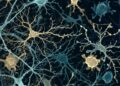
Image Credits: AI Generated

DOI: 10.3389/fpsyt.2026.1921211

Keywords: cannabis, lived time, time perception, ipseity, phenomenology, self-disorder, temporality, psychopathology, lived, time, disruption, temporal

News Source: Glenn Wilkins. (November 13, 2026). Perspective Proposes Cannabis Modulates Lived Time and Disrupts Temporal Self-Experience. Scienmag.

Tags: cannabisdisruptionipseitylivedlived timephenomenologyPsychopathologyself-disorderTemporaltemporalitytimeTime Perception
Share12Tweet7Share2ShareShareShare1

Related Posts

Fusobacterium nucleatum Extracellular Vesicles Trigger Neuroinflammation and Anxiety-Like Behaviors via IL-1β

Fusobacterium nucleatum Extracellular Vesicles Trigger Neuroinflammation and Anxiety-Like Behaviors via IL-1β

November 17, 2026
Immune Cell Exhaustion May Drive Neurodegeneration in Alzheimer's and Parkinson's

Immune Cell Exhaustion May Drive Neurodegeneration in Alzheimer’s and Parkinson’s

November 17, 2026

Posterior Cruciate Ligament Continuously Lengthens Across Knee Flexion in Healthy Adults

November 17, 2026

3D-Printed Guide Template Associated With Improved Spinal Deformity Correction in Cohort

November 17, 2026

POPULAR NEWS

  • Review Highlights Multi-Level Factors Influencing Clinical AI Adoption by Healthcare Providers

    Review Highlights Multi-Level Factors Influencing Clinical AI Adoption by Healthcare Providers

    29 shares
    Share 12 Tweet 7
  • Gut Microbiota and Metabolites Influence Immunotherapy Response in Liver Cancer

    29 shares
    Share 12 Tweet 7
  • Nonlinear Sex-Specific Remodeling of the TCRβ Repertoire During Adult Aging

    29 shares
    Share 12 Tweet 7
  • Capped Nanovials Enable Extended Cell Growth and Screening in UCLA Study

    29 shares
    Share 12 Tweet 7

About

We bring you the latest biotechnology news from best research centers and universities around the world. Check our website.

Follow us

Recent News

Fusobacterium nucleatum Extracellular Vesicles Trigger Neuroinflammation and Anxiety-Like Behaviors via IL-1β

Experiential Workshop Expands Mexican Students’ Understanding of Bat Diets and Ecological Roles

Immune Cell Exhaustion May Drive Neurodegeneration in Alzheimer’s and Parkinson’s

Subscribe to Blog via Email

Enter your email address to subscribe to this blog and receive notifications of new posts by email.

Join 88 other subscribers
  • Contact Us

Bioengineer.org © Copyright 2023 All Rights Reserved.

Welcome Back!

Login to your account below

Forgotten Password?

Retrieve your password

Please enter your username or email address to reset your password.

Log In
No Result
View All Result
  • Homepages
    • Home Page 1
    • Home Page 2
  • News
  • National
  • Business
  • Health
  • Lifestyle
  • Science

Bioengineer.org © Copyright 2023 All Rights Reserved.