

• HOME
  • NEWS
  • EXPLORE
    • CAREER
      • Companies
      • Jobs
    • EVENTS
    • iGEM
      • News
      • Team
    • PHOTOS
    • VIDEO
    • WIKI
  • BLOG
  • COMMUNITY
    • FACEBOOK
    • INSTAGRAM
    • TWITTER
Tuesday, May 12, 2026
BIOENGINEER.ORG
No Result
View All Result
  • Login
  • HOME
  • NEWS
  • EXPLORE
    • CAREER
      • Companies
      • Jobs
        • Lecturer
        • PhD Studentship
        • Postdoc
        • Research Assistant
    • EVENTS
    • iGEM
      • News
      • Team
    • PHOTOS
    • VIDEO
    • WIKI
  • BLOG
  • COMMUNITY
    • FACEBOOK
    • INSTAGRAM
    • TWITTER
  • HOME
  • NEWS
  • EXPLORE
    • CAREER
      • Companies
      • Jobs
        • Lecturer
        • PhD Studentship
        • Postdoc
        • Research Assistant
    • EVENTS
    • iGEM
      • News
      • Team
    • PHOTOS
    • VIDEO
    • WIKI
  • BLOG
  • COMMUNITY
    • FACEBOOK
    • INSTAGRAM
    • TWITTER
No Result
View All Result
Bioengineer.org
No Result
View All Result
Home NEWS Science News Biology

‘Persistent photoconductivity’ offers new tool for…

Bioengineer by Bioengineer
February 8, 2018
in Biology
Reading Time: 2 mins read
0
Share on FacebookShare on TwitterShare on LinkedinShare on RedditShare on Telegram
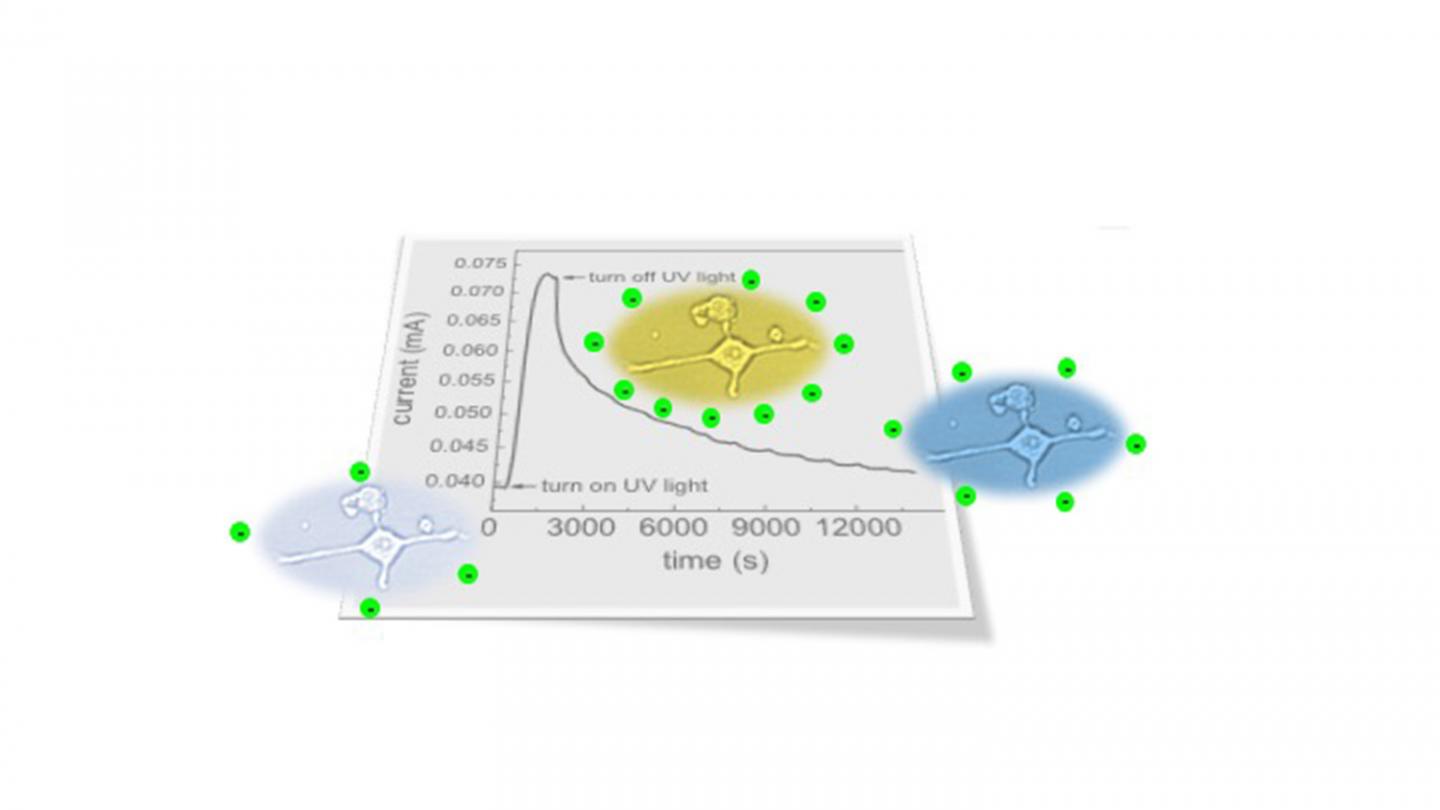
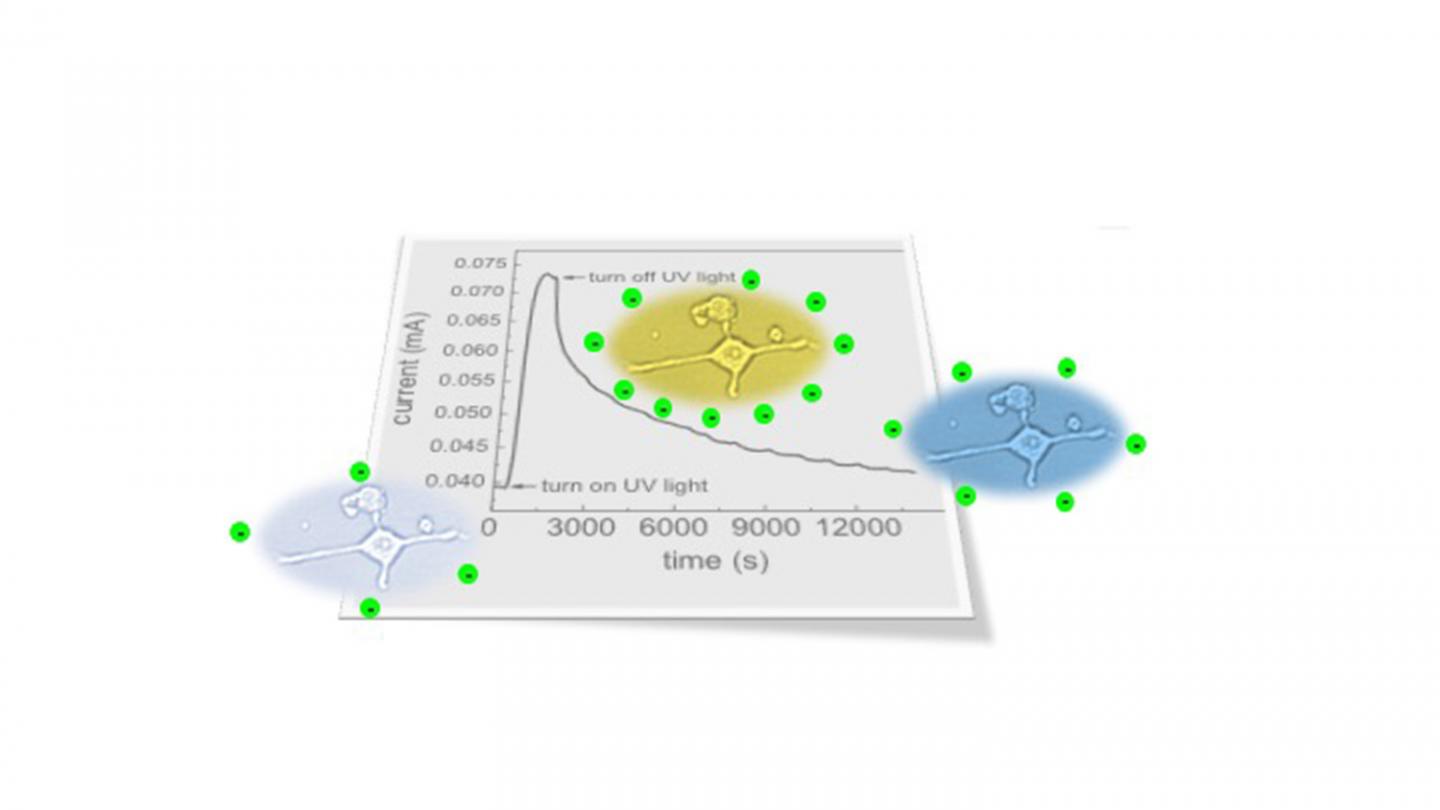
IMAGE

Credit: Albena Ivanisevic

Researchers at North Carolina State University have developed a new approach for manipulating the behavior of cells on semiconductor materials, using light to alter the conductivity of the material itself.

"There's a great deal of interest in being able to control cell behavior in relation to semiconductors – that's the underlying idea behind bioelectronics," says Albena Ivanisevic, a professor of materials science and engineering at NC State and corresponding author of a paper on the work. "Our work here effectively adds another tool to the toolbox for the development of new bioelectronic devices."

The new approach makes use of a phenomenon called persistent photoconductivity. Materials that exhibit persistent photoconductivity become much more conductive when you shine a light on them. When the light is removed, it takes the material a long time to return to its original conductivity.

When conductivity is elevated, the charge at the surface of the material increases. And that increased surface charge can be used to direct cells to adhere to the surface.

"This is only one way to control the adhesion of cells to the surface of a material," Ivanisevic says. "But it can be used in conjunction with others, such as engineering the roughness of the material's surface or chemically modifying the material."

For this study, the researchers demonstrated that all three characteristics can be used together, working with a gallium nitride substrate and PC12 cells – a line of model cells used widely in bioelectronics testing.

The researchers tested two groups of gallium nitride substrates that were identical, except that one group was exposed to UV light – triggering its persistent photoconductivity properties – while the second group was not.

"There was a clear, quantitative difference between the two groups – more cells adhered to the materials that had been exposed to light," Ivanisevic says.

"This is a proof-of-concept paper," Ivanisevic says. "We now need to explore how to engineer the topography and thickness of the semiconductor material in order to influence the persistent photoconductivity and roughness of the material. Ultimately, we want to provide better control of cell adhesion and behavior."

###

The paper, "Persistent Photoconductivity, Nanoscale Topography and Chemical Functionalization Can Collectively Influence the Behavior of PC12 Cells on Wide Band Gap Semiconductor Surfaces," is published in the journal Small. Lead author of the paper is Patrick Snyder, a Ph.D. student in Ivanisevic's lab. The paper was co-authored by Ronny Kirste of Adroit Materials, and Ramon Collazo, an assistant professor of materials science and engineering at NC State.

The work was done with support from the U.S. Army Research Office, under grant number W911NF-15-1-0375, and the National Science Foundation, under grant number DMR-1312582.

Media Contact

Matt Shipman
[email protected]
919-515-6386
@NCStateNews

Homepage

Original Source

https://news.ncsu.edu/2017/05/persistent-photoconductivity-bioelectronics-2017/ http://dx.doi.org/10.1002/smll.201700481


Share12Tweet8Share2ShareShareShare2

Related Posts

Cutting-Edge Genomic Techniques Reveal Unexpected Cellular Changes in the Aging Brain — Biology

Cutting-Edge Genomic Techniques Reveal Unexpected Cellular Changes in the Aging Brain

May 12, 2026
USC Researchers Initiate Study on the Most Advanced Lab-Grown Kidney Structures — Biology

USC Researchers Initiate Study on the Most Advanced Lab-Grown Kidney Structures

May 12, 2026

Childbirth in Humans Is Not Uniquely Challenging Among Mammals, New Research Shows

May 12, 2026

From Complexity to Clarity: Unraveling the “Topological Laws” Governing Cell Death

May 11, 2026
Please login to join discussion

POPULAR NEWS

  • Research Indicates Potential Connection Between Prenatal Medication Exposure and Elevated Autism Risk

    842 shares
    Share 337 Tweet 211
  • New Study Reveals Plants Can Detect the Sound of Rain

    728 shares
    Share 290 Tweet 182
  • Salmonella Haem Blocks Macrophages, Boosts Infection

    62 shares
    Share 25 Tweet 16
  • Breastmilk Balances E. coli and Beneficial Bacteria in Infant Gut Microbiomes

    57 shares
    Share 23 Tweet 14

About

We bring you the latest biotechnology news from best research centers and universities around the world. Check our website.

Follow us

Recent News

New Insights Reveal How Sleep Habits Could Increase Dementia Risk

Unmet Care Needs in Elderly Residential Homes Revealed

Design Improvements Encourage Responsible AI Use to Advance Environmental Protection, Study Finds

Subscribe to Blog via Email

Enter your email address to subscribe to this blog and receive notifications of new posts by email.

Join 82 other subscribers
  • Contact Us

Bioengineer.org © Copyright 2023 All Rights Reserved.

Welcome Back!

Login to your account below

Forgotten Password?

Retrieve your password

Please enter your username or email address to reset your password.

Log In
No Result
View All Result
  • Homepages
    • Home Page 1
    • Home Page 2
  • News
  • National
  • Business
  • Health
  • Lifestyle
  • Science

Bioengineer.org © Copyright 2023 All Rights Reserved.
