Plant molecular biologists investigating pepper genetics have characterized twenty-one cation and proton exchanger genes across the Capsicum annuum genome, demonstrating that three specific members—designated CaCHX9, CaCHX20, and CaCHX21—coordinate plant responses across contrasting environmental pressures. Through systematic profiling and heterologous expression assays in Nicotiana benthamiana, the research team discovered that these plasma membrane transporters execute dual biological functions. Overexpression of the three genes significantly bolstered plant resilience against severe drought and salinity stresses by curtailing leaf water loss, moderating stomatal apertures, and curbing reactive oxygen species accumulation. However, this physiological adaptation incurred a pronounced trade-off during biotic challenge, as identical overexpression constructs compromised host resistance to the oomycete pathogen Phytophthora capsici. Leaves expressing these transporters developed substantially larger necrotic lesions, triggered heightened accumulation of hydrogen peroxide and superoxide radicals, and selectively accelerated effector-induced cell death pathways, establishing an intricate molecular junction between abiotic adaptation and disease susceptibility.
Cultivated pepper represents one of the most economically and nutritionally vital solanaceous vegetables worldwide, supplying dietary capsaicinoids and essential micronutrients, yet commercial production faces compounding threats from soil degradation and pathogenic outbreaks. To endure fluctuating environments, plants rely heavily on membrane transport systems to maintain cellular homeostasis, osmotic equilibrium, and intracellular pH. Cation and proton antiporters belonging to the CPA superfamily regulate fundamental physiological processes by modulating cytoplasmic ion concentrations. The CPA superfamily bifurcates into the CPA1 group, which encompasses sodium-proton exchangers of the NHX family, and the CPA2 group, which comprises potassium efflux antiporters alongside cation-proton exchangers known as the CHX family. While previous investigations documented extensive CHX gene families in Arabidopsis thaliana, rice, and soybean, the specific genomic architecture and physiological functions of CHX transporters in pepper remained predominantly uncharacterized.
To establish a comprehensive catalog of CHX genes within pepper, the investigators interrogated the Capsicum annuum cultivar Zhangshugang reference database using profile hidden Markov models corresponding to the conserved cation and proton exchanger domain PF00999. By deploying twenty-eight Arabidopsis AtCHX and seventeen rice OsCHX protein sequences as queries in systematic BLASTp screening, the initial search retrieved forty-eight potential candidate sequences. Subsequent domain confirmation against the Pfam database filtered out incomplete sequences, leaving twenty-one high-confidence pepper CHX genes designated CaCHX1 through CaCHX21 in numerical order across the chromosomes. Physical mapping established that these twenty-one genes are distributed unevenly across nine distinct chromosomes. Chromosome 01 harbored the highest density with six family members, followed by chromosome 06 with four members and chromosome 05 with three members. Chromosomes 02 and 09 each contained two genes, while chromosomes 03, 04, 08, and 12 each accommodated a solitary CaCHX locus.
Computational analysis revealed substantial diversity among the physicochemical properties of the identified pepper transporters. Polypeptide lengths ranged from 465 amino acids in CaCHX4 to 1005 residues in CaCHX6, corresponding to deduced molecular weights spanning 51.06 to 111.06 kilodaltons. Theoretical isoelectric points exhibited considerable divergence, extending from 5.35 in CaCHX18 to 9.25 in CaCHX17. All twenty-one proteins demonstrated positive aliphatic index values ranging between 105.11 and 119.94 alongside positive grand average of hydropathicity scores from 0.082 to 0.442, confirming their intrinsic hydrophobic nature as membrane proteins. DeepLoc computational algorithms predicted that every CaCHX family member targets the cell surface, a distribution pattern consistent with essential functions in translocating cations across the plasma membrane boundary.
Phylogenetic reconstruction comparing pepper, rice, and Arabidopsis sequences grouped the proteins into three evolutionarily conserved subfamilies: C1, C2, and C3. Subfamily C1 contains two pepper members, C2 encompasses seven members, and C3 incorporates twelve members. Synteny and evolutionary selection analyses across six related Solanaceae genomes identified numerous homologous pairs, including twenty homologs in Zunla-1, eighteen in CM334, fifteen in wild pepper, fifteen in potato, and thirteen in cultivated tomato relatives. All fifty-one homologous gene pairs exhibited non-synonymous to synonymous substitution ratios substantially below one, demonstrating that purifying selection has persistently governed CHX sequence evolution across nightshade lineages. Intra-genomic paralog comparisons in the Zhangshugang genome revealed exceptionally low synonymous substitution rates among duplicated pairs, indicating that recent segmental and tandem duplication events drove the functional expansion of the pepper CHX family.
Structural characterization demonstrated that gene architecture closely aligned with the phylogenetic subfamilies. Most CaCHX loci contained defined untranslated regions, except for CaCHX4, CaCHX5, CaCHX6, CaCHX7, CaCHX13, and CaCHX15. Intron-exon organization varied from two to four exons in subfamilies C1 and C2, whereas C3 family members displayed complex configurations ranging from three to eleven exons. Conserved motif searching identified ten discrete protein motifs, with motif 1 and motif 7 ubiquitously preserved across all twenty-one members. Three-dimensional homology modeling corroborated high structural concordance across the family, dominated by alpha-helices comprising roughly 36 to 47 percent of secondary structures. Promoter inspections across the 1.5-kilobase upstream regulatory regions uncovered fifty-two varieties of cis-acting elements. Light-responsive motifs were the most abundant class, followed by sixteen hormone-responsive elements, including abundant abscisic acid response elements and salicylic acid motifs. Furthermore, numerous stress-associated elements emerged, including low-temperature elements, drought-inducible MYB binding sites, and abundant antioxidant response elements.
Transcriptomic profiling across varied tissues revealed pronounced developmental and spatial regulation of pepper CHX transcripts. In healthy plants, vegetative leaf and fruit tissues exhibited negligible baseline expression, whereas multiple family members displayed substantial transcriptional activation during late stages of floral development and flower bud maturation, pointing toward specialized roles in reproductive biology. Under hormonal stimulation, salicylic acid treatment distinctly elevated CaCHX1 expression in leaves and roots while repressing root CaCHX6 levels. Exploration of post-transcriptional regulatory networks revealed that eight pepper microRNAs target seven CaCHX transcripts through mRNA cleavage. For instance, can-miR172e targets both CaCHX12 and CaCHX14, while can-miR-n028 cleaves CaCHX20. Additionally, two distinct microRNAs, can-miR171f-g and can-miR013, operate through translational inhibition to regulate CaCHX2 and CaCHX6, illustrating that multi-tiered transcriptional and post-transcriptional controls govern CaCHX expression under shifting environmental conditions.
Quantitative reverse transcription PCR confirmed dynamic expression shifts when four-week-old Zhangshugang pepper seedlings encountered physiological stress. Inoculation with fungal pathogen Colletotrichum truncatum triggered immediate transcriptional downregulation across CaCHX6, CaCHX7, CaCHX9, CaCHX10, and CaCHX14, whereas CaCHX15, CaCHX20, and CaCHX21 transcript levels declined sharply at three hours before rebounding steadily. Inoculation with the oomycete Phytophthora capsici stimulated progressive transcript accumulation for CaCHX6, CaCHX9, CaCHX20, and CaCHX21, each reaching peak expression at forty-eight hours post-inoculation. Under twenty-percent polyethylene glycol drought conditions, CaCHX6, CaCHX9, CaCHX15, CaCHX20, and CaCHX21 were markedly upregulated, whereas four-hundred millimolar sodium chloride exposure provoked transient repression of CaCHX6 and CaCHX15 on day one. To confirm intracellular locations, the researchers expressed green fluorescent protein fusions of CaCHX9, CaCHX20, and CaCHX21 in both Nicotiana benthamiana and pepper leaves, verifying via confocal microscopy and membrane marker co-localization that all three transporters reside strictly within the plasma membrane.
Functional evaluation under abiotic constraints illustrated the positive contribution of these plasma membrane transporters toward osmotic adaptation. Tobacco leaves transiently expressing CaCHX9, CaCHX20, or CaCHX21 exhibited noticeable wilting within six hours of exposure to drought and salt treatments compared to green fluorescent protein controls. Subsequent physiological quantification established that these transformed leaves experienced significantly lower water-loss rates over a six-hour period than control tissues. Microscopic evaluations of the abaxial leaf epidermis revealed that while baseline stomatal density and aperture under unstressed conditions matched the control, exposure to sodium chloride and polyethylene glycol induced markedly accelerated stomatal closure in leaves overexpressing the three transporters. Histochemical quantification with nitroblue tetrazolium staining showed that leaves overexpressing CaCHX9, CaCHX20, or CaCHX21 accumulated substantially lower quantities of superoxide anions under saline and drought stresses, indicating that these transporters mitigate oxidative damage by maintaining physiological water balance and preventing excessive oxidative stress during environmental dehydration.
Conversely, functional disease assays revealed that these identical transporters exacerbate susceptibility when plants encounter invasive oomycete pathogens. Following inoculation of transformed tobacco leaves with Phytophthora capsici zoospore suspensions, tissues overexpressing CaCHX9, CaCHX20, or CaCHX21 displayed pronounced expansion of necrotic lesions after five days, enlarging by 23.2 percent, 21.6 percent, and 16.9 percent, respectively, relative to control leaves. Histochemical staining revealed that pathogen-induced accumulation of hydrogen peroxide rose by 16.0 percent in CaCHX9, 9.2 percent in CaCHX20, and 15.5 percent in CaCHX21 overexpressing tissues, while superoxide anion content increased by 18.0 percent, 12.3 percent, and 17.3 percent. Programmed cell death assays demonstrated that while none of the transporters altered BAX-induced cell death, CaCHX9 selectively promoted INF1-mediated necrosis associated with pathogen-associated molecular pattern defenses. Concurrently, CaCHX20 and CaCHX21 accelerated necrosis triggered by the late necrotrophic effector NIP at ninety-six hours, indicating that these transporters promote Phytophthora colonization by heightening oxidative surges and amplifying distinct cell-death signaling pathways.
The study authors emphasized several analytical boundaries and outlined future research trajectories essential to translating these findings into crop improvements. Although transient assays in Nicotiana benthamiana provide a rapid and widely adopted heterologous platform for solanaceous functional genomics, stable transgenic pepper lines will be necessary to corroborate these stress phenotypes in native agricultural contexts. Furthermore, while the current genetic assays establish clear links between CaCHX function, water conservation, and pathogen susceptibility, the fundamental biochemical properties of the transporters—including precise ion transport selectivity, cation exchange stoichiometry, and pH-dependent regulatory kinetics—remain uncharacterized. Detailed ion flux electrophysiology and structural analyses will be required to decipher how these antiporters coordinate cytoplasmic proton coupled fluxes. Ultimately, uncoupling the mechanisms that confer beneficial abiotic stress resilience from those that aggravate necrotrophic disease vulnerability provides valuable molecular targets for marker-assisted breeding and precision gene editing aimed at cultivating resilient pepper varieties.
Subject of Research: Functional characterization of Capsicum annuum cation/proton antiporter CHX genes under abiotic and biotic stresses
Article Title: Comprehensive analysis of Capsicum annuum CHX genes reveals the roles of CaCHX9, CaCHX20, CaCHX21 in stress tolerance and disease resistance
Article References: Rongsheng, W., Ying, Y., Shi, C., Hongguang, Z., Yi, Y., Shuang, W., Ling, Z., Yunmi, L., Lei, C., Zhihong, Z., & Junliang, Y. (2026). Comprehensive analysis of Capsicum annuum CHX genes reveals the roles of CaCHX9, CaCHX20, CaCHX21 in stress tolerance and disease resistance. Plant Stress, Article 101635. https://doi.org/10.1016/j.stress.2026.101635
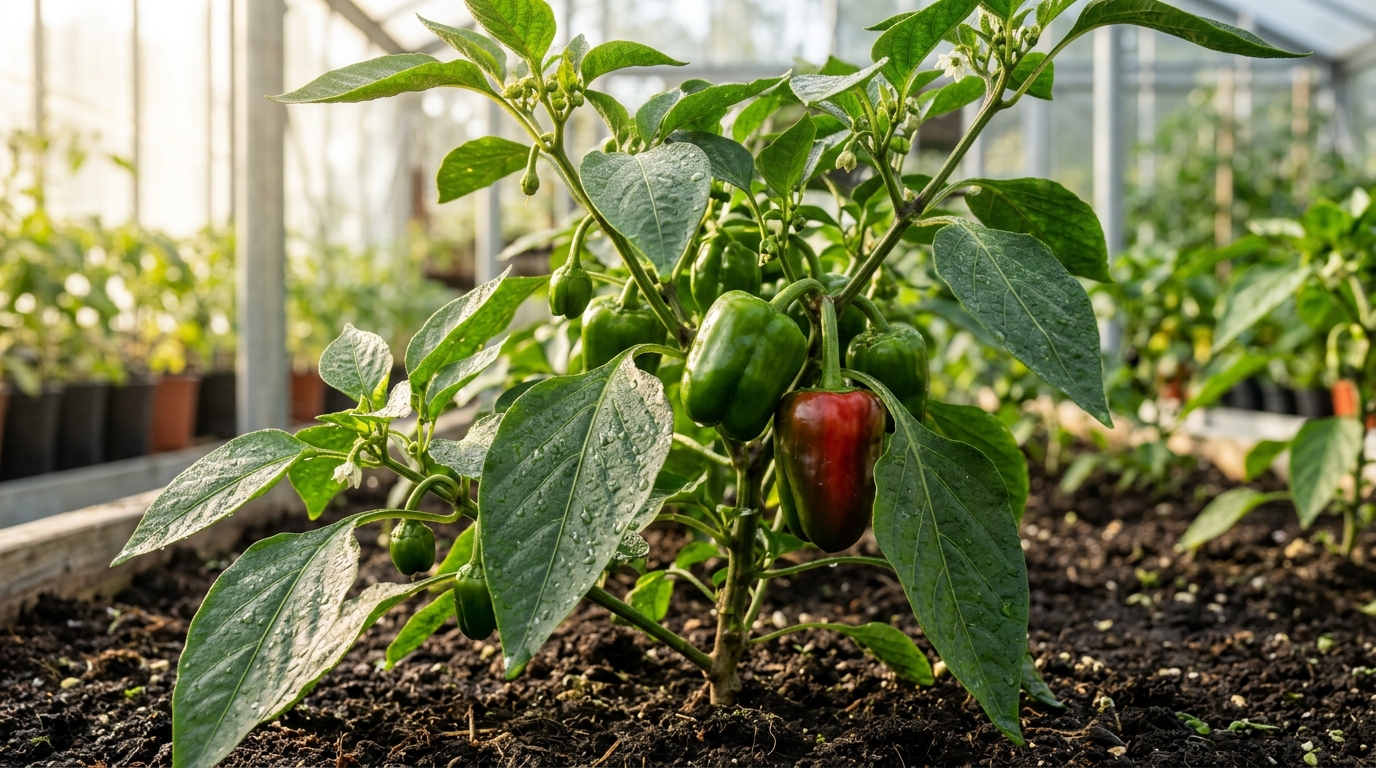
Image Credits: AI Generated
DOI: 10.1016/j.stress.2026.101635
Keywords: Capsicum annuum, CaCHX genes, cation proton antiporter, drought tolerance, salt stress, Phytophthora capsici, reactive oxygen species, stomatal regulation, subcellular localization, plasma membrane, cell death assay, plant immunity, transcriptome profiling, cis regulatory elements, microRNA regulation, Nicotiana benthamiana
News Source: Juliet Wilcox. (November 28, 2026). Pepper Cation Exchanger Genes Boost Stress Tolerance but Increase Pathogen Susceptibility. Scienmag.