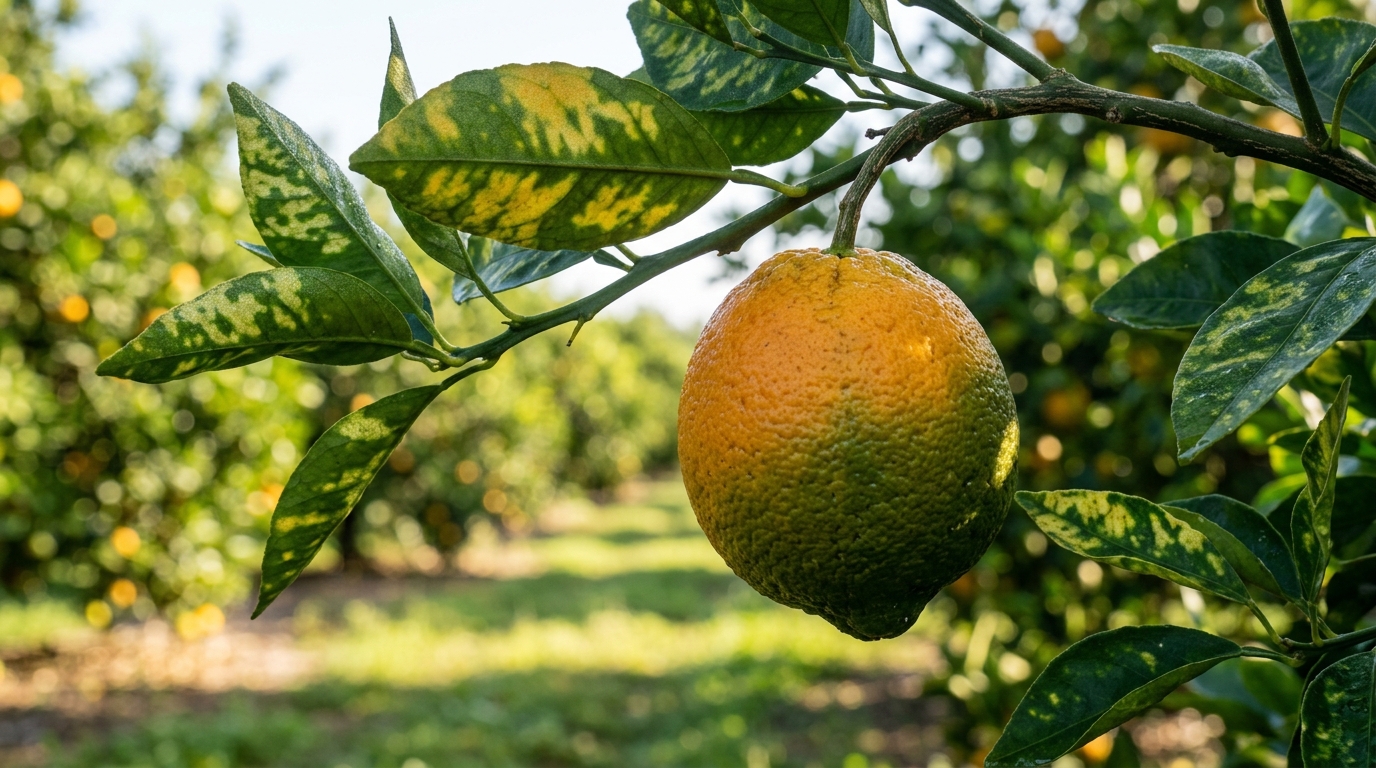
Citrus greening, formally known as Huanglongbing or HLB, is considered one of the most devastating bacterial diseases affecting commercial citrus production worldwide, severely compromising fruit quality, tree longevity, and orchard yield. The incurable condition is associated with three uncultured phloem-colonizing bacterial species belonging to the genus ‘Candidatus Liberibacter’: ‘Candidatus Liberibacter asiaticus’ (CaLas), which causes the most severe symptoms, and ‘Candidatus Liberibacter africanus’ (CaLaf) and ‘Candidatus Liberibacter americanus’ (CaLam), which cause milder disease forms. Now, an international team of plant pathologists led by Aminta Hernández-Marín, Félix Morán, Ester Marco-Noales, and collaborators has comprehensively validated two conventional polymerase chain reaction (PCR) assays targeting the protein-coding genes fusA and rpoB. Published in the Journal of Agriculture and Food Research, the investigation demonstrates that these conventional PCR assays provide accessible, reliable diagnostic alternatives for resource-limited laboratories lacking expensive real-time quantitative PCR infrastructure, while establishing standardized DNA barcoding regions and a biologically safe reference plasmid in accordance with international plant health standards.
The development of transferable diagnostic methods addresses an urgent global phytosanitary emergency driven by the rapid international spread of HLB and its insect vectors. Sweet orange (Citrus sinensis) production alone reached approximately 67.2 million tons in 2024, yet HLB has established itself in more than 60 countries across Africa, Asia, Oceania, and the Americas. In major citrus-producing nations like Brazil, India, and the United States, the disease has inflicted catastrophic economic losses, including annual damages surpassing one billion dollars in Florida alone. In several African countries, reported citrus yield reductions range between 25 percent and 100 percent. The causal Gram-negative alpha-proteobacteria colonize plant phloem and are persistently transmitted by psyllid vectors, Diaphorina citri and Trioza erytreae. While mainland Europe and Australia remain free of the pathogen, T. erytreae is established in Spain, and D. citri was recently detected in Cyprus and Greece. Because curative treatments do not exist, early detection, rapid surveillance, and phytosanitary containment represent the only effective strategies to manage disease spread.
Although real-time quantitative PCR (qPCR) serves as the international gold standard for HLB diagnosis due to its high analytical sensitivity, costly instrumentation and infrastructure demands prevent its routine implementation in many regional surveillance facilities. Conventional endpoint PCR presents a practical, cost-effective alternative that can be conducted using standard thermal cyclers and simple agarose gel electrophoresis. Furthermore, conventional PCR products can be sequenced directly to achieve unambiguous species-level identification from a single amplification workflow. The fusA assay amplifies a 201-nucleotide fragment using primers RPA-HLB-F2 and RPA-HLB-R2 at 600 nanomolar concentrations. The rpoB assay amplifies a 156-nucleotide fragment using primers CaL_rpoB-F and CaL_rpoB-R at 1000 nanomolar concentrations. Both assays utilize five microliters of template DNA in 25-microliter reactions across 40 thermal cycles.
Following validation requirements outlined in the European and Mediterranean Plant Protection Organization (EPPO) Standard PM 7/98, the research team first evaluated the analytical sensitivity of both conventional PCR assays. Using healthy citrus plant extracts spiked with synthetic double-stranded DNA gBlocks containing concatenated fusA and rpoB sequences, both assays demonstrated a limit of detection (LOD) of 13 target copies per microliter, translating to 65 copies per reaction. Agarose gel electrophoresis demonstrated that the fusA assay consistently produced visibly stronger band intensities than the rpoB assay at equivalent template concentrations. When tested on naturally infected citrus samples from Brazil, Costa Rica, Mexico, and Thailand diluted serially into healthy leaf tissues, the estimated limit of detection ranged from 3 to 37 target copies per microliter (15 to 185 total copies per reaction), depending on the specific host cultivar and baseline bacterial titer. While amplification near the detection limit showed occasional inconsistency for rpoB, the fusA assay demonstrated robust, reproducible amplification across low-titer dilutions.
The analytical specificity and selectivity of the two conventional PCR protocols were validated using an extensive panel of 130 citrus plant and insect samples collected from thirteen orchards across eight countries. The evaluated cohort encompassed eight citrus cultivars alongside the psyllid vector Diaphorina citri and the rutaceous host plant Clausena anisata. Both conventional assays achieved 100 percent inclusivity, successfully detecting 112 CaLas isolates spanning seven geographic territories, two CaLaf isolates from South Africa, and one CaLam isolate from Brazil. To verify exclusivity, the assays were challenged against eight non-target phytopathogenic bacterial strains from the genera Xanthomonas, Xylella, Spiroplasma, and Agrobacterium. Neither assay generated amplicons of the expected diagnostic size from non-target strains. Furthermore, high-throughput sequencing of healthy citrus bacteriomes from Spain confirmed that natural endophytic and epiphytic bacterial communities did not produce false-positive cross-amplification. These combined tests confirmed 100 percent exclusivity and demonstrated successful host selectivity across five verified citrus species, including Citrus aurantiifolia and Citrus sinensis.
To assess diagnostic performance under routine screening conditions, the team compared both conventional PCR assays against the validated EPPO PM 7/121(2) reference qPCR method targeting the 16S rRNA gene across 85 field samples from Mexico, the Dominican Republic, and Spain. The fusA conventional PCR achieved a diagnostic sensitivity of 80.82 percent, a diagnostic specificity of 100 percent, and an overall relative accuracy of 83.52 percent. In contrast, the rpoB assay exhibited a diagnostic sensitivity of 73.97 percent, a diagnostic specificity of 100 percent, and a relative accuracy of 77.64 percent. Statistical concordance evaluated through Cohen’s kappa coefficient revealed moderate agreement between fusA and the reference qPCR method (k = 0.44), whereas rpoB displayed fair agreement (k = 0.35). The authors explained that the lower diagnostic sensitivity of conventional PCR compared to qPCR is an expected limitation of endpoint detection, where gel-based visualization requires higher target amplicon concentrations than fluorogenic probe chemistries, making qPCR preferable for low-titer asymptomatic screening.
Assay repeatability and reproducibility were evaluated following EPPO PM 7/98 guidelines using six citrus DNA samples possessing low bacterial loads ranging from 4 to 123 bacteria per microliter. Both assays exhibited a 100 percent positivity detection level of 34.88 plus or minus 13.59 target copies per microliter. However, intra-assay repeatability, measured as accordance across technical replicates, showed that the fusA assay was substantially more consistent, yielding mean accordance values between 0.83 and 0.89 compared to 0.72 to 0.83 for rpoB across two thermocycler platforms and commercial master mixes. Due to its superior analytical sensitivity and operational stability, the fusA assay was chosen for an international Test Performance Study involving five diagnostic laboratories in Spain, South Africa, France, and Portugal. The interlaboratory comparison demonstrated remarkable reproducibility, yielding concordance scores ranging from 0.76 to 1.00 despite variations in operators, testing schedules, and thermocycler models, validating the protocol’s suitability for decentralized diagnostic networks.
In addition to endpoint detection, the researchers investigated the taxonomic utility of fusA and rpoB as candidate DNA barcodes to resolve a significant gap in international diagnostic protocols, where validated barcoding loci for HLB-associated bacteria have been absent. Comparative genomic analysis of 26 Liberibacter genomes identified 581 core gene clusters comprising 591,463 base pairs, confirming that both fusA and rpoB belong to the stable bacterial core genome. Analysis of complete coding sequences revealed that fusA and rpoB possess mean interspecies nucleotide identities of 80.8 percent and 80.9 percent, respectively, in stark contrast to the highly conserved 16S rRNA gene, which exhibited 95.8 percent sequence identity across species. Maximum likelihood phylogenetic reconstruction incorporating 665 sequences—comprising 194 newly generated sequences from diverse global citrus isolates and 471 database sequences—demonstrated that both partial gene fragments cleanly resolved species-specific clades without taxonomic overlap, clearly differentiating CaLas, CaLaf, and CaLam from related non-citrus species like Liberibacter crescens.
Multiple sequence alignments revealed that the amplified partial fragments—spanning 134 nucleotides for fusA and 156 nucleotides for rpoB—maintain high intraspecific sequence conservation alongside pronounced interspecific divergence. For the fusA amplicon, intraspecific nucleotide identities ranged from 97 to 100 percent in CaLas, and 98.5 to 100 percent in both CaLaf and CaLam. Similarly, the rpoB fragment displayed intraspecific identities of 99 to 100 percent in CaLas, 97.5 to 100 percent in CaLaf, and 98.7 to 100 percent in CaLam. This clear separation establishes a definitive barcode gap, validating an approximate 97 percent sequence identity threshold as an effective criterion for unambiguous species-level discrimination. By coupling conventional PCR amplification with routine Sanger sequencing, diagnostic laboratories can rapidly confirm the exact bacterial species responsible for an outbreak from the initial diagnostic amplicon, eliminating the risk of misidentification caused by non-specific amplification or cross-reactions previously documented with conserved ribosomal RNA markers.
A final major breakthrough presented in the study is the development of a biological reference material that resolves severe biosafety and regulatory barriers associated with handling quarantine citrus pathogens. To eliminate phytosanitary hazards of transporting infected plant tissues into disease-free regions, the researchers engineered a recombinant plasmid, pIVIA 14/26, maintained in Escherichia coli strain NZY5alpha and deposited in the Spanish Type Culture Collection under accession number CECT 31376. The synthetic construct incorporates concatenated diagnostic regions representing six established PCR and qPCR protocols, including fusA, rpoB, 16S rRNA, hyvI/hyvII, nrdB, and the rplKAJL-rpoBC operon. Crucially, each target region contains an artificial four-nucleotide spacer sequence (CACA) that allows laboratory personnel to distinguish control plasmid amplification from genuine field infections via sequencing. Fully validated according to EPPO PM 7/147 guidelines, this safe, stable, and publicly accessible positive control provides laboratories worldwide with an indispensable standard for quality assurance, assay calibration, and global diagnostic harmonization.
Subject of Research: Diagnostic validation of conventional PCR assays and DNA barcoding for citrus greening detection
Article Title: A framework for HLB detection: validation of conventional PCR for resource-limited settings, fusA and rpoB based species barcoding, and development of standardized reference materials
Article References: Hernández-Marín, A., Bester, R., Maree, H. J., Cellier, G., Costa, J., Cruz, L., Marco-Noales, E., & Morán, F. (2026). A framework for HLB detection: validation of conventional PCR for resource-limited settings, fusA and rpoB based species barcoding, and development of standardized reference materials. Journal of Agriculture and Food Research, 32, Article 103452. https://doi.org/10.1016/j.jafr.2026.103452
Image Credits: AI Generated
DOI: 10.1016/j.jafr.2026.103452
Keywords: citrus greening, Huanglongbing, Candidatus Liberibacter, fusA, rpoB, conventional PCR, DNA barcoding, EPPO PM 7/98, plant diagnostics, citrus disease, Diaphorina citri, Trioza erytreae, reference material, CECT 31376, phytosanitary surveillance, interlaboratory validation, Citrus sinensis
News Source: Alan Morgan. (November 28, 2026). Conventional PCR and DNA Barcodes Enable Accessible Citrus Greening Detection. Scienmag.