• HOME
  • NEWS
  • EXPLORE
    • CAREER
      • Companies
      • Jobs
    • EVENTS
    • iGEM
      • News
      • Team
    • PHOTOS
    • VIDEO
    • WIKI
  • BLOG
  • COMMUNITY
    • FACEBOOK
    • INSTAGRAM
    • TWITTER
Sunday, July 12, 2026
BIOENGINEER.ORG
No Result
View All Result
  • Login
  • HOME
  • NEWS
  • EXPLORE
    • CAREER
      • Companies
      • Jobs
        • Lecturer
        • PhD Studentship
        • Postdoc
        • Research Assistant
    • EVENTS
    • iGEM
      • News
      • Team
    • PHOTOS
    • VIDEO
    • WIKI
  • BLOG
  • COMMUNITY
    • FACEBOOK
    • INSTAGRAM
    • TWITTER
  • HOME
  • NEWS
  • EXPLORE
    • CAREER
      • Companies
      • Jobs
        • Lecturer
        • PhD Studentship
        • Postdoc
        • Research Assistant
    • EVENTS
    • iGEM
      • News
      • Team
    • PHOTOS
    • VIDEO
    • WIKI
  • BLOG
  • COMMUNITY
    • FACEBOOK
    • INSTAGRAM
    • TWITTER
No Result
View All Result
Bioengineer.org
No Result
View All Result
Home NEWS Science News Biology

People with autism have a more symmetrical brain

Bioengineer by Bioengineer
October 31, 2019
in Biology
Reading Time: 2 mins read
0
IMAGE
Share on FacebookShare on TwitterShare on LinkedinShare on RedditShare on Telegram

IMAGE

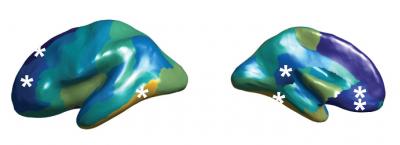
Credit: Clyde Francks, MPI Nijmegen

The left and right halves of our brains develop differently, as each hemisphere ‘specialises’ in certain functions. For example, for most people the left hemisphere–controlling the right hand–is dominant for language. But brain asymmetry is sometimes affected in people with developmental or psychiatric disorders like autism, which is characterised by impaired social cognition, repetitive behaviour and restricted interests. PhD student Merel Postema explains: “Previous studies have suggested that people with autism spectrum disorder are less likely to have the typical asymmetries for language dominance or hand preference. However, it has not been clear whether asymmetry of the brain’s anatomy is affected in autism, because different studies have reported different findings.”

Do people with autism have a more symmetrical brain? To settle this question, scientists from the international ENIGMA consortium of brain researchers decided to do a large-scale study, based on brain scans that were collected in different countries over more than 20 years. This is by far the largest ever study of this question, using brain scan data from 1,774 people with autism and 1,809 healthy controls.

The team found that the left and right cerebral hemispheres of the brain are indeed more similar in people with autism. In other words, people with ASD had less brain asymmetry. The reduced asymmetry was mostly found for cortical thickness, at various locations across the brain’s surface. In the healthy brain, the thickness of the cerebral cortex (the thin layer of gray matter that covers the brain) differs between the left and right hemispheres. Importantly, the anatomical differences did not depend on age, sex, IQ, the severity of symptoms, or medication use.

“The very small average differences in brain asymmetry between affected people and controls mean that changes of brain asymmetry will not be useful in terms of clinical prediction”, says study leader Clyde Francks. “But the findings might inform our understanding of the neurobiology of autism spectrum disorder”.

As the bulk of the data were from children, the findings suggest that altered development of the brain’s left-right axis is involved in autism, affecting widespread brain regions with diverse functions. For example, many of the affected brain regions overlap with the default mode network, which is a network of inter-connected brain regions that is particularly active during passive rest and mind-wandering, rather than when doing a specific task. Why this might relate to ASD may be a topic of future research.

###

Publication

Postema, M.C., Van Rooij, D., Anagnostou, E., Arango, C., Auzias, G., Behrmann, M., … Francks, C. (2019). Altered structural brain asymmetry in autism spectrum disorder in a study of 54 datasets. Nature Communications. DOI: 10.1038/s41467-019-13005-8

Questions? Contact:

Clyde Francks

Email: [email protected]

Marjolein Scherphuis (press officer)

Phone: +31 24 3521947

Email: [email protected]

Media Contact
Marjolein Scherphuis
[email protected]
31-243-521-947

Related Journal Article

http://dx.doi.org/10.1038/s41467-019-13005-8

Tags: BehaviorCell BiologyGeneticsneurobiologySocial/Behavioral Science
Share13Tweet8Share2ShareShareShare2

Related Posts

Han directs new $15M NIH center for organ-on-chip technology

Han directs new $15M NIH center for organ-on-chip technology

July 11, 2026
Bacteriophages Enable Next-Gen Smart Pathogen Detection Sensors

Bacteriophages Enable Next-Gen Smart Pathogen Detection Sensors

July 10, 2026

Temperature Fluctuations Have Greater Impact Than Previously Believed

July 10, 2026

New Study Uncovers Biology Behind Glioma Cancer Progression

July 10, 2026
Please login to join discussion

POPULAR NEWS

  • Detection of EDCs in Breast Milk and Infant Urine Up to Six Months Highlights Early Exposure Risks

    77 shares
    Share 31 Tweet 19
  • New Drug Candidate Developed at McMaster Shows Potential for Treating Brain Cancer

    58 shares
    Share 23 Tweet 15
  • KTU Researchers Explore Ultrasound’s Role in Enhancing Blood Flow Beyond Diagnostics

    53 shares
    Share 21 Tweet 13
  • 高齢者の骨粗鬆症治療の持続性比較

    51 shares
    Share 20 Tweet 13

About

We bring you the latest biotechnology news from best research centers and universities around the world. Check our website.

Follow us

Recent News

Diverse Symptom Burdens and Care Needs in Older Ischemic Stroke Patients

KAIST Creates AI to Detect Early Cerebrovascular Disease Signs at Home

Anthropometric Traits and Metabolic Biomarkers Linked to Pancreatic Cancer Risk

Subscribe to Blog via Email

Enter your email address to subscribe to this blog and receive notifications of new posts by email.

Join 85 other subscribers
  • Contact Us

Bioengineer.org © Copyright 2023 All Rights Reserved.

Welcome Back!

Login to your account below

Forgotten Password?

Retrieve your password

Please enter your username or email address to reset your password.

Log In
No Result
View All Result
  • Homepages
    • Home Page 1
    • Home Page 2
  • News
  • National
  • Business
  • Health
  • Lifestyle
  • Science

Bioengineer.org © Copyright 2023 All Rights Reserved.