Credit: Penn Medicine
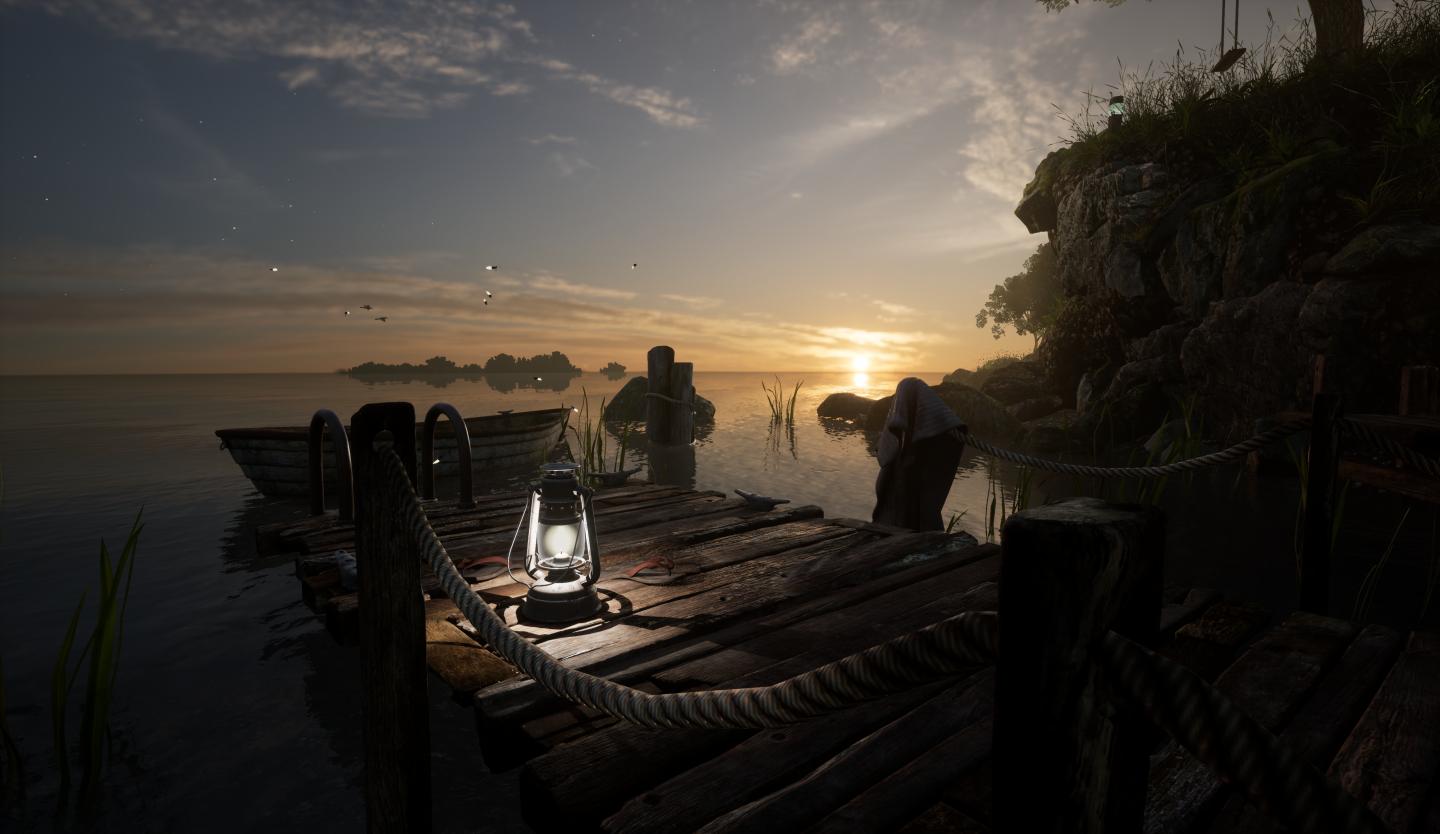
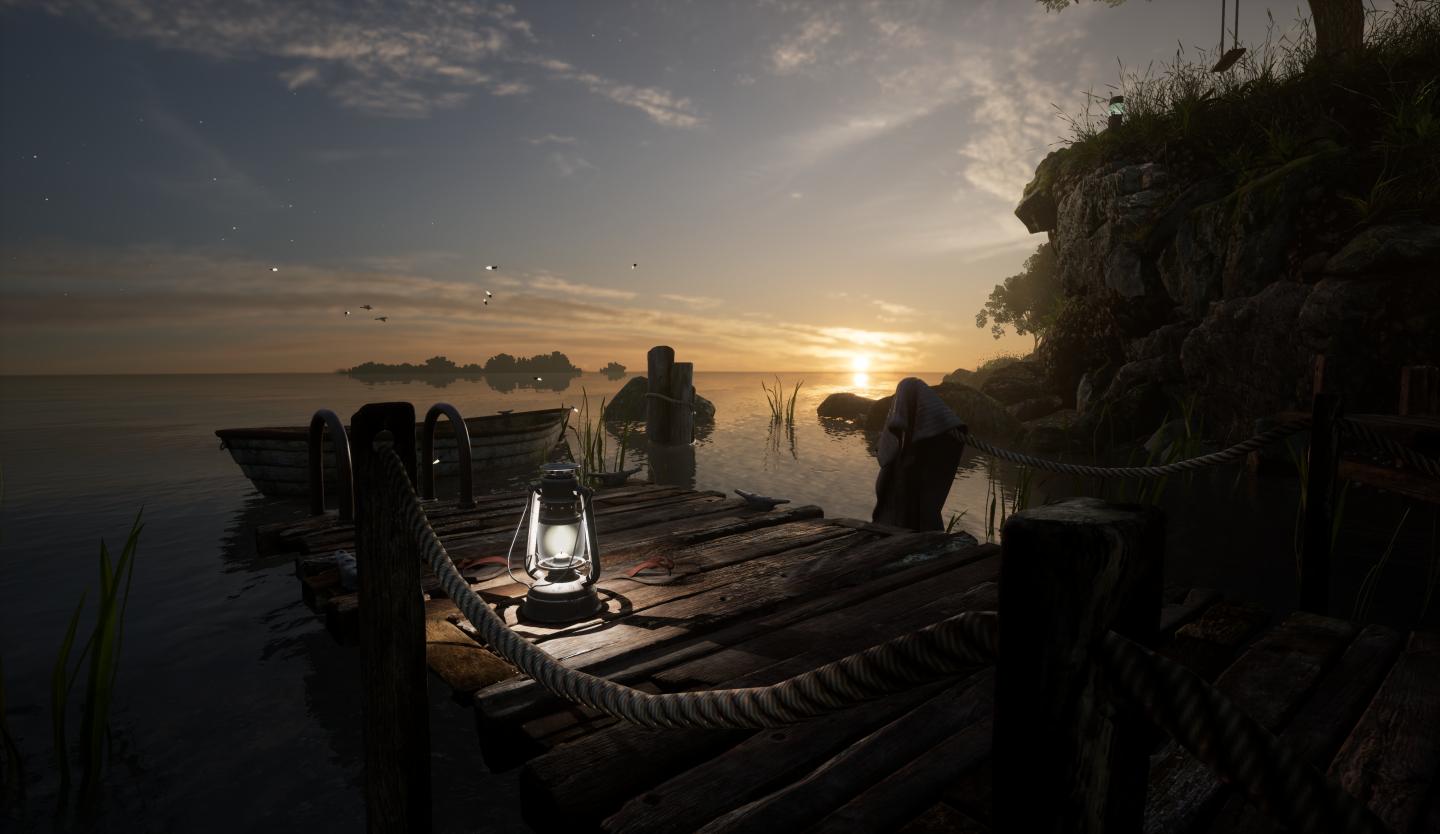
As your eyes scan the horizon, the starry nightscape gives way to the first hints of light as the sun peeks above the point where the ocean meets the sky. As the sun rises over the water, you glance to your right and notice a swing hanging from a tree that's lightly rocking in the gentle breeze, a breeze you can hear as it rustles leaves and calmly plays through the wind chimes on the deck of the house nearby. You look down and to the left, and you see a fish swim by the dock in the water beneath you. Somewhere, a bird sings, greeting the new day. Once the sun is up, a voice tells you it's time to go. You remove your headset and find yourself in the hospital waiting room where you've been sitting the whole time.
Just about everyone would rather be sitting on that dock than waiting in a doctor's office. Now, thanks to virtual reality, it's at least somewhat possible. Penn's Radiation Oncology department has recently added this VR mindfulness experience to its waiting room in the Roberts Proton Therapy Center. The voice-guided meditation program runs less than 10 minutes and involves a fully-immersive headset that provides both sights and sounds. It gives patients the chance to leave their thoughts of cancer behind for a short while and focus on something more relaxing as they wait for their treatment.
"It's a far cry from reading an old magazine or watching The Price is Right," said William P. Levin, MD, an associate professor of Radiation Oncology.
The opportunity extends beyond patients themselves. Caregivers, family, and friends who would otherwise be sitting in the waiting room anxious for their loved one to finish treatment now also have the chance to transport themselves and take their minds off of the illness that's brought them to the hospital. Department leaders saw such a clear benefit to the practice, they also got one for staff.
"Physicians and staff can take a few minutes out of their day and relax themselves through this guided meditation program, which will not only help them reset, but will also allow them to provide better care for our patients," James M. Metz, MD, chair of Radiation Oncology, said.
Levin says mindfulness only scratches the surface of what VR can bring to the medical world, and Metz points out that several other projects are already underway in Penn Radiation Oncology, including a virtual tour through the department for patients. Anyone considering proton therapy would have access to the tour with Google Cardboard – a VR headset that connects to your smartphone. Anyone would be able to download the tour, learn about the treatment they'd potentially undergo, and see the facility where they'd be treated. One aspect of the tour would be from the perspective of a proton as it moves through the radiation device and into a patient's body.
"Now we can do more than tell patients about what side effects they may experience; we can help them visualize it and provide a greater understanding of why those side effects are happening," Metz said. He noted the program also has potential added value for caregivers, since they'll have a better understanding of what their loved one is going through.
Plans for a third initiative, focused on medical education, are also in the works. Penn Radiation Oncology already hosts a proton training course for physicians and administrators each fall that draws attendees from all over the world. Thanks to VR, even those who can't attend in person can still reap the benefits.
"This is the next generation of education, and as technology continues to evolve, it will only help Penn's mission to train the world," Metz said. "The sky's the limit for what this can do, and we're only just getting started."
Levin echoed that sentiment. He's someone who has always dreamed big when it comes to VR, though his interest wasn't originally piqued through his medical career. An avid photographer, he first considered the idea for its potential impact on arts and culture. Levin is currently leading the research and development of integrative oncology services for Penn like exercise therapies and art therapies, and VR is one of his passions. He notes that it's a natural extension of his existing role in art therapy research, classes, and even taking and curating the photographs patients see as they walk through Penn's radiation oncology facility. He says the opportunity for patients to tour a museum or visit a landmark during treatment is within reach. "Google has already mapped the planet," Levin said. "We're not too far from having the ability to incorporate that into an immersive experience where instead of looking at Google Street View on your desktop or smartphone, you put on a headset and feel like you're actually there. It's as if you're standing in the Louvre with the chance to experience the perspective and sensation you'd get if you were physically in front of the Mona Lisa, rather than just looking at a picture of the painting."
While that kind of VR travel can serve as distraction and entertainment, Levin points out there's also something therapeutic about it, too. He relayed a story about his own experience with a VR simulation that had him in the crow's nest of an old ship, and as the sun came out, he could almost feel its warmth. Thanks to wearable technology, it's possible to incorporate biofeedback into future VR experiences, giving people a chance to teach themselves how to relax.
"You can imagine a scenario just like the ship, where the clouds clear and the waves get more gentle as your heartrate lowers and you calm down," Levin said. "Now we're not just talking about distraction. We're actually talking about this experience being a therapy that reduces stress and anxiety."
Back here on dry land, Levin points out just how transformative VR can be for medicine. The National Cancer Institute estimates 1,735,350 new cancer cases in the United States alone in 2018, and that the number of cancer survivors is expected to increase to 20.3 million by 2026. Doctors only have so much time to spend with each patient, but VR gives those patients the ability to revisit their appointments, reevaluate the information they receive, have a friend or loved one experience it, and make sure everyone understands the information being presented and treatment plans.
"That's why so much of our VR program is housed in OncoLink," Metz said, referring to the education initiative housed in Radiation Oncology that supports patients, caregivers, and practitioners. OncoLink also provides survivorship care plans, among other educational materials, and VR may have a critical role to play in that effort moving forward. "Mindfulness in the waiting room and tours for patients are only first steps," Metz said.
###
Media Contact
John Infanti
[email protected]
215-301-5221
@PennMedNews
http://www.uphs.upenn.edu/news/
Original Source
https://www.pennmedicine.org/news/news-blog/2018/august/from-mindfulness-to-medical-education-penn-radiation-oncology-explores-the-potential-of-vr