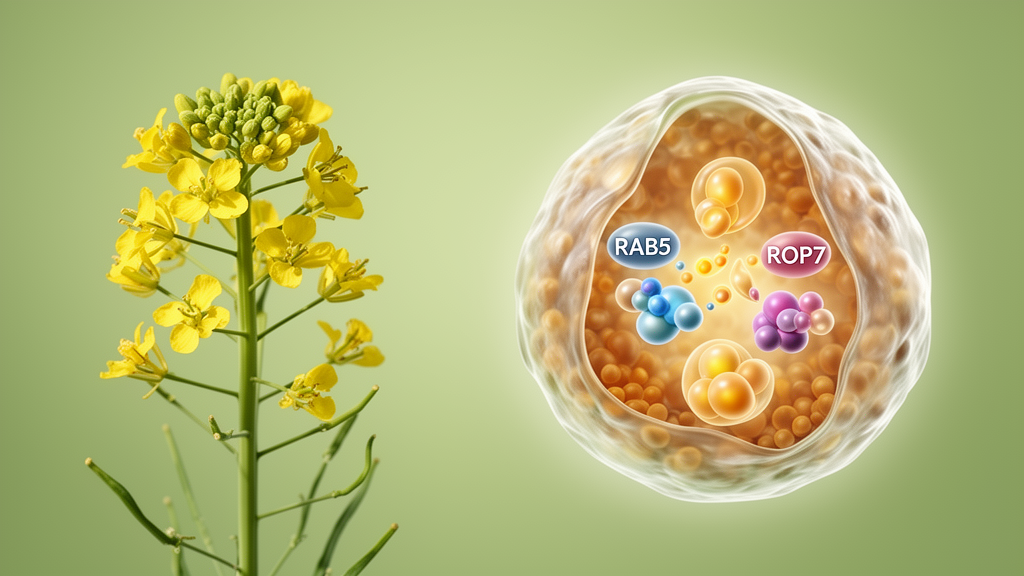
A protein called REAP1 acts as a molecular bridge between two distinct small-GTPase pathways in the model plant Arabidopsis thaliana, according to a peer-reviewed study in Nature Plants . The researchers found that REAP1 links RAB5 proteins involved in intracellular membrane trafficking with ROP7, a plant-specific Rho-family GTPase involved in processes such as cell morphogenesis. Their experiments identified a previously unknown RAB5–REAP1–ROP7 pathway whose coordinated activity contributes to normal pollen development.
Small GTPases function as molecular switches within cellular signaling networks, where they help regulate activities including intracellular transport and cell morphogenesis. Communication between different families of small GTPases is established in animal cells, but whether and how such crosstalk occurs in plants had remained largely unknown. A team led by Emi Ito and Takashi Ueda at the National Institute for Basic Biology investigated the question in Arabidopsis , with collaborators at Ochanomizu University, Kyoto Prefectural University, Saitama University, Nagoya University and RIKEN.
The study focused on molecular interactions, protein localization, genetic manipulation and pollen development in the model plant, rather than on reproduction in other plant species or on human biology. Plants have distinct repertoires of small GTPases, including ARA6, a plant-unique member of the RAB5 family, and ROPs, a plant-specific group within the Rho family. RAB5 proteins participate in intracellular membrane trafficking, while ROP proteins regulate processes including cell morphogenesis.
The researchers identified REAP1, also known as SWAP70, as a component capable of interacting with both pathways. REAP1 bound to ARA6 and to canonical RAB5 proteins that are widely conserved among eukaryotic cells. It also localized to endosomes, intracellular compartments that serve as hubs for membrane trafficking.
This localization depended on interactions with both RAB5 and specific membrane lipids. Additional experiments showed that REAP1 binds to ROP7, providing the molecular connection between the two GTPase systems. Overexpression of RAB5 promoted the recruitment of ROP7 to endosomes, whereas ROP7 recruitment did not occur in cells lacking REAP1.
These observations support a model in which REAP1 connects RAB5-dependent membrane-trafficking machinery with ROP7 signaling at endosomes. The pathway had a measurable role in plant reproduction. When RAB5 and ROP7 functions were reduced simultaneously, defects occurred during the transition from the unicellular to the bicellular stage of pollen development.
Plants in this condition produced an increased number of pollen grains that failed to mature normally. This combined disruption links communication between the two pathways through REAP1 with proper pollen development. The findings identify a specific molecular bridge and show that crosstalk between distinct small-GTPase systems contributes to a reproductive outcome in Arabidopsis , offering a mechanistic account of how membrane-trafficking and cell-morphogenesis signals may be coordinated during pollen maturation.
Subject of Research: REAP1-mediated crosstalk between RAB5 and ROP7 in Arabidopsis pollen development
Article Title: A molecular bridge connects two small GTPase pathways in plants
Article References: A molecular bridge connects two small GTPase pathways in plants. Original publication (Bibliographic details unavailable.)
Image Credits: AI Generated
DOI: Not provided
Keywords: Arabidopsis, REAP1, RAB5, ROP7, small GTPases, endosomes, pollen development, plant reproduction, cell signaling, membrane trafficking, molecular, bridge
News Source: Drew Townsend. (October 26, 2026). Peer-reviewed Arabidopsis study links RAB5 and ROP7 to pollen development. Scienmag.