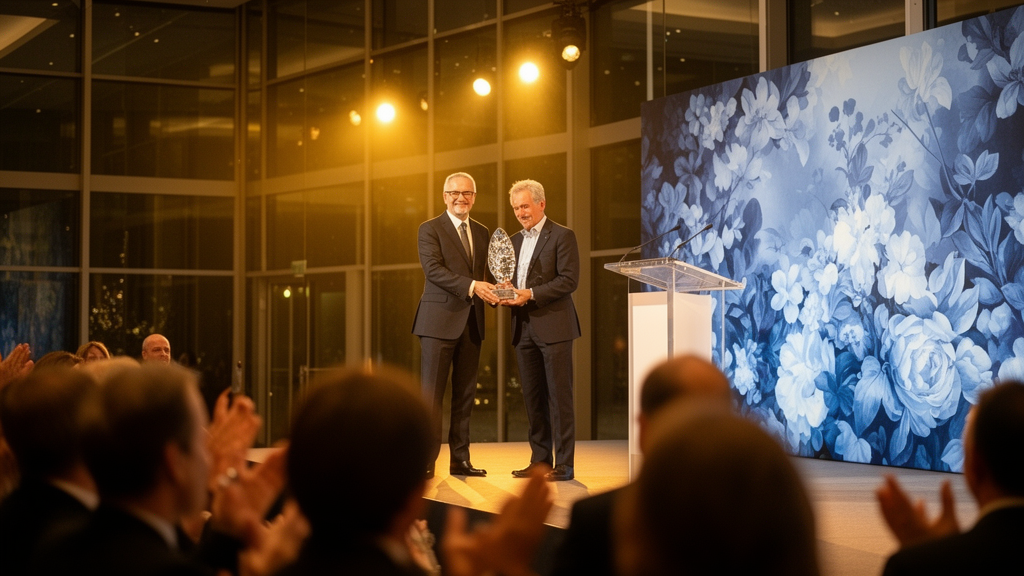
Springer Nature has announced the recipients of its Editor of Distinction Awards for 2026, an annual programme that recognises the academic editors whose behind-the-scenes labour keeps the scientific record accurate, fair and functional. Among the journals celebrating honourees this year is BMC Geriatrics, a peer-reviewed open access title dedicated to research on ageing and the health of older adults. The awards span two categories, the Springer Nature Editorial Contribution Award and the Springer Nature Author Service Award, and together they name dozens of editors working across geriatrics, gerontology, nursing science, rehabilitation and related disciplines.
The Editorial Contribution Award is described as recognising meticulous assessment of submissions and rigorous management of the peer review process, with an emphasis on safeguarding the scientific accuracy of the published record. In practical terms, this is the work that happens after a manuscript arrives at a journal but before it can be published: the editor reads the submission, evaluates whether it fits the journal’s scope and quality threshold, selects appropriate external reviewers, weighs their sometimes conflicting reports, and decides whether the paper should be accepted, revised or rejected. When the subject matter involves clinical trials in older populations, epidemiological analyses of ageing cohorts, or interventions in long-term care settings, the technical stakes of that judgement are considerable.
The 2026 Editorial Contribution Award list for BMC Geriatrics includes thirty editors drawn from institutions across Asia, Europe, the Middle East and beyond. The honourees include A R M Saifuddin Ekram, Agnieszka Wiśniowska-Szurlej, Antoine Christiaens, Bart Spaetgens, Chang Dae Lee, Chen Pao-Huan, Ellen Freiberger, Esma Nur Kolbasi Dogan, Francesco Curcio, Gu Eon Kang, Guogui Huang, Hui-Chuan Hsu, Javier Jerez-Roig, Jonathan K. L. Mak, Kazuhiro Miyata, Koen Milisen, Krystal Warmoth, Padmore Adusei Amoah, Qingsong Chang, Seyedeh Saleheh Mortazavi, Shanshan Shen, Shirin Vellani, Silvia Giovannini, Stefano Cacciatore, Takashi Mori, Tino Prell, Tsuyoshi Harada, Xue-Qiang Wang, Yang Zhao and Zeynep Şahiner. The geographic spread of the list reflects the international character of ageing research itself, a field in which demographic pressures are transforming health systems on every continent.
The second category, the Author Service Award, recognises exceptional service in improving the author experience and ensuring that the peer review process is efficient, constructive and fair. This dimension of editorial work is less visible to readers but arguably just as consequential. Editors who handle manuscripts well communicate decisions clearly, recruit reviewers who provide substantive and respectful feedback, keep the review cycle moving within reasonable timeframes, and mediate disputes between authors and reviewers when they arise. For early-career researchers in particular, the tone and quality of peer review feedback can shape not only whether a paper gets published but how the underlying research develops.
The 2026 Author Service Award honourees named for BMC Geriatrics are Alex Smithson, Bart Spaetgens, Bartłomiej K. Sołtysik, Chang Dae Lee, Chen Pao-Huan, Cheng Lei, Dario Calafiore, Dongshan Zhu, Fan Yang, Fengjuan Hu, Franziska Saxer, Gustave Mabiama, Hao Luo, Hui-Chuan Hsu, Ippei Chiba, Jaehoon Seol, Javier Jerez-Roig, Jonathan K. L. Mak, Kazuhiro Miyata, Krystal Warmoth, Lisa Kouladjian Odonnell, Luís Sousa, Monika Pathania, Peng Nie, Shiou Liang Wee, Shirin Vellani, Tsuyoshi Harada, Xuewen Wang, Yanfeng Jiang and Yeji Hwang. Several names appear on both lists, including Bart Spaetgens, Chang Dae Lee, Chen Pao-Huan, Hui-Chuan Hsu, Javier Jerez-Roig, Jonathan K. L. Mak, Kazuhiro Miyata, Krystal Warmoth, Shirin Vellani and Tsuyoshi Harada, indicating editors judged to have excelled both in the technical stewardship of submissions and in the service they provide to authors navigating revision and resubmission.
The recognition programme arrives at a moment when the academic publishing ecosystem is under intense scrutiny. Peer review, the mechanism by which scientific claims are vetted before publication, relies almost entirely on the voluntary labour of researchers who review manuscripts and, in the case of academic editors, manage that process on behalf of journals. Studies of reviewer workload have repeatedly documented rising submission volumes and growing difficulty in recruiting qualified reviewers, a strain that has intensified with the expansion of open access publishing and the sheer growth in global research output. Awards of this kind are one of the few formal mechanisms through which publishers acknowledge that the integrity of the literature depends on individuals who perform this work alongside their own research, teaching and clinical commitments.
For a journal such as BMC Geriatrics, the editorial function carries specific technical weight. Research on ageing frequently involves vulnerable participant populations, complex multimorbidity data, longitudinal cohort designs that span decades, and outcome measures that must be validated across languages and healthcare systems. Editors in this field must be equipped to assess statistical methodology in studies where sample sizes are constrained by the realities of recruiting older participants, to judge the clinical significance of effect sizes in trials of falls prevention, cognitive interventions or deprescribing strategies, and to ensure that studies involving frail or cognitively impaired participants meet appropriate ethical standards. The publisher’s description of the Editorial Contribution Award, with its emphasis on safeguarding scientific accuracy, speaks directly to these responsibilities.
The publisher’s announcement frames the awards around the full breadth of what editorial teams do: developing networks for authors and peer reviewers, helping authors improve their papers, and advocating for their journal communities. That framing reflects a shift in how editorial roles are understood within large publishing houses. Academic editors are no longer conceived purely as gatekeepers who accept or reject manuscripts; they are increasingly treated as community builders who cultivate relationships with research groups, identify emerging topics that warrant special issues, and represent the journal at conferences. In geriatrics, where research findings must ultimately reach clinicians, policymakers and care providers, that advocacy role has practical consequences for how quickly evidence about effective interventions for older adults moves from journal pages into practice.
The dual-category structure of the 2026 awards also mirrors a broader conversation in publishing about the two distinct quality dimensions of peer review. Rigour, the first dimension, concerns whether the review process catches methodological flaws, unsupported claims and statistical errors before they enter the record. Service, the second dimension, concerns whether the process treats authors with fairness and delivers feedback that is actionable rather than dismissive. A review process can be rigorous without being constructive, and constructive without being rigorous; the awards programme explicitly honours editors who are judged to have achieved both. The overlap between the two honouree lists suggests that, at least for this journal, the publisher sees those qualities as closely linked in practice.
For the wider research community, announcements of this kind serve a purpose beyond ceremony. They make visible the individuals who shape what gets published in a field, allowing authors to understand the editorial standards of a journal and allowing institutions to recognise the service contributions of their faculty. In gerontology and geriatrics, where the research community spans medicine, nursing, public health, rehabilitation science and social gerontology, the composition of an editorial board and the quality of its editorial labour directly influence which questions about ageing get asked, which answers get published, and how quickly that knowledge becomes available to the clinicians and caregivers who need it. The 2026 Editor of Distinction Awards, as celebrated by BMC Geriatrics and Springer Nature, put names to that often invisible infrastructure and, in doing so, underline a simple point about how science actually works: the published record is only as reliable as the people who labour, largely without formal reward, to keep it that way.
Subject of Research: Recognition of academic editors for peer review and author service in geriatrics publishing
Article Title: Springer Nature Editor of Distinction Awards 2026
Article References: Springer Nature Editor of Distinction Awards 2026. (n.d.). Original publication
Image Credits: AI Generated
DOI: Not provided
Keywords: Springer Nature, BMC Geriatrics, peer review, academic publishing, Editor of Distinction Awards, editorial work, author service, geriatrics, ageing research, open access, scientific integrity, research community
News Source: Ophelia Keating. (October 9, 2026). Peer Review Champions Honoured in Springer Nature Editor of Distinction Awards 2026. Scienmag.