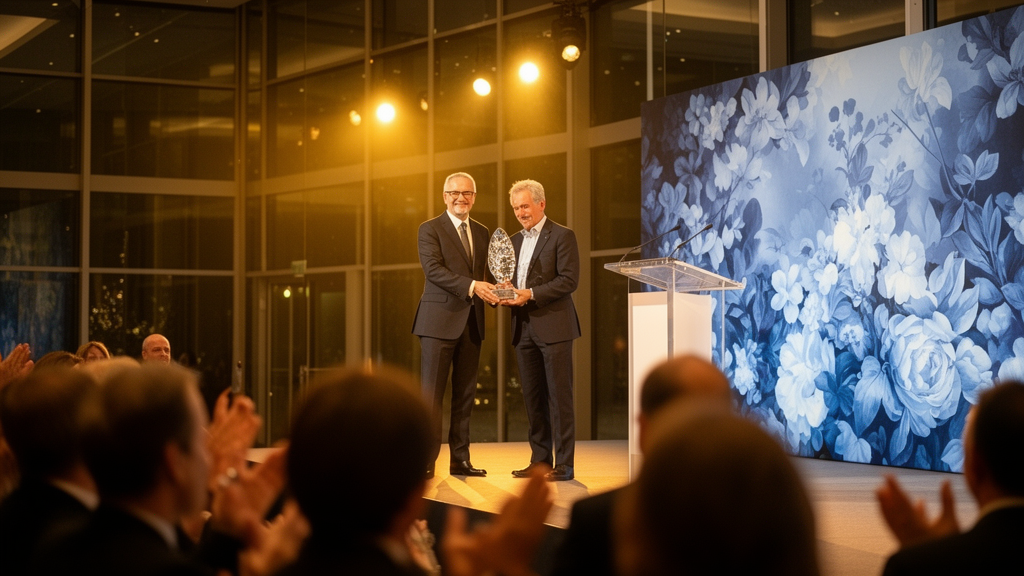
The invisible architecture of scientific publishing rests on the shoulders of editors, and once a year Springer Nature pauses to name the people who carry that weight with particular distinction. The Editor of Distinction Awards 2026, announced through the BMC Geriatrics journal platform, honour editorial board members whose work behind the scenes shapes what ultimately appears in the published record. This year’s list spans two categories, the Springer Nature Editorial Contribution Award and the Springer Nature Author Service Award, and together they recognise dozens of researchers drawn from geriatrics, gerontology, nursing science, rehabilitation and allied fields across four continents.
The Editorial Contribution Award is described as recognising meticulous assessment of submissions and rigorous management of the peer review process, with an explicit emphasis on safeguarding the scientific accuracy of the published record. That phrasing matters more than it might first appear. Peer review is the primary quality-control mechanism of modern science, and the editor who manages it is effectively the last line of defence between flawed or overstated research and the clinicians, policymakers and fellow scientists who rely on published findings. In a field such as geriatrics, where study results feed directly into decisions about the care of older adults, the stakes of that gatekeeping role are unusually high.
The recipients of the Editorial Contribution Award include A R M Saifuddin Ekram, Agnieszka Wiśniowska-Szurlej, Antoine Christiaens, Bart Spaetgens, Chang Dae Lee, Chen Pao-Huan, Ellen Freiberger, Esma Nur Kolbasi Dogan, Francesco Curcio, Gu Eon Kang, Guogui Huang, Hui-Chuan Hsu, Javier Jerez-Roig, Jonathan K. L. Mak, Kazuhiro Miyata, Koen Milisen, Krystal Warmoth, Padmore Adusei Amoah, Qingsong Chang, Seyedeh Saleheh Mortazavi, Shanshan Shen, Shirin Vellani, Silvia Giovannini, Stefano Cacciatore, Takashi Mori, Tino Prell, Tsuyoshi Harada, Xue-Qiang Wang, Yang Zhao and Zeynep Şahiner. The list reflects the genuinely international character of contemporary aging research, with editors affiliated with institutions across Asia, Europe, the Middle East, Africa and beyond.
Several names on the Editorial Contribution list will be familiar to anyone who follows the geriatrics and gerontology literature. Ellen Freiberger, based in Nuremberg, has long published on physical activity and frailty in older people. Koen Milisen of Leuven is a leading figure in nursing science and delirium research. Tino Prell in Rostock has contributed extensively to work on frailty and cognitive decline. Silvia Giovannini and Stefano Cacciatore represent the strong Italian tradition of geriatric medicine research. Their presence on an award list for editorial rigour underscores a point that journal publishers have been increasingly eager to make: the scientists who review and edit are often the same leading researchers whose own papers define their fields.
The second honour, the Springer Nature Author Service Award, recognises exceptional service in improving the author experience and ensuring that the peer review process is efficient, constructive and fair. The distinction between the two awards is subtle but meaningful. Where the Editorial Contribution Award centres on the accuracy of what gets published, the Author Service Award centres on how authors are treated along the way: whether decisions arrive in reasonable time, whether reviewer comments are actionable rather than dismissive, and whether the process feels transparent to the researchers who have invested months or years in a study.
The Author Service Award recipients named in the announcement are Alex Smithson, Bart Spaetgens, Bartłomiej K. Sołtysik, Chang Dae Lee, Chen Pao-Huan, Cheng Lei, Dario Calafiore, Dongshan Zhu, Fan Yang, Fengjuan Hu, Franziska Saxer, Gustave Mabiama, Hao Luo, Hui-Chuan Hsu, Ippei Chiba, Jaehoon Seol, Javier Jerez-Roig, Jonathan K. L. Mak, Kazuhiro Miyata, Krystal Warmoth, Lisa Kouladjian Odonnell, Luís Sousa, Monika Pathania, Peng Nie, Shiou Liang Wee, Shirin Vellani, Tsuyoshi Harada, Xuewen Wang, Yanfeng Jiang and Yeji Hwang. Several editors, including Spaetgens, Lee, Chen, Hsu, Jerez-Roig, Mak, Miyata, Warmoth, Vellani and Harada, appear on both lists, a dual recognition that signals sustained excellence across the full editorial workflow.
What does distinguished editorial work actually involve on a technical level? Handling editors for a journal such as BMC Geriatrics triage incoming submissions, judge initial suitability and scope, and then recruit appropriate external reviewers, a task that has grown harder as reviewer fatigue spreads across academia. Once reviews return, the editor must weigh sometimes contradictory assessments, identify reviewers who may have missed the point of a method or misread a statistical approach, and compose a decision letter that is honest about a paper’s weaknesses while giving authors a genuine path to revision. For manuscripts reporting clinical trials or complex longitudinal cohorts of older adults, editors must also verify that ethical approvals, consent procedures and reporting guidelines have been properly followed.
The award announcement itself frames the work in terms of three activities: developing networks for authors and peer reviewers, helping authors improve their papers, and advocating for their journal communities. Network building has become an increasingly formal part of the role. Editors are expected to expand pools of qualified reviewers, mentor early-career researchers who serve as reviewers, and maintain relationships with research groups working on the topics the journal covers. In geriatrics this is particularly demanding because the field sits at the intersection of internal medicine, nursing, rehabilitation, pharmacology, psychology and social science, so a single frailty paper may require reviewers from several disciplines to evaluate it fairly.
The emphasis on helping authors improve their papers also reflects a broader shift in publishing culture. The most effective editors no longer behave purely as gatekeepers who accept or reject; they act as intermediaries who translate terse reviewer criticism into constructive revision plans. That is especially valuable for authors from countries where English is not the primary language of science, and for clinician-researchers who conduct studies in hospitals and long-term care facilities while carrying full patient loads. A decision letter that specifies exactly which analyses need re-running, or which reporting items are missing, can determine whether a useful study on falls prevention or dementia care eventually reaches the readers who need it.
For the research community, the 2026 awards are also a reminder of how much of the scientific record depends on labour that is largely unpaid and rarely visible. Reviewers and handling editors typically perform this work alongside their own research, teaching and clinical duties, and their names appear in public only when journals choose to celebrate them, as Springer Nature has done here. The full recipient lists for both the Editorial Contribution Award and the Author Service Award have been published on the BMC Geriatrics journal site, and the publisher’s announcement closes with congratulations to this year’s honourees for their dedication to their journals and the research communities they serve. As submission volumes continue to climb across scientific publishing, recognising the people who keep peer review rigorous, fair and humane is likely to remain an annual fixture, and a necessary one.
Subject of Research: Springer Nature Editor of Distinction Awards 2026 recognising editorial contributions in geriatrics publishing
Article Title: Springer Nature Editor of Distinction Awards 2026
Article References: Springer Nature Editor of Distinction Awards 2026. (n.d.). Original publication
Image Credits: AI Generated
DOI: Not provided
Keywords: Springer Nature, BMC Geriatrics, peer review, editorial awards, geriatrics, scientific publishing, Editor of Distinction Awards, author service, academic editors, research integrity, gerontology, scholarly communication
News Source: Ophelia Keating. (October 14, 2026). Peer Review Champions Honoured in Springer Nature Editor of Distinction Awards 2026. Scienmag.