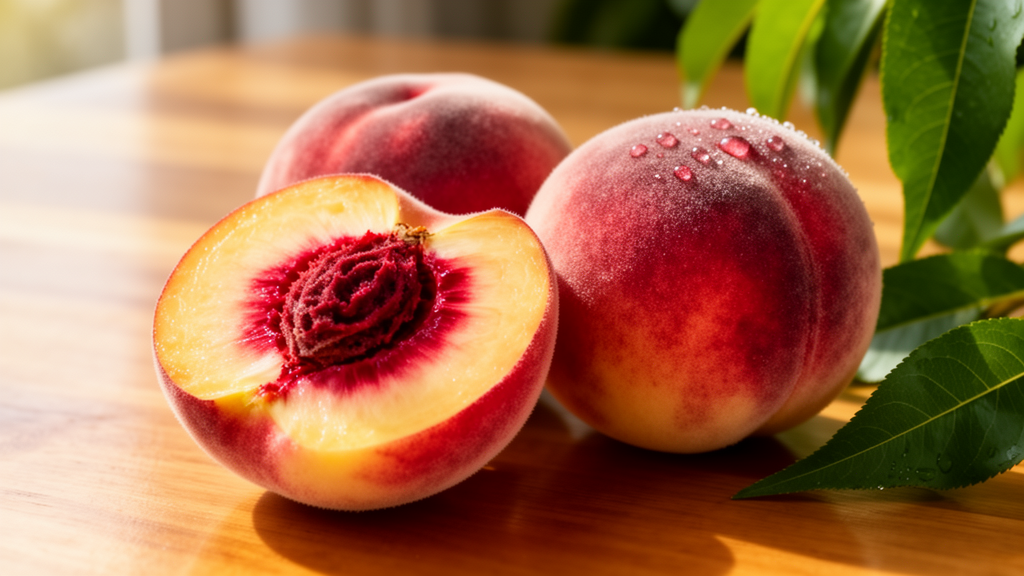
A newly published horticultural genetic investigation in Molecular Horticulture has resolved a longstanding breeding paradox in Prunus persica, demonstrating that the regulatory protein PpBL pleiotropically coordinates both attractive red pigment and astringent taste compounds in peach flesh while co-occurring fruit acidity is determined by tight genetic linkage rather than direct transcriptional control. Red-fleshed peach cultivars have garnered notable interest in the fruit industry due to their vibrant visual appeal and rich concentrations of antioxidant compounds, primarily anthocyanins and proanthocyanidins, which enhance fruit aesthetic properties and provide recognized dietary antioxidants. Despite substantial commercial potential and rising market demand for premium specialty fruit crops, red-fleshed varieties have historically been confined to a small industry niche because elevated pigment accumulation in the pulp is routinely accompanied by undesirable bitterness, noticeable astringency, and high organic acid concentrations. Plant breeders seeking to develop sweet, consumer-friendly red peaches have struggled with this persistent co-segregation of traits. By combining biparental genetic mapping, multi-stage developmental profiling, RNA sequencing, and biochemical validation, the research team clarified the precise molecular mechanisms that jointly direct color and astringency while establishing why high fruit acidity remains bound to the red-flesh phenotype through chromosomal linkage drag.
To investigate the genetic architecture linking fruit pigmentation with flavor attributes, the researchers established an experimental cross between two red-fleshed peach cultivars, designated as wen30 and wen48, generating a mapping population of 152 hybrid F1 progeny planted in 2017. Comprehensive phenotypic characterization over two consecutive growing seasons, 2021 and 2022, revealed that flesh coloration segregated in a clear Mendelian 3:1 ratio of 123 red-fleshed individuals to 29 white-fleshed individuals, confirming that the dominant blood-flesh characteristic is governed by a single major genetic locus. Biochemical measurements demonstrated striking transgressive segregation across the offspring for total anthocyanins, proanthocyanidins, and titratable fruit acidity expressed in malic acid equivalents. In 2021, paternal and maternal anthocyanin levels measured 2.86 and 3.29 micromoles per gram of dry weight, respectively, whereas the F1 progeny ranged from 0.01 to 15.81 micromoles per gram of dry weight. Proanthocyanidin content in the parents measured 126.42 and 113.43 milligrams per gram of dry weight, while offspring spanned from 0.74 to 579.39 milligrams per gram of dry weight. Similarly, parental fruit acidity values of 0.51 percent and 0.27 percent gave rise to an F1 distribution spanning from 0.21 percent to 1.55 percent, with broad-sense heritability estimates reaching 82 percent for anthocyanins, 86 percent for proanthocyanidins, and 65 percent for acidity.
Statistical evaluation of the phenotypic data demonstrated pronounced positive correlations among all three monitored traits across both trial years. Pearson correlation coefficients between anthocyanin and proanthocyanidin concentrations reached 0.85 in 2021 and rose to 0.95 in 2022, while correlations between anthocyanin accumulation and fruit acidity reached 0.62 and 0.70 across the corresponding seasons. To identify the specific genomic regions driving these shared phenotypic distributions, the authors generated whole-genome sequencing libraries from fresh leaf tissue using the CTAB extraction protocol and the GenoBaits DNA library preparation kit, sequencing parental and progeny genomes in paired-end 150-base-pair mode on the MGI platform. Alignment of filtered clean reads against the peach reference genome v2.0 identified 394,679 high-quality single nucleotide polymorphisms following rigorous quality, minor allele frequency, and missingness filtering. Using Lep-MAP3 software, the investigators organized these informative markers into a high-density genetic linkage map spanning 530.690 centimorgans across eight chromosomal linkage groups, containing 1,339 marker bins with a compact average inter-marker distance of 0.396 centimorgans.
Quantitative trait locus mapping executed with the composite interval mapping program GACD v1.2 detected overlapping, highly significant genetic intervals governing all three target traits on peach chromosome 5. Anthocyanin accumulation was governed by two distinct loci, including a minor locus on chromosome 4 termed qAN-4 that explained 15.88 percent of phenotypic variance with a logarithm of odds score of 9.37 in 2021, and a major, stable locus on chromosome 5 termed qAN-5 that explained 57.77 percent of phenotypic variance with logarithm of odds scores between 25.23 and 26.28. Concurrently, a major quantitative trait locus for proanthocyanidins, designated qPA-5, mapped to chromosome 5 between 0 and 14.4 centimorgans, achieving logarithm of odds scores from 20.47 to 30.05 and accounting for 58.46 to 65.69 percent of phenotypic variation. A robust acidity locus, designated qFA-5, was mapped between 0.6 and 13.9 centimorgans on the same chromosome, yielding logarithm of odds scores of 23.01 to 31.60 and explaining 55.68 to 67.68 percent of variance. Crucially, the confidence intervals for all three traits co-localized within a stable 3.7 to 13.6 centimorgan interval encompassing 260 annotated genes.
To pinpoint the causal transcriptional regulators residing within the co-localized chromosome 5 interval, the researchers monitored fruit flesh development at 40, 70, 80, 90, and 100 days after anthesis, representing stages s1 through s5, across contrasting white-fleshed and red-fleshed progeny. While anthocyanins and proanthocyanidins remained consistently low throughout all developmental stages in white-fleshed peaches, red-fleshed fruits exhibited dramatic accumulation after stage s2, reaching 21-fold, 37-fold, and 52-fold higher anthocyanin concentrations, and 111-fold, 37-fold, and 72-fold higher proanthocyanidin levels during stages s3 through s5. Flesh samples from stages s3, s4, and s5 were subjected to comparative RNA sequencing, which detected 806 upregulated and 448 downregulated differentially expressed genes between white and red fruits across development. Filtering these candidate transcripts within the mapped interval highlighted 32 differentially expressed genes, most prominently the known NAC family transcription factor PpBL, designated as Prupe.5G006200, and a glycosyltransferase designated as PpUGT73C3, cataloged as Prupe.5G022600. Quantitative real-time reverse transcription PCR on independent subsets of five white-fleshed and five red-fleshed progeny verified marked upregulation of both genes in pigmented fruit mesocarp tissue.
Functional evaluation of candidate genomic variation identified a 6,688-base-pair long terminal repeat retrotransposon, termed blood-TE, situated within the promoter region of PpBL that co-segregated with the red-flesh phenotype in a 27:90:36 ratio across the F1 population. Resequencing data also identified three non-synonymous single nucleotide polymorphisms within the coding sequence of PpUGT73C3 that were in strong genetic linkage with the blood-TE insertion, leading to the designation of the variant allele as Ppugt73c3. Combining these linked polymorphisms categorized the hybrid population into four discrete haplotypes, among which haplotype 1 predominated with 115 individuals and exhibited significantly higher anthocyanin, proanthocyanidin, and fruit acidity levels than any alternate haplotype. Both recombinant PpUGT73C3 and Ppugt73c3 proteins, expressed with an N-terminal six-histidine tag in prokaryotic cells and purified via nickel affinity chromatography, possessed molecular weights of approximately 58 kilodaltons and contained the conserved 44-amino-acid plant secondary product glycosyltransferase box ending in a glutamine residue. In vitro catalytic assays with UDP-glucose and cyanidin monitored by liquid chromatography-tandem mass spectrometry confirmed that both enzymes synthesized cyanidin-3-O-glucoside, with the natural variant Ppugt73c3 demonstrating significantly enhanced catalytic efficiency.
In vivo transformation assays in peach flesh confirmed the dual functional roles of PpUGT73C3 and its variant in directing secondary metabolite synthesis. Transient Agrobacterium-mediated overexpression of either PpUGT73C3 or Ppugt73c3 driven by the CaMV 35S promoter in the white-fleshed cultivar Datuanmilu provoked prominent pulp pigmentation, increasing anthocyanin content by 2.16-fold and 2.42-fold, respectively, alongside significant upregulation of the downstream structural gene PpANS. Concurrently, proanthocyanidin concentrations increased by 1.50-fold and 2.50-fold in the respective overexpression lines, accompanied by enhanced transcript levels of core proanthocyanidin structural genes PpANR and PpLAR. Complementary virus-induced gene silencing using pTRV vectors in wen30 fruits reduced anthocyanin levels by 32 percent and 29 percent, and decreased proanthocyanidin accumulation by 77 percent and 67 percent in PpUGT73C3 and Ppugt73c3 silencing treatments, respectively. However, neither transient overexpression nor silencing of either glycosyltransferase allele produced significant changes in fruit acidity or consistently altered the expression of the malate-associated structural genes PpNAD-MDH1 or PpALMT-9, demonstrating that UGT73C3 activity is restricted to flavonoid metabolism.
Parallel functional assays demonstrated that the upstream transcription factor PpBL acts as a master coordinator of both pigment accumulation and astringent tannin biosynthesis. Transient overexpression of PpBL in Datuanmilu fruits generated intense pulp coloration, elevating anthocyanin concentrations by 2.76-fold and proanthocyanidin content by 2.15-fold relative to empty vector controls, accompanied by increased expression of PpANS, PpUGT73C3, PpANR, and PpLAR. Conversely, virus-induced gene silencing of PpBL in wen30 fruit mesocarp suppressed visible red pigmentation, reducing anthocyanin levels by 26 percent and cutting proanthocyanidin content by 51 percent while downregulating the corresponding biosynthetic structural genes. Importantly, altering PpBL expression did not significantly affect measured fruit acidity or produce consistent changes in PpNAD-MDH1 or PpALMT-9 transcript abundance. These physiological findings indicated that while PpBL drives both anthocyanin and proanthocyanidin branches of the flavonoid pathway, it does not exert direct transcriptional control over the organic acid accumulation machinery in ripening peach fruits.
Direct biochemical and promoter-binding assays revealed the exact molecular interactions through which PpBL coordinates this dual metabolic program. Dual-luciferase reporter assays conducted in Nicotiana benthamiana leaf tissues demonstrated that co-infiltrating the effector construct PpBL-62SK with promoter-luciferase reporter constructs for PpUGT73C3, PpANR, and PpLAR significantly enhanced luminescence, increasing LUC to REN ratios by 2.10-fold, 5.5-fold, and 2.6-fold over control treatments, respectively. Promoter sequence scanning detected a functional W-box cis-acting element positioned 186 base pairs upstream of the PpUGT73C3 transcription start site, alongside conserved E-box elements within the PpANR and PpLAR promoters. Yeast one-hybrid assays confirmed that Y187 yeast strains co-transformed with pGADT7-PpBL and respective pHIS2 promoter plasmids grew on selective medium supplemented with 30 millimolar 3-amino-1,2,4-triazole. Electrophoretic mobility shift assays utilizing purified recombinant His-PpBL protein and biotinylated oligonucleotide probes demonstrated sequence-specific physical binding to the W-box of the PpUGT73C3 promoter and to the E-box motifs of the PpANR and PpLAR promoters, which was abrogated when target recognition sequences were mutated.
These experimental results collectively establish a cohesive genetic and physiological framework for understanding fruit quality traits in red-fleshed peaches. Rather than operating through a previously proposed PpMYB10.1-dependent cascade, PpBL directly binds to the promoter of PpUGT73C3 to drive anthocyanin glycosylation while simultaneously binding the promoters of PpLAR and PpANR to promote proanthocyanidin synthesis, explaining the pleiotropic co-segregation of coloration and astringency. Conversely, the co-segregation of elevated fruit acidity is caused by close chromosomal linkage rather than shared transcriptional control. The tonoplast sugar transporter gene PpTST1, a recognized governor of peach acidity mapped within the co-localized interval, displayed strong genetic linkage between an exon single nucleotide polymorphism and the blood-TE transposon in the PpBL promoter, with a correlation coefficient of negative 0.84. Haplotype 1 packages high pigment and astringency with high fruit acidity due to this unbroken linkage drag. Identifying this distinction between transcriptional pleiotropy and tight genetic linkage equips fruit breeders with the molecular markers needed to break linkage blocks and develop sweet, non-astringent, red-fleshed peach cultivars.
Subject of Research: Genetic and molecular regulation of anthocyanin, proanthocyanidin, and organic acid traits in red-fleshed peach
Article Title: Dual regulation of anthocyanins and proanthocyanidins by PpBL and its linkage to acidity in peach
Article References: Xing, H., Fan, J., Li, G., Cao, K., Li, Y., Zhu, G., Fang, W., Chen, C., Wang, X., Wu, J., & Wang, L. (2026). Dual regulation of anthocyanins and proanthocyanidins by PpBL and its linkage to acidity in peach. Molecular Horticulture, 6(1), Article 67. https://doi.org/10.1186/s43897-026-00255-6
Image Credits: AI Generated
DOI: 10.1186/s43897-026-00255-6
Keywords: Prunus persica, peach genetics, PpBL, PpUGT73C3, PpTST1, anthocyanin biosynthesis, proanthocyanidins, fruit acidity, blood-flesh peach, quantitative trait loci, transcription factors, retrotransposons, linkage drag, flavonoid pathway, plant secondary metabolism, fruit breeding, molecular horticulture
News Source: Juliet Wilcox. (November 18, 2026). Peach Gene PpBL Drives Pigment and Astringency While Acidity Inherits Separately. Scienmag.