• HOME
  • NEWS
  • EXPLORE
    • CAREER
      • Companies
      • Jobs
    • EVENTS
    • iGEM
      • News
      • Team
    • PHOTOS
    • VIDEO
    • WIKI
  • BLOG
  • COMMUNITY
    • FACEBOOK
    • INSTAGRAM
    • TWITTER
Tuesday, October 6, 2026
BIOENGINEER.ORG
No Result
View All Result
  • Login
  • HOME
  • NEWS
  • EXPLORE
    • CAREER
      • Companies
      • Jobs
        • Lecturer
        • PhD Studentship
        • Postdoc
        • Research Assistant
    • EVENTS
    • iGEM
      • News
      • Team
    • PHOTOS
    • VIDEO
    • WIKI
  • BLOG
  • COMMUNITY
    • FACEBOOK
    • INSTAGRAM
    • TWITTER
  • HOME
  • NEWS
  • EXPLORE
    • CAREER
      • Companies
      • Jobs
        • Lecturer
        • PhD Studentship
        • Postdoc
        • Research Assistant
    • EVENTS
    • iGEM
      • News
      • Team
    • PHOTOS
    • VIDEO
    • WIKI
  • BLOG
  • COMMUNITY
    • FACEBOOK
    • INSTAGRAM
    • TWITTER
No Result
View All Result
Bioengineer.org
No Result
View All Result
Home Headlines

Pathways leading to beta cell division identified, may aid diabetes…

Bioengineer.org by Bioengineer.org
January 24, 2018
in Headlines, Health, Science News
Reading Time: 2 mins read
0
Share on FacebookShare on TwitterShare on LinkedinShare on RedditShare on Telegram
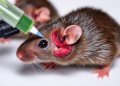
IMAGE

Credit: UC San Diego Health

Pancreatic beta cells help maintain normal blood glucose levels by producing the hormone insulin — the master regulator of energy (glucose). Impairment and the loss of beta cells interrupts insulin production, leading to type 1 and 2 diabetes. Using single-cell RNA sequencing, researchers at University of California San Diego School of Medicine have, for the first time, mapped out pathways that regulate beta cell growth that could be exploited to trick them to regenerate.

The findings are published in the May 2 issue of the journal Cell Metabolism.

"If we can find a drug that makes beta cells grow, it could improve blood sugar levels in people with diabetes," said Maike Sander, MD, professor in the Department of Pediatrics and Cellular and Molecular Medicine at UC San Diego School of Medicine. "These people often have residual beta cells but not enough to maintain normal blood glucose levels."

The body generates beta cells in utero and they continue to regenerate after birth, but as people age, cell regeneration diminishes. The predominant way to grow new beta cells is through cell division, but beta cells capable of dividing are rare, compromising less than 1 percent of all beta cells. Scientists have been investigating molecular pathways that govern beta cell growth in hopes of finding new therapies that would help people regain blood glucose control after the onset of diabetes.

In their study, Sander's team identified the pathways that are active when beta cells divide providing insight into possible drug targets. Using single-cell RNA sequencing, the team was able to profile molecular features and metabolic activity of individual beta cells to determine how dividing beta cells differ from non-dividing cells.

"No one has been able to do this analysis because the 1 percent or less of beta cells that are dividing are masked by the 99 percent of beta cells that are not dividing," said Sander. "This in-depth characterization of individual beta cells in different proliferative states was enabled by newer technology. It provides a better picture of what sends beta cells into cell division and clues we can use to try to develop drugs to stimulate certain pathways."

Whether stimulating beta cells to grow will result in therapeutic interventions for diabetes is still to be seen, but this new information opens the door to find out, said Sander.

###

Co-authors include: Chun Zeng, Francesca Mulas, Yinghui Sui, Tiffany Guan, Yuliang Tan, Fenfen Liu, Wen Jin, Andrea C. Carrano, and Gene W. Yeo, UC San Diego; Nathanael Miller, and Orian S. Shirihai, UC Los Angeles; and Mark O. Huising, UC Davis.

Media Contact

Yadira Galindo
[email protected]
858-249-0456
@UCSanDiego

http://www.ucsd.edu

Related Journal Article

http://dx.doi.org/10.1016/j.cmet.2017.04.014
Share12Tweet7Share2ShareShareShare1

Related Posts

Cannabidiol Sponge Implanted at Injury Site Cuts Brain Swelling After Trauma in Rats

Cannabidiol Sponge Implanted at Injury Site Cuts Brain Swelling After Trauma in Rats

October 6, 2026
Shotgun genetic engineering lets mammalian cells test millions of designs at once

Shotgun genetic engineering lets mammalian cells test millions of designs at once

October 6, 2026

New AI Model Sees Clearly Underwater by Treating Blurry and Sharp Features Differently

October 6, 2026

Seaweed Polymer Chemistry Goes Greener With a Reusable Ionic Liquid Solvent

October 6, 2026
Please login to join discussion

POPULAR NEWS

  • Alloys That Shrink Their Own Grains: New PIX Mechanism Refines Metals With Heat Alone

    Alloys That Shrink Their Own Grains: New PIX Mechanism Refines Metals With Heat Alone

    29 shares
    Share 12 Tweet 7
  • Endurance Exercise Reshapes the Liver in Males and Females Through Distinct Molecular Routes

    29 shares
    Share 12 Tweet 7
  • Single Transcription Factor PU.1 Rapidly Converts Fibroblasts into Macrophage-Lineage Cells

    29 shares
    Share 12 Tweet 7
  • New Scale Measures How Ready Nurse Educators Really Are for the AI Era

    29 shares
    Share 12 Tweet 7

About

We bring you the latest biotechnology news from best research centers and universities around the world. Check our website.

Follow us

Recent News

Alloys That Shrink Their Own Grains: New PIX Mechanism Refines Metals With Heat Alone

Endurance Exercise Reshapes the Liver in Males and Females Through Distinct Molecular Routes

Single Transcription Factor PU.1 Rapidly Converts Fibroblasts into Macrophage-Lineage Cells

Subscribe to Blog via Email

Success! An email was just sent to confirm your subscription. Please find the email now and click 'Confirm' to start subscribing.

Join 85 other subscribers
  • Contact Us

Bioengineer.org © Copyright 2023 All Rights Reserved.

Welcome Back!

Login to your account below

Forgotten Password?

Retrieve your password

Please enter your username or email address to reset your password.

Log In
No Result
View All Result
  • Homepages
    • Home Page 1
    • Home Page 2
  • News
  • National
  • Business
  • Health
  • Lifestyle
  • Science

Bioengineer.org © Copyright 2023 All Rights Reserved.