• HOME
  • NEWS
  • EXPLORE
    • CAREER
      • Companies
      • Jobs
    • EVENTS
    • iGEM
      • News
      • Team
    • PHOTOS
    • VIDEO
    • WIKI
  • BLOG
  • COMMUNITY
    • FACEBOOK
    • INSTAGRAM
    • TWITTER
Saturday, November 14, 2026
BIOENGINEER.ORG
No Result
View All Result
  • Login
  • HOME
  • NEWS
  • EXPLORE
    • CAREER
      • Companies
      • Jobs
        • Lecturer
        • PhD Studentship
        • Postdoc
        • Research Assistant
    • EVENTS
    • iGEM
      • News
      • Team
    • PHOTOS
    • VIDEO
    • WIKI
  • BLOG
  • COMMUNITY
    • FACEBOOK
    • INSTAGRAM
    • TWITTER
No Result
View All Result
Bioengineer.org
No Result
View All Result
Home NEWS Science News Health

PathLUPI Uses Transcriptomic Training to Predict Molecular Features from Histology Images

by
November 11, 2026
in Health
Reading Time: 2 mins read
0
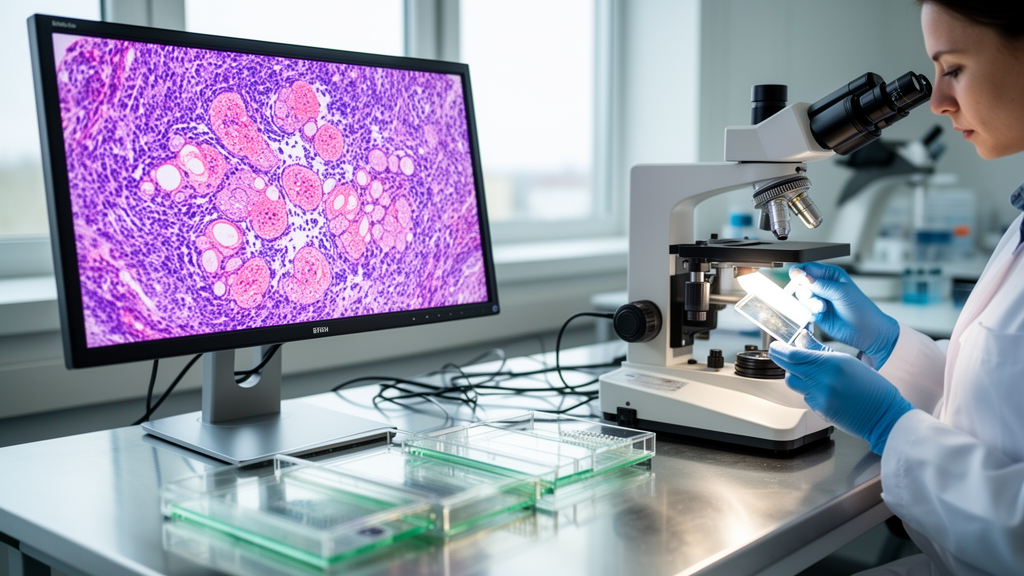
PathLUPI Uses Transcriptomic Training to Predict Molecular Features from Histology Images

PathLUPI Uses Transcriptomic Training to Predict Molecular Features from Histology Images

Share on FacebookShare on TwitterShare on LinkedinShare on RedditShare on Telegram

Researchers have developed PathLUPI, a deep learning framework designed to extract genome-anchored histological representations by incorporating transcriptomic privileged information during training. Evaluated across 49 molecular oncology tasks using 11,361 cases drawn from 20 distinct cohorts, the model demonstrated superior performance over conventional methods that rely exclusively on whole-slide images for training.

In precision oncology, acquiring accurate molecular insights directly through genomic sequencing remains costly and time-consuming for widespread clinical implementation. At the same time, reliably predicting complex molecular characteristics and patient clinical prognosis directly from routine whole-slide histology images has presented a persistent computational challenge for existing deep learning approaches.

To address this limitation, PathLUPI integrates transcriptomic data as privileged information during its training phase. This training strategy allows the framework to learn genome-anchored histological embeddings from tissue architecture, enabling the model to perform molecular predictions using standard whole-slide images alone once deployed at inference.

Across extensive testing, PathLUPI attained an area under the receiver operating characteristic curve of at least 0.80 across 18 separate biomarker prediction and molecular subtyping tasks. The investigators noted that this performance surpassed standard baseline methods that were trained solely on routine histological whole-slide images.

Beyond biomarker identification, the model demonstrated utility in forecasting patient outcomes. PathLUPI achieved a concordance index of at least 0.70 across survival cohorts spanning five major cancer types, indicating its capacity to capture clinically relevant prognostic signals directly from routine diagnostic slides.

The embeddings generated by PathLUPI also identified distinct cellular morphological signatures tied to specific genotypes. The spatial fidelity of these learned morphological patterns was further substantiated through analysis of representative high-resolution spatial transcriptomics samples, providing a framework to connect molecular context with routine digital pathology workflows.

Subject of Research: Deep learning for molecular prediction from histology images

Article Title: Genome-anchored foundation model embeddings improve molecular prediction from histology images

Article References: Jin, C., Zhou, F., Yu, Y., Ma, J., Wang, Y., Xu, Y., Zhou, H., Jiang, H., Luo, L., Mao, L., He, Z., Zhang, X., Zhang, J., Chan, R. C. K., Yao, H., & Chen, H. (2026). Genome-anchored foundation model embeddings improve molecular prediction from histology images. Nature Communications. https://doi.org/10.1038/s41467-026-78947-2

Image Credits: AI Generated

DOI: 10.1038/s41467-026-78947-2

Keywords: PathLUPI, precision oncology, molecular prediction, whole-slide images, histopathology, transcriptomic privileged information, genome-anchored embeddings, biomarker prediction, molecular subtyping, cancer survival prediction, deep learning, spatial transcriptomics, cellular morphology, concordance index, receiver operating characteristic, computational pathology, cancer cohorts

News Source: Nathaniel Bowman. (November 11, 2026). PathLUPI Uses Transcriptomic Training to Predict Molecular Features from Histology Images. Scienmag.

Tags: biomarker predictioncancer cohortscancer survival predictioncellular morphologycomputational pathologyconcordance indexdeep learninggenome-anchored embeddingshistopathologymolecular predictionmolecular subtypingPathLUPIprecision oncologyreceiver operating characteristicSpatial transcriptomicstranscriptomic privileged informationwhole slide images
Share12Tweet7Share2ShareShareShare1

Related Posts

Frontline Healthcare Workers Show Pandemic Stress Linked to CRP and Memory Scores

Frontline Healthcare Workers Show Pandemic Stress Linked to CRP and Memory Scores

November 14, 2026
Machine Learning Shows Modest Accuracy in Predicting Early Diabetic Kidney Disease Progression

Machine Learning Shows Modest Accuracy in Predicting Early Diabetic Kidney Disease Progression

November 14, 2026

ABCB1 Transporter Gene Variants Alter Viral Infection Risks After Kidney Transplantation

November 14, 2026

Surveillance System Rules Substantially Influenced Finland’s Syphilis Trends and Demographics

November 14, 2026

POPULAR NEWS

  • Aquifer Storage Can Channel German Data Centre Waste Heat to 20,000 Buildings

    Aquifer Storage Can Channel German Data Centre Waste Heat to 20,000 Buildings

    29 shares
    Share 12 Tweet 7
  • African Surgical Trainee Wellness Lacks Evaluated Interventions Despite Severe Structural Pressures

    29 shares
    Share 12 Tweet 7
  • Multi-Omics Genetic Analysis Identifies ADAMTS8 and IL6R as Aortic Aneurysm Targets

    29 shares
    Share 12 Tweet 7
  • Mapping COVID-19 Retweet Networks Reveals Structural Partisan Divides on Brazilian Social Media

    29 shares
    Share 12 Tweet 7

About

We bring you the latest biotechnology news from best research centers and universities around the world. Check our website.

Follow us

Recent News

Frontline Healthcare Workers Show Pandemic Stress Linked to CRP and Memory Scores

Ureaplasma urealyticum Blunts Amniotic IDO1 Defense and Amplifies Chemokine Production

Study Maps Translator AI Workflow Demands to European Digital Competency Standards

Subscribe to Blog via Email

Enter your email address to subscribe to this blog and receive notifications of new posts by email.

Join 87 other subscribers
  • Contact Us

Bioengineer.org © Copyright 2023 All Rights Reserved.

Welcome Back!

Login to your account below

Forgotten Password?

Retrieve your password

Please enter your username or email address to reset your password.

Log In
No Result
View All Result
  • Homepages
    • Home Page 1
    • Home Page 2
  • News
  • National
  • Business
  • Health
  • Lifestyle
  • Science

Bioengineer.org © Copyright 2023 All Rights Reserved.