• HOME
  • NEWS
  • EXPLORE
    • CAREER
      • Companies
      • Jobs
    • EVENTS
    • iGEM
      • News
      • Team
    • PHOTOS
    • VIDEO
    • WIKI
  • BLOG
  • COMMUNITY
    • FACEBOOK
    • INSTAGRAM
    • TWITTER
Saturday, May 16, 2026
BIOENGINEER.ORG
No Result
View All Result
  • Login
  • HOME
  • NEWS
  • EXPLORE
    • CAREER
      • Companies
      • Jobs
        • Lecturer
        • PhD Studentship
        • Postdoc
        • Research Assistant
    • EVENTS
    • iGEM
      • News
      • Team
    • PHOTOS
    • VIDEO
    • WIKI
  • BLOG
  • COMMUNITY
    • FACEBOOK
    • INSTAGRAM
    • TWITTER
  • HOME
  • NEWS
  • EXPLORE
    • CAREER
      • Companies
      • Jobs
        • Lecturer
        • PhD Studentship
        • Postdoc
        • Research Assistant
    • EVENTS
    • iGEM
      • News
      • Team
    • PHOTOS
    • VIDEO
    • WIKI
  • BLOG
  • COMMUNITY
    • FACEBOOK
    • INSTAGRAM
    • TWITTER
No Result
View All Result
Bioengineer.org
No Result
View All Result
Home Headlines

Past experiences affect recognition, memory: Study

Bioengineer.org by Bioengineer.org
January 19, 2018
in Headlines, Health, Science News
Reading Time: 2 mins read
0
Share on FacebookShare on TwitterShare on LinkedinShare on RedditShare on Telegram
IMAGE

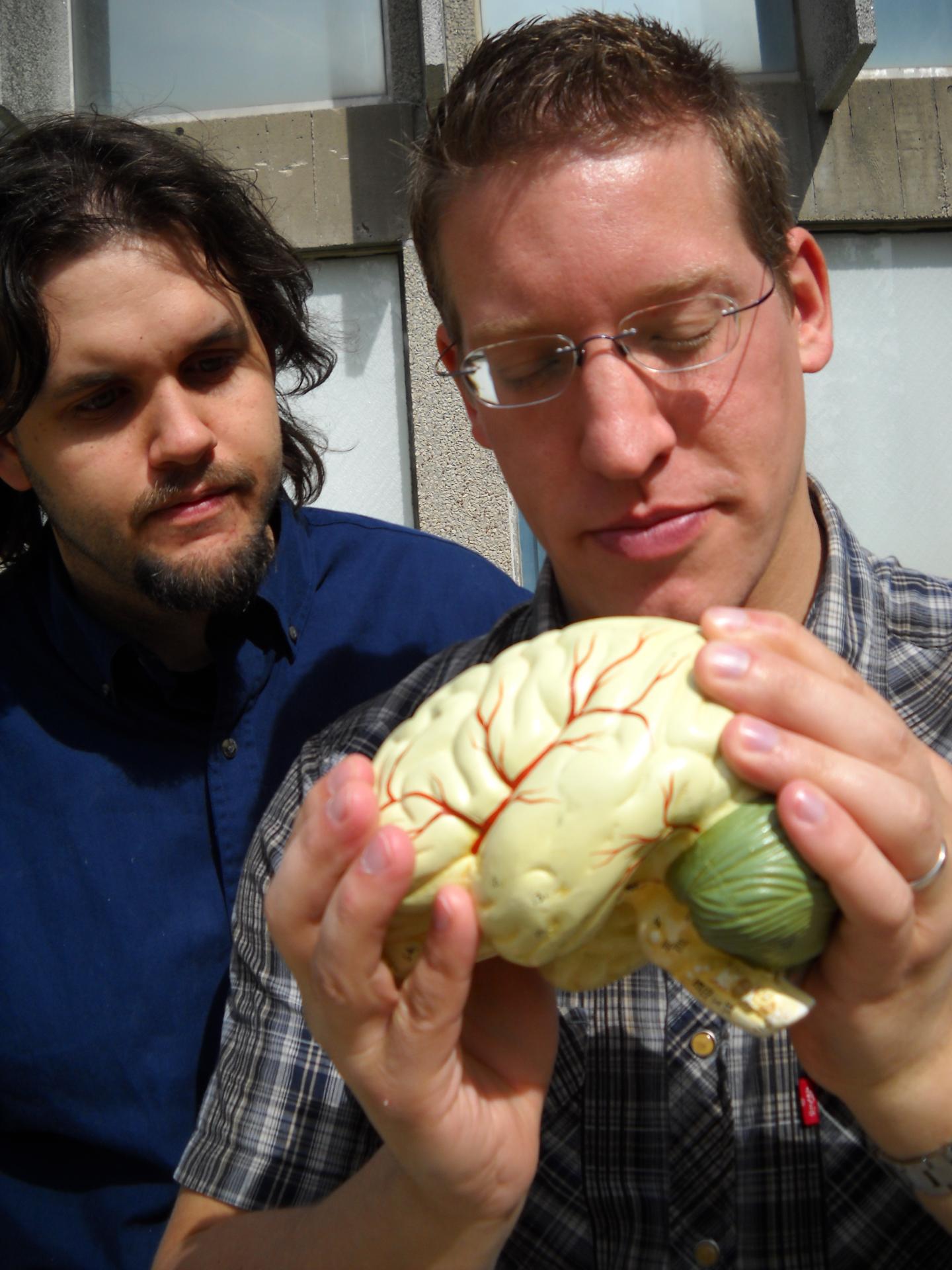
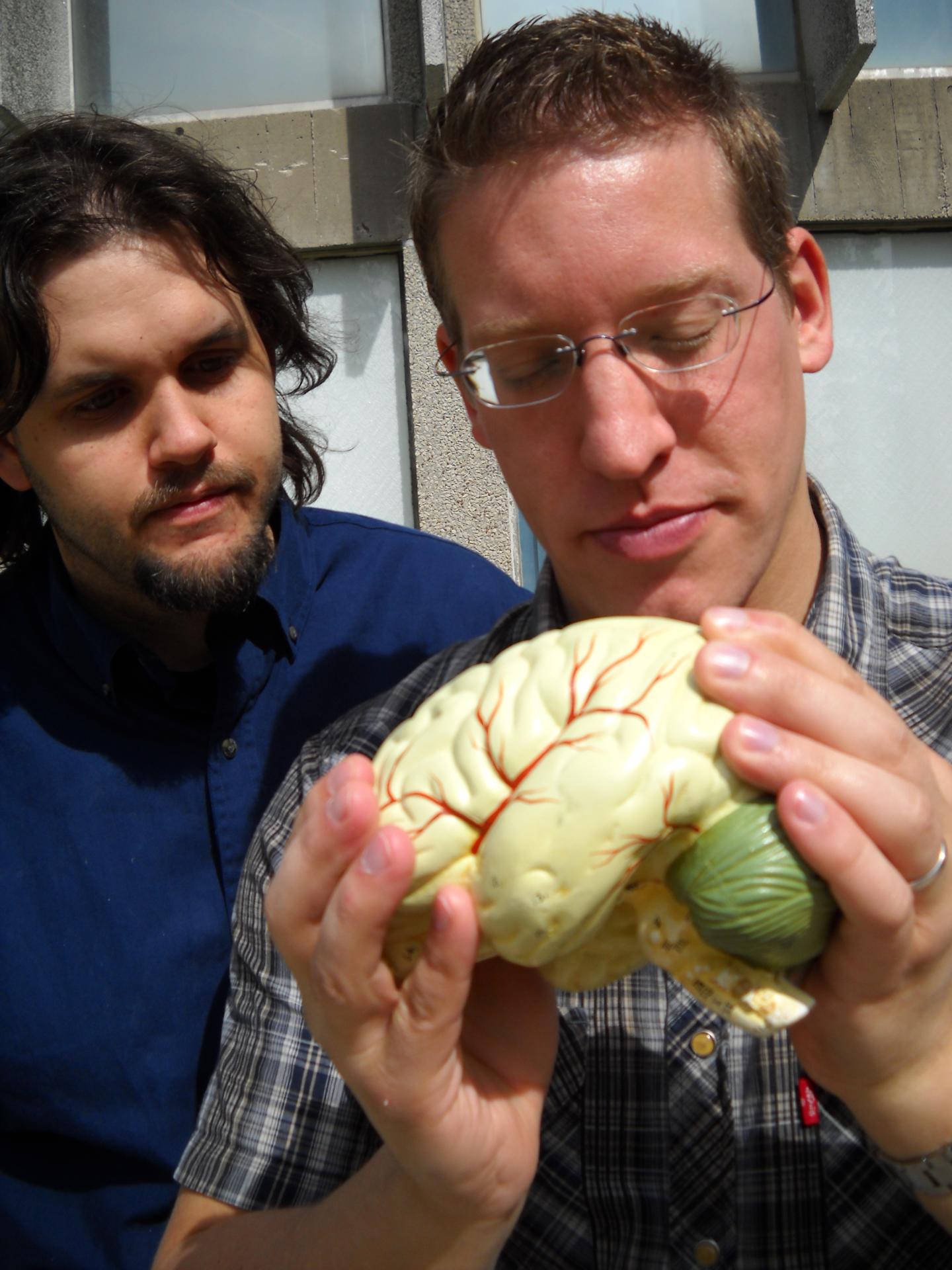
IMAGE: Prof. Boyer Winters holds a model of the human brain.

Credit: University of Guelph

New research from the University of Guelph on the brain and memory could help in developing therapies for people with schizophrenia and Alzheimer's disease.

The study by psychology professor Boyer Winters and his research team was published recently in the Journal of Neuroscience.

Their work sheds new light on the internal workings of the brain, specifically regions involved in recognizing and remembering objects.

"Our study suggests that past experience with an object alters the brain circuitry responsible for object recognition," said Winters.

"It has significant implications for our understanding of multisensory information processing."

Multisensory integration is an important part of memory, Winters said. For example, if you hold something while blindfolded, chances are you can recognize it by touch if you have seen it before. But how?

Specialized areas of the brain mediate information for sight and touch, Winters said. Some researchers say those regions "talk" to each other, enabling better recognition of an object.

Others believe that the brain integrates information from the senses and stores it in a separate place entirely, and then taps into that area to aid object recognition.

Winters and his team from U of G's Collaborative Neuroscience Program set out to test which model is correct using rats.

They let some rats briefly explore an object's tactile and visual characteristics. The next day, the researchers showed the object to the same animals, and compared their responses to rats seeing the object for the first time.

Rats exploring the objects for the first time appeared to use multiple specialized brain regions to recognize the object, while rats with previous exposure tapped into a separate part of their brains to perform the same memory task.

"Knowing what an object looks like enables them to assimilate information in a way that doesn't happen when there is no pre-exposure," Winters said.

"Our study suggests there is an assigned region of the brain for memory based on previous experience with objects."

The more exposure to an object, the more information about it is stored in dedicated parts of the brain, leading to more efficient behavioural responses, Winters said.

The research may help in developing therapies for people with dementia and other brain disorders who cannot recognize highly familiar objects or people, he said.

###

Media Contact

Boyer Winters
[email protected]
519-824-4120 x52163
@uofg

http://www.uoguelph.ca

Share12Tweet8Share2ShareShareShare2

Related Posts

Carboplatin ± Nivolumab in Metastatic TNBC Trial

May 16, 2026

New Numeracy Screener Developed for Preschoolers

May 16, 2026

Genetic Dosage Influences Parkinson’s Cognitive Decline

May 16, 2026

Post-Neonatal Epilepsy in Newborns Study Revealed

May 16, 2026
Please login to join discussion

POPULAR NEWS

  • Research Indicates Potential Connection Between Prenatal Medication Exposure and Elevated Autism Risk

    843 shares
    Share 337 Tweet 211
  • New Study Reveals Plants Can Detect the Sound of Rain

    730 shares
    Share 291 Tweet 182
  • Salmonella Haem Blocks Macrophages, Boosts Infection

    62 shares
    Share 25 Tweet 16
  • Breastmilk Balances E. coli and Beneficial Bacteria in Infant Gut Microbiomes

    58 shares
    Share 23 Tweet 15

About

We bring you the latest biotechnology news from best research centers and universities around the world. Check our website.

Follow us

Recent News

Carboplatin ± Nivolumab in Metastatic TNBC Trial

New Numeracy Screener Developed for Preschoolers

Genetic Dosage Influences Parkinson’s Cognitive Decline

Subscribe to Blog via Email

Enter your email address to subscribe to this blog and receive notifications of new posts by email.

Join 82 other subscribers
  • Contact Us

Bioengineer.org © Copyright 2023 All Rights Reserved.

Welcome Back!

Login to your account below

Forgotten Password?

Retrieve your password

Please enter your username or email address to reset your password.

Log In
No Result
View All Result
  • Homepages
    • Home Page 1
    • Home Page 2
  • News
  • National
  • Business
  • Health
  • Lifestyle
  • Science

Bioengineer.org © Copyright 2023 All Rights Reserved.