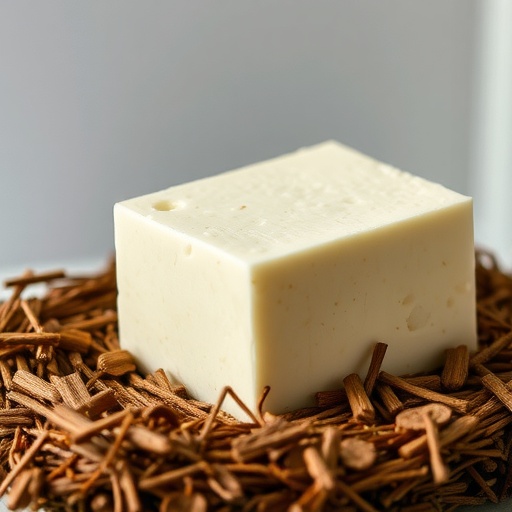
In the ever-evolving landscape of food technology and delivery, ensuring that perishable products retain their quality from production to consumer is paramount. A groundbreaking study published in Food Science and Biotechnology introduces innovative passive insulation strategies specifically tailored for tofu, a delicate soy-based food product renowned for its nutritional benefits and culinary flexibility. This research not only addresses thermal management but also explores how such strategies can maintain tofu’s quality under the stresses of simulated delivery scenarios, promising a revolution in food preservation and transport.
Tofu, cherished globally for its high protein content and versatility, poses unique challenges during delivery due to its sensitivity to temperature fluctuations. Thermal instability can lead to texture degradation, microbial growth, and flavor alterations, collectively undermining the consumer experience. Recognizing these vulnerabilities, the researchers embarked on an intensive investigation of passive insulation materials and designs that could provide a stable thermal environment without relying on active cooling systems, which are often bulky and energy-intensive.
The study meticulously evaluates various passive insulation configurations to identify how different materials and packaging geometries influence heat retention and dissipation rates. By simulating real-world delivery conditions—such as ambient temperature variations and transit time—the research provides valuable insights into which insulation solutions effectively maintain optimal internal temperatures. This comprehensive approach underscores the importance of aligning scientific rigor with practical applications in the highly competitive food delivery market.
Central to the research is the consideration of thermal conductivity, heat capacity, and insulation thickness, each playing a critical role in slowing down temperature changes within the tofu packaging. Materials evaluated include highly porous foams, aerogels, and natural fiber composites, all selected for their potential to balance thermal performance with ecological sustainability. The study reveals that certain combinations, notably those integrating layered structural elements with low-density cores, achieve superior insulation while minimizing environmental impact, aligning with growing consumer demand for green packaging.
Beyond thermal metrics, the research innovatively scrutinizes the preservation of tofu’s texture and moisture content over time, variables deeply intertwined with consumer satisfaction. By maintaining a narrow temperature band, the insulation systems prevent moisture loss and textural breakdown, which typically manifest as water separation and firmness degradation in tofu. This dual focus on thermophysical dynamics and food quality parameters broadens the understanding of what constitutes effective packaging—not just containment but active preservation.
To emulate the complexities of delivery logistics, the scientists modeled different transit durations and external temperature conditions ranging from cool, temperate climates to warm, humid environments prevalent in many urban centers. Such thorough testing simulates real-world challenges faced by online grocery and meal kit services, which have surged in popularity. The implications of these findings extend beyond tofu, hinting at adaptable insulation strategies applicable to a diverse array of perishable foods requiring stringent temperature control.
Critically, the study reveals how standard packaging solutions fall short in protecting tofu during prolonged transit, often resulting in compromised quality by the time the product reaches consumers. This gap highlights an urgent need for improved passive systems that are both cost-effective and scalable. The research team’s solutions, focusing on simple yet scientifically optimized designs, promise feasibility for large-scale adoption in commercial food supply chains, potentially reducing food waste and enhancing consumer trust in delivered products.
From a technological standpoint, the research leverages advanced thermal imaging and sensor integration to monitor temperature gradients within the packaging. These in-situ measurements provide high-resolution data, allowing for precise calibration of insulation properties against actual heat transfer behaviors. This level of technical sophistication ensures that the insulation materials are not only theoretically suitable but demonstrably effective under dynamic conditions, bridging the gap between laboratory results and field deployment.
Moreover, the investigation incorporates life cycle assessments of the proposed materials, addressing their environmental footprint from sourcing through disposal. Such holistic evaluation is critical in today’s context where sustainability is integral to innovation. The findings advocate for materials that pair performance with biodegradability or recyclability, aligning packaging technologies with circular economy principles and reducing the ecological burden traditionally associated with food delivery services.
The potential economic benefits of these passive insulation strategies are significant. By preserving tofu quality, companies can reduce spoilage-related losses and enhance customer satisfaction, driving repeat business. Additionally, the elimination or reduction of active refrigeration requirements during transit can lower operational costs and carbon emissions, presenting a compelling value proposition for logistics providers striving toward greener practices.
This research also opens avenues for customized packaging solutions tailored to specific delivery niches. For example, premium tofu varieties susceptible to faster degradation could benefit from higher-grade insulation, while standard products might employ cost-effective variants. Such segmentation allows producers and distributors to optimize their supply chains efficiently without compromising on product integrity or profitability.
Anticipating future trends, the study hints at integrating smart packaging elements, such as embedded sensors that communicate temperature data in real-time to stakeholders, enabling proactive interventions if thermal thresholds are breached. While this is beyond the current passive scope, the foundation laid by these insulation insights sets the stage for hybrid systems that combine passive and active features to further safeguard food quality.
In summary, this seminal work by Bang, Park, Sung, and colleagues constitutes a major leap in understanding how passive insulation can be harnessed to maintain the thermal and qualitative stability of tofu during delivery. Its implications resonate throughout the food technology sector, suggesting that thoughtfully engineered packaging solutions can sustainably enhance food supply resilience amid the expanding demand for online and direct-to-consumer food services.
As the global appetite for convenient, healthy food options grows, innovations like these will be pivotal in transforming food logistics. The coupling of material science with culinary science exemplified here paves the way for smarter, more sustainable food systems, ensuring that consumers enjoy the freshness and quality they expect regardless of where or how they receive their meals. The future of food delivery, illuminated by such pioneering research, promises to be cooler, fresher, and greener.
Subject of Research: Passive insulation methods to maintain thermal and quality stability of tofu during delivery.
Article Title: Passive insulation strategies for tofu: thermal and quality stability under simulated delivery.
Article References:
Bang, SH., Park, J., Sung, JM. et al. Passive insulation strategies for tofu: thermal and quality stability under simulated delivery. Food Sci Biotechnol (2025). https://doi.org/10.1007/s10068-025-02067-8
Image Credits: AI Generated
DOI: 14 December 2025
Tags: culinary versatility of tofudelivery challenges for perishable goodsenergy-efficient food transport solutionsfood preservation techniques for tofuinnovative packaging for perishable foodsinsulation materials for food safetymaintaining tofu quality during transportmicrobial growth prevention in tofupassive insulation strategies for tofuresearch on tofu quality retentiontemperature stability in soy productsthermal management in food delivery