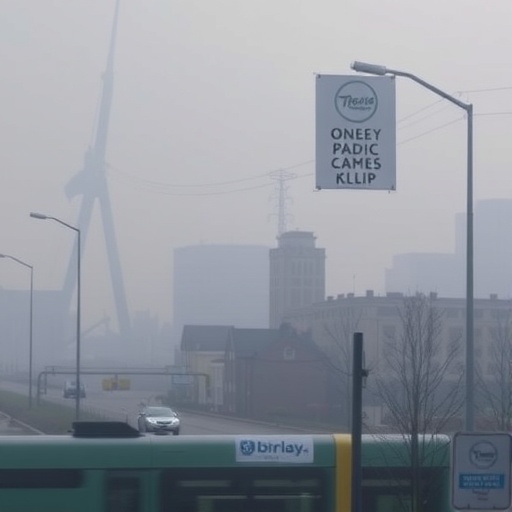
A groundbreaking study funded by the São Paulo Research Foundation (FAPESP) and published in the peer-reviewed journal Scientific Reports has unveiled a compelling link between fine particulate matter pollution in São Paulo, Brazil, and a heightened risk of kidney disease. This comprehensive research delves into the health ramifications of prolonged exposure to airborne particulate matter with a diameter smaller than 2.5 micrometers (PM2.5), a pollutant primarily generated from the combustion of vehicle fuels. The findings underscore a significant public health concern, particularly for men, who appear disproportionately vulnerable to hospitalizations due to three specific kidney conditions associated with air pollution exposure.
The study meticulously analyzed data spanning from 2011 to 2021 to estimate hospitalization risks across different kidney diseases linked to varying levels of PM2.5 exposure in São Paulo’s urban environment. Remarkably, even exposure levels adhering to the World Health Organization’s recommended 24-hour average limit of 15 μg/m³ were sufficient to elevate the risk of acute kidney injury in men. Contrastingly, this increased risk was not observed in women under the same pollution concentrations, highlighting potential gender-specific physiological or immunological responses to particulate matter inhalation and systemic distribution.
One of the most concerning revelations of this study is that São Paulo residents frequently encounter fine particulate matter concentrations reaching as high as 65 μg/m³, far exceeding the WHO’s safety threshold by over fourfold. Such extreme air pollution episodes correspond with a fourfold increase in the likelihood of hospitalization for chronic kidney disease among various age groups. Specifically, individuals aged 19 to 50 face markedly elevated risks, with the danger also extending to men in the 51 to 75 age bracket, where the hospitalization risk remains significantly elevated up to 2.5 times.
Beyond chronic kidney disease, the implications of PM2.5 exposure further extend to acute kidney injury (AKI), with the study noting an amplified hospitalization risk among younger men aged 19 to 50. Additionally, glomerulopathies, diseases that impair the kidney’s critical blood-filtering structures known as glomeruli, are notably more prevalent in men under 40 who are exposed to ambient PM2.5 levels ranging from the WHO guideline to the highest levels detected in São Paulo. Another crucial finding is that membranous nephropathy—a severe form of glomerulopathy—is increasingly linked with PM2.5 exposure regardless of the patient’s age or sex, suggesting a broad vulnerability of kidney tissue to this pollutant.
The pathophysiological mechanism hypothesized by the research team centers on the ability of fine particulate matter to bypass pulmonary defenses, enter systemic circulation, and deposit within renal tissues. Once embedded in the kidney, these particulates are recognized as foreign bodies by the immune system, triggering a cascade of inflammatory mediators. This immune activation promotes fibrosis and accelerated senescence or premature aging within the kidney, disrupting normal renal function and facilitating disease progression. As explained by project coordinator Professor Lucia Andrade, these immunological and cellular processes pave the way for multiple forms of kidney damage.
Supporting this hypothesis, prior animal studies conducted by Andrade’s research group demonstrated that mice exposed to unfiltered urban air from São Paulo developed more severe kidney injury compared to counterparts breathing filtered air. This was evidenced by diminished glomerular filtration rates, enhanced renal inflammation, activation of necroptosis pathways responsible for programmed cell death, and increased markers of both fibrosis and senescence. These experiments provide crucial biological plausibility to the epidemiological associations observed in human populations.
The implications of these findings extend far beyond the clinical domain, as they highlight immense concerns over healthcare system burdens and patient quality of life. Chronic kidney disease and acute kidney injury significantly impact morbidity, often requiring expensive and invasive treatments such as hemodialysis—a procedure involving extracorporeal blood filtration—and kidney transplantation. The latter is further complicated by a prolonged waiting list, underscoring the urgency of addressing preventable environmental risk factors.
Looking forward, an ongoing collaboration between Brazilian and Dutch researchers aims to deepen understanding by longitudinally following kidney transplant recipients. This forthcoming study intends to correlate varying levels of PM2.5 exposure with post-transplant health outcomes, thereby evaluating particulate pollution’s effect on graft survival and patient longevity.
Despite existing public policies aimed at reducing atmospheric pollution in São Paulo, the study’s results suggest these initiatives have yet to achieve sufficient impact. Researchers advocate for a transformative shift toward development models that minimize reliance on fossil fuel combustion, the principal driver of both urban air pollution and global climate change. Achieving cleaner air quality is not only critical for safeguarding renal health but also for mitigating the broader environmental and public health crises spawned by pollutant emissions.
This comprehensive investigation was conducted through the project titled “Air Pollution Is the Driver of Premature Kidney Aging,” supported by FAPESP and the Netherlands Organization for Scientific Research (NWO), with key contributors including Dr. Iara da Silva and Professor Lucia Andrade from the University of São Paulo. The team was further bolstered by the METROCLIMA MASP project, an integrated approach to climate change and air quality coordinated by Professor Maria de Fátima Andrade at IAG-USP. The collaborative framework and cross-disciplinary expertise underscore the global and multifaceted nature of addressing environmental determinants of kidney disease.
In conclusion, the evidence from São Paulo serves as a stark reminder of the hidden impacts of air pollution on renal health, especially in megacities where vehicular emissions elevate PM2.5 concentrations to alarmingly high levels. Integrating this knowledge into public health strategies and urban planning could pave the way for reducing the burden of kidney diseases and ensuring healthier futures for vulnerable populations.
Subject of Research: Chronic exposure to PM2.5 air pollution and its impact on kidney diseases in São Paulo, Brazil.
Article Title: Chronic PM2.5 exposure and increased risk of hospitalization for kidney disease in São Paulo, Brazil
News Publication Date: 16-Feb-2026
Web References:
Scientific Reports article: http://dx.doi.org/10.1038/s41598-026-39558-5
Project “Air Pollution Is the Driver of Premature Kidney Aging”: https://bv.fapesp.br/en/auxilios/107272
METROCLIMA MASP project: http://www.metroclima.iag.usp.br/
References:
Da Silva, I., Andrade, L.C. et al., Scientific Reports, 2026
Follow-up animal study on acute kidney injury, The Journal of Pathology, Wiley Online Library
Keywords:
Kidney disease, PM2.5, air pollution, São Paulo, acute kidney injury, chronic kidney disease, glomerulopathies, membranous nephropathy, inflammation, fibrosis, senescence, environmental health, urban pollution.
Tags: acute kidney injury from air pollutioncombustion-related air pollutants and renal healthepidemiology of kidney disease and pollutionfine particulate pollution impact on kidneysgender differences in pollution susceptibilitylong-term exposure to PM2.5particulate matter and kidney disease riskPM2.5 air pollution health effectspublic health impact of low-level PM2.5São Paulo air quality and healthurban air pollution and hospitalization ratesWHO air quality guidelines and kidney disease