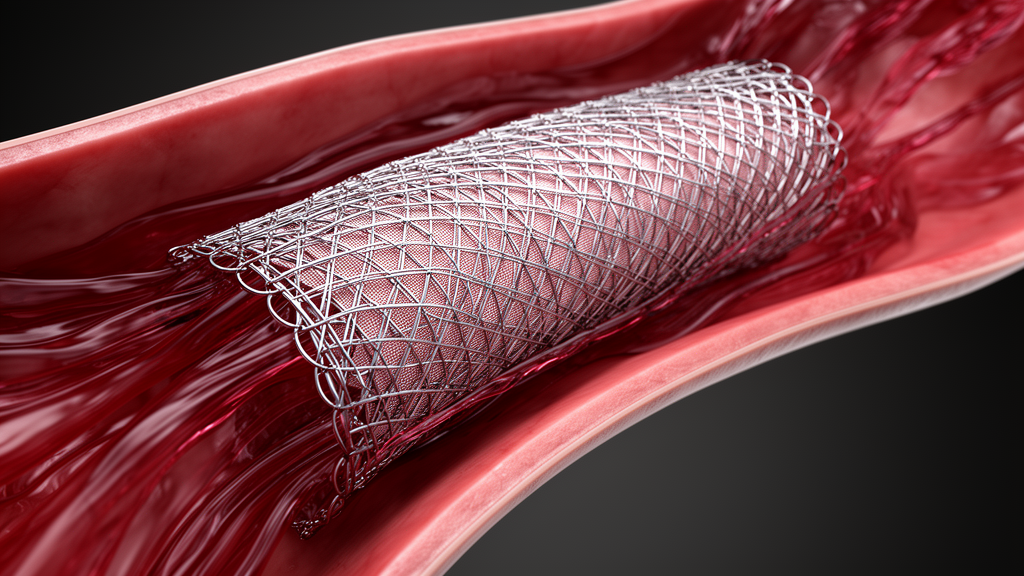
Hydrodynamic simulation testing has demonstrated that partial frozen elephant trunk devices can experience significant structural deformation and narrowing not only along their distal non-stented skirt but also directly within their stented portion during retrograde blood flow. In a research communication published in the journal General Thoracic and Cardiovascular Surgery Cases, investigators evaluated the physical performance of this specialized vascular graft under conditions replicating retrograde perfusion. The simulation findings revealed that while the device was intentionally engineered with reduced mechanical stiffness to protect vulnerable aortic tissue, this reduced radial force leaves the structural framework inherently sensitive to external pressure gradients. When subjected to retrograde flow, the resulting collapse of the graft lumen can severely restrict fluid passage, presenting an unexpected hemodynamic challenge during complex cardiovascular interventions.
This laboratory investigation was undertaken to build upon recent clinical observations regarding unexpected device narrowing in surgical patients. Specifically, authors Takeshi Shimamoto and Kenji Minatoya responded to an earlier case report by Niki and Esaki, which had described unanticipated stenosis occurring at the distal edge of a partial frozen elephant trunk while a patient was receiving retrograde perfusion via extracorporeal membrane oxygenation. That clinical report emphasized that the non-stented fabric skirt located at the distal end of the graft was particularly prone to severe mechanical narrowing under reversed flow conditions. Having previously published the initial clinical outcomes associated with the partial frozen elephant trunk technique, Shimamoto and Minatoya conducted experimental simulations to determine whether this luminal narrowing was limited exclusively to the flexible distal skirt or involved the stented graft body as well.
The design of the partial frozen elephant trunk was originally developed to resolve a critical clinical complication known as distal stent graft-induced new entry, which can occur when rigid stents exert excessive pressure against a fragile aortic wall. To minimize mechanical wall stress, the engineers altered the internal architecture of the device by decreasing the number of structural stent wires from two down to one and selecting thinner metal wires throughout the frame. According to baseline biomechanical measurements, these structural modifications achieved a 43 percent reduction in spring-back force and a 29 percent reduction in radial force relative to conventional frozen elephant trunk models. While these reductions successfully alleviate local mechanical strain on delicate aortic tissues, the authors noted that the modifications also make the entire implant considerably more compliant when external pressures exceed the internal pressure of the graft.
The authors had previously demonstrated the general clinical viability of the partial frozen elephant trunk in their surgical practice, achieving a 100 percent technical success rate and zero in-hospital mortality across their initial patient series. Nevertheless, their clinical experience also revealed an unforeseen postoperative issue when one patient developed a significant blood pressure gradient between the upper and lower extremities following surgery. To understand the underlying physical mechanisms responsible for this abnormal gradient, the medical team designed an experimental hydrodynamic simulation capable of replicating the pressure and flow dynamics encountered during clinical perfusion.
Within this circulation loop, the partial frozen elephant trunk was placed inside a realistic dissected aortic model that featured a simulated mock flap. To evaluate the mechanical consequences of extracorporeal membrane oxygenation, fluid flow was directed from right to left across the test chamber, reproducing the exact direction of retrograde arterial perfusion.
The experimental observations confirmed that retrograde flow produces substantial narrowing across multiple segments of the partial frozen elephant trunk rather than being restricted to the unsupported skirt. Significant mechanical deformation was documented both in the distal skirt and directly within the central stented segment of the device. To isolate the contributing factors, the researchers tested a modified configuration in which the two-centimeter distal skirt was completely removed from the prosthesis. While removing the skirt improved the localized narrowing at the distal margin, marked deformation of the stented body segment persisted under identical retrograde flow conditions. This finding established that the reduced radial force of the stented skeleton makes the primary body of the graft inherently prone to collapse under retrograde pressure differentials.
In analyzing the broader clinical role of the device, the authors stated that the partial frozen elephant trunk should be regarded as an advanced alternative to conventional unstented elephant trunks rather than as an outright replacement for high-radial-force frozen elephant trunk designs. The reduced radial force and thinner profile offer distinct surgical handling advantages during planned second-stage aortic repairs. In particular, the device avoids what surgeons term stent-graft-graft anastomosis failure, a complication where surgical sutures directly interfere with metallic stent struts during subsequent operations, predisposing the vascular junction to pseudoaneurysm formation.
Despite these handling advantages, the researchers stressed that vascular surgeons must exercise ongoing vigilance whenever clinical circumstances require retrograde perfusion modalities such as extracorporeal membrane oxygenation. Because retrograde flow can precipitate the simultaneous collapse of both the distal skirt and the stented graft body, clinical teams must recognize the heightened risk of device-induced malperfusion and compromised distal blood supply. The authors emphasized that device vulnerability during non-physiological flow is not entirely unique to this modification, as even conventional frozen elephant trunk devices carry documented risks of intraoperative malperfusion.
Subject of Research: Deformation of partial frozen elephant trunk devices during retrograde aortic perfusion
Article Title: Potential deformation of the stented portion in partial frozen elephant trunk: a double-edged sword during retrograde flow under retrograde perfusion
Article References: Shimamoto, T., & Minatoya, K. (2026). Potential deformation of the stented portion in partial frozen elephant trunk: a double-edged sword during retrograde flow under retrograde perfusion. General Thoracic and Cardiovascular Surgery Cases, 5(1), Article 16. https://doi.org/10.1186/s44215-026-00259-0
Image Credits: AI Generated
DOI: 10.1186/s44215-026-00259-0
Keywords: partial frozen elephant trunk, retrograde perfusion, hydrodynamic simulation, extracorporeal membrane oxygenation, aortic dissection, vascular stent grafts, radial force, malperfusion, Potential, deformation, stented, portion
News Source: Ophelia Keating. (November 11, 2026). Partial Frozen Elephant Trunk Stent Deforms Under Retrograde Perfusion Flow. Scienmag.