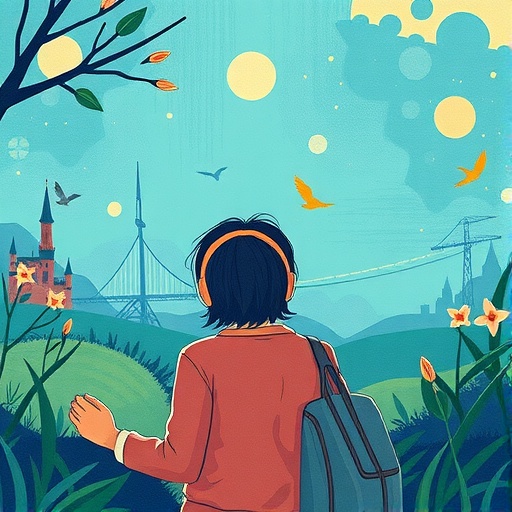
A recent investigation into the acceptance of AI-generated imagery in children’s literature has revealed significant insights about parental and child reactions. The study, conducted by researchers at North Carolina State University, challenges the presumption that modern parents may resist the integration of artificial intelligence in artistic expressions tailored for young readers. Instead, it presents a nuanced picture of willingness and apprehension, contingent upon several factors that could shape the future of children’s storytelling.
The research involved 13 parent-child pairs, comprising children aged between four to eight years and at least one participating parent. These groups were selected for their ability to reflect a broad spectrum of opinions on the experiential aspects of story reading. Each pair was tasked with engaging with two of three distinctive stories that featured illustrations. The images in these stories were rendered utilizing different methodologies: some were entirely AI-generated, others were human art enhanced by AI, and thirdly, there were images created solely by human artists.
Upon completing each reading session, the responses of the children were solicited through ratings focused on their enjoyment of both the narrative and the accompanying illustrations. For the parents, in-depth interviews aimed to uncover their preferences and concerns regarding the images that complemented the textual narrative presented in the stories. This setup provided a fertile ground for exploring the intersection of narrative engagement and technological influence on childhood literacy.
A particularly interesting finding emerged from the analytics of emotional sensitivity. Researchers noted that children demonstrated a heightened awareness of the emotional representation within the illustrations compared to their parents. Children were more adept at recognizing dissonances between the illustrations’ emotional cues and the narrative’s text. This discrepancy often stemmed from the limitations of AI in accurately interpreting and conveying complex emotional expressions that usually come intuitively to human artists.
The significance of the type of story selected for reading also played a critical role in shaping parental and child perceptions. When engaging with realistic narratives or scientific stories, both parents and older children expressed heightened concerns regarding the authenticity of the illustrations, particularly when it came to representing factual scenarios accurately. Conversely, such concerns were markedly less pronounced in fables or fantastical tales, showcasing a clear delineation in parental scrutiny based on the narrative’s roots in realism.
Moreover, while the general consensus leaning toward acceptance of AI-generated illustrations was fostered among parents, certain apprehensions lingered regarding the evolution of creative employment. Many voiced discomfort with the possibility of AI usurping traditional roles of human artists, fearing it might undermine the value of human creativity. Even as they acknowledged that well-vetted AI imagery could enhance storytelling, their concerns about the “artificial” aesthetic characteristic of many AI outputs indicated a preference for the uniquely human touch that traditional artistry brings.
The experimental aspect of labeling illustrations provided additional insight into the varying degrees of noticeability and utility of providing information regarding AI involvement. Researchers placed small labels beneath images denoting whether they were AI-generated. However, many participants overlooked these labels, indicating a preference for more conspicuous notifications, such as those on the book’s cover. This suggests that parents were deeply invested not merely in the format but also in the transparency of content creation and the human hand behind the narratives their children engage with.
In assessing the fundamental demands from parents about AI in literature, three distinct requirements emerged. Firstly, they preferred a straightforward covering label clearly indicating AI involvement. This labeling should facilitate informed purchasing decisions without requiring perusal of pages for smaller acknowledgments. Secondly, parents were particularly attuned to specific errors stemming from AI-generated illustrations, especially those that could lead to misconceptions or unsafe behavior in real-life contexts. Lastly, the research underscored the critical need for expert intervention in screening AI-generated images, reinforcing the notion that expertise remains a vital element in children’s education and safety.
While the study’s findings rest heavily on a limited sample size, they present critical implications for the publishing industry, educational circles, and the broader discourse surrounding the intersection of technology and creativity. The delicate balance between adopting innovative tools like AI and adhering to the foundational principles of storytelling—especially in a developmental context—is more relevant than ever. The nuanced perspectives from parents and children alike can guide future developments not only in storytelling but also in how technology can complement, rather than compromise, the art of story-driven education.
As this exploration unfolds, it remains imperative that creators and publishers remain attuned to the evolving preferences and concerns of their audience. Understanding the need for human oversight in an increasingly automated landscape enables stakeholders to retain the core elements that resonate with the hearts and minds of the next generation. With responsible integration of AI in children’s literature, the potential to enrich young readers’ experiences could lead to a profound transformation in how stories are crafted and consumed.
The paper detailing these fascinating insights, titled “They all look mad with each other: Understanding the Needs and Preferences of Children and Parents in AI-Generated Images for Stories,” has been published in the International Journal of Child–Computer Interaction, stretching the dialogue open on an area that bridges technology, art, and education. This research not only brings to light critical considerations for utilizing AI technologies in children’s media but also opens a pathway for future inquiries and innovations that harness the best of both human creativity and technological advancements.
Subject of Research: People
Article Title: ‘They all look mad with each other’: Understanding the Needs and Preferences of Children and Parents in AI-Generated Images for Stories
News Publication Date: 12-Nov-2025
Web References: Link to the Journal
References: None
Image Credits: None
Keywords
AI-generated images, children’s literature, parental preferences, emotional content, storytelling, educational implications, human artistry, AI in education.
Tags: acceptance of artificial intelligence in children’s booksAI-generated imagery in children’s literaturechild responses to AI art in bookschildren’s preferences for book illustrationsemotional reactions to AI illustrationsimpact of AI on children’s literatureimplications of AI in artistic expression for kidsintegration of technology in early childhood literatureparental perspectives on children’s storytellingqualitative study on parent-child interactionsstorytelling methods in contemporary children’s literatureunderstanding parental concerns about AI in education