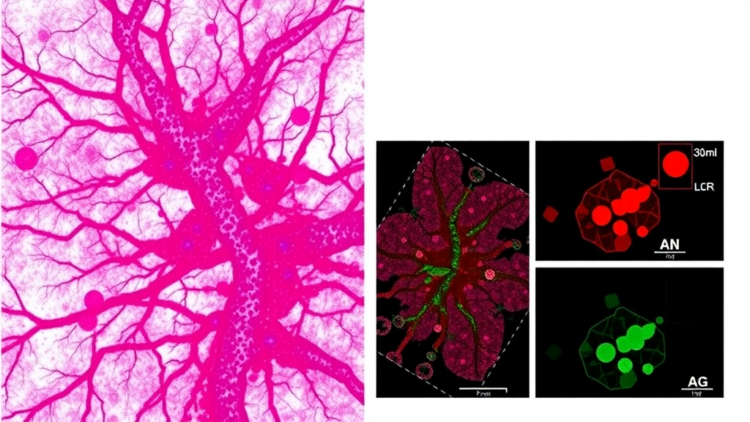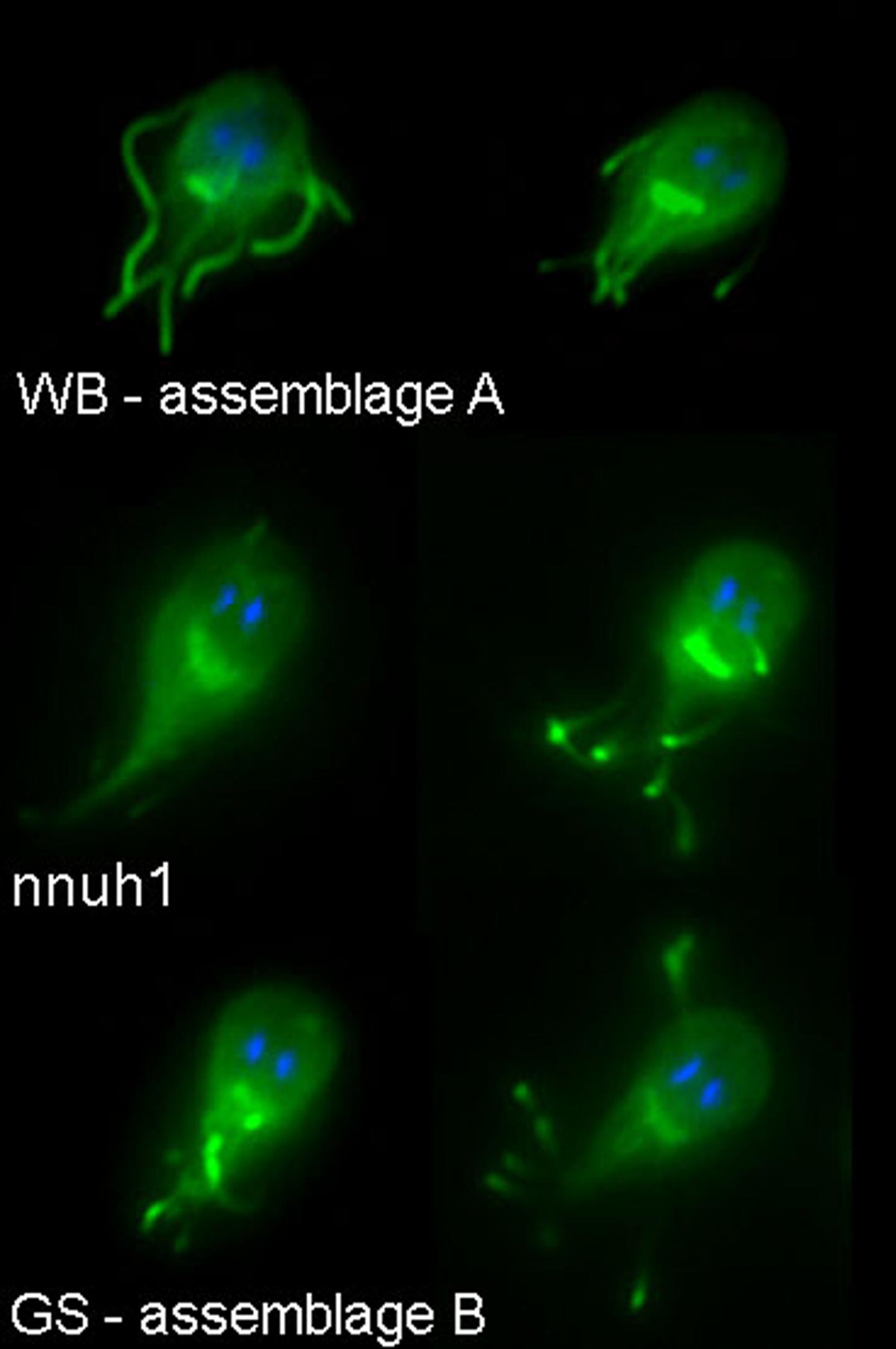
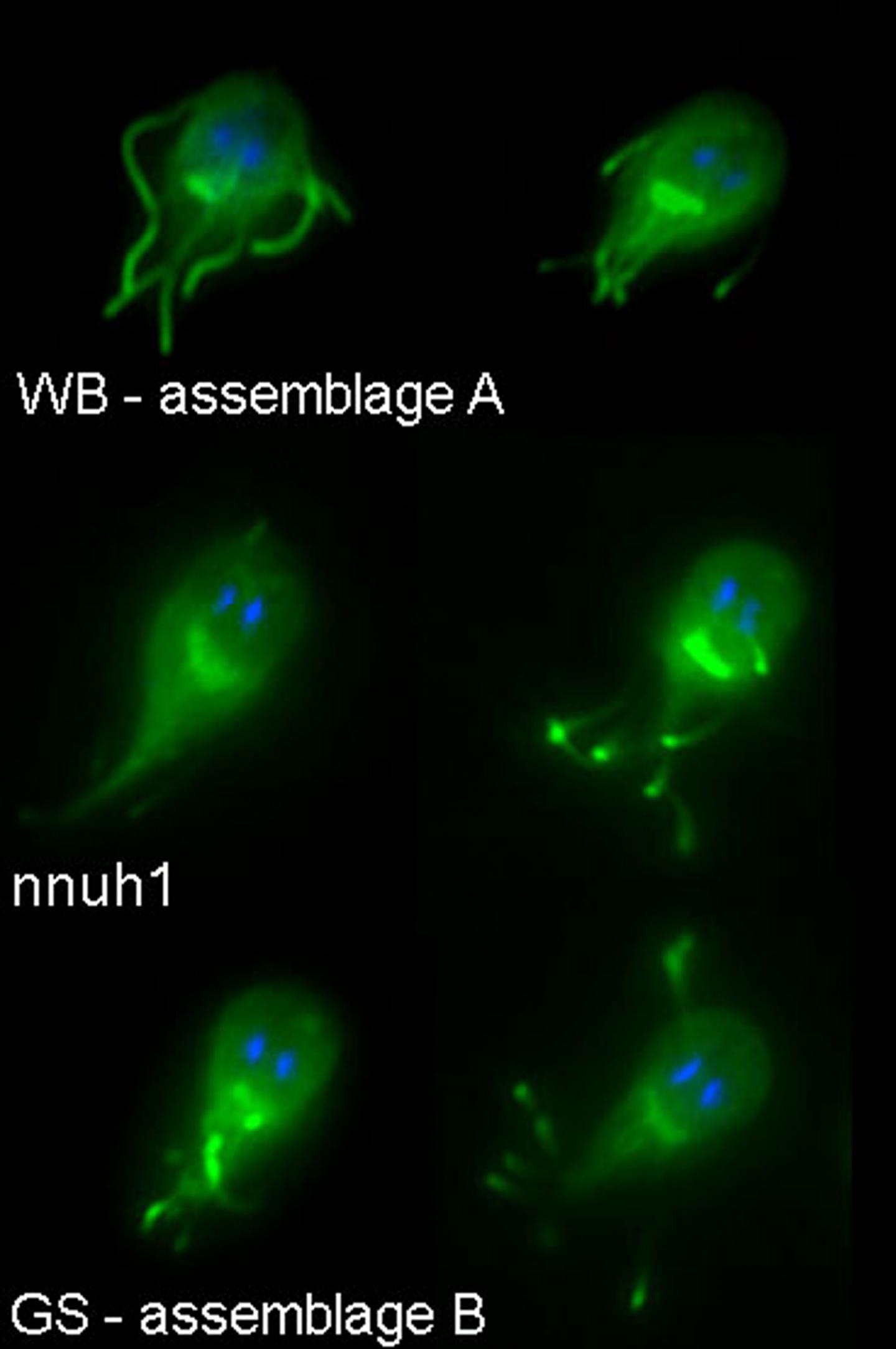
Credit: Suha Al Naimi and Kevin Tyler
Giardia parasites – responsible for one of the world's most common gastric diseases – are able to mimic human cell functions to break apart cells in the gut and feed off them, new research has shown.
A team at the University of East Anglia (UEA) has been investigating the secret behind the success of giardia, which has eluded scientists for more than 300 years.
They found that the parasite produces two main types of protein that enable it to cut through layers of protective mucus in the gut, breaking the links that knit cells together in order to easily access the nutrients within them.
The parasite, which people typically pick up through drinking infected water or contaminated food, causes a disease called giardiasis, with symptoms including diarrhoea and stomach pains. Currently more than 200,000 people are ill with giardiasis and there are 500,000 new cases a year.
The research team, based in the National Institute for Health Research Health Protection Research Unit in Gastrointestinal Infections, at UEA's Norwich Medical School, wanted to find out more about how the parasite's activities can cause severe symptoms in some patients.
Working with colleagues at the Institute of Infection and Global Health at the University of Liverpool, the team looked at cell cultures infected with giardia in the laboratory to see what the parasite was producing that could be interacting with cells in the gut. Of the two 'families' of protein identified, the team discovered that one "mimics" a group of human proteins called Tenascins.
Tenascin proteins are essential for us – they regulate cell adhesion during wound healing and tissue remodelling – providing help to cells to break apart when necessary and balancing the proteins that glue the cells together.
The giardia parasite has evolved by making proteins that are very similar to ours and able to trigger this process.
However, the giardia tenascins are used instead to upset the body's balance by preventing healing of the junctions between cells that hold them together.
The research is published in the journal GigaScience.
Senior author Dr Kevin Tyler, from UEA's Norwich Medical School, said: "We've discovered an entirely new model for how this disease develops in the gut – which can also explain why in some people the symptoms can be more severe. Because the giardia have broken down the cell barriers and made all these nutrients available, other, opportunistic bacteria can move in to take advantage of these 'ready meals' which can make giardiasis even more severe for some.
"Giardia was one of the very first disease-causing microbes to be visualised – scientists have known of its existence since 1681. But this is the first time we have been able properly to understand why this parasite is so successful."
The next step for the team is to look at whether neutralizing these proteins can provide therapy for the illness and to ask whether differences in these molecules, between parasites that cause more severe disease and those that do not, can be used to identify the more dangerous strains – which is not currently possible.
###
The research is part of the Aquavalens programme, a €9 million EU-funded research project to improve the safety of European drinking water, led by UEA.
'Giardia Secretome Highlights Secreted Tenascins as a Key Component of Pathogenesis' is published in the journal Gigascience on January 29, 2018.
Media Contact
Lisa Horton
[email protected]
44-016-035-93496
@uniofeastanglia
http://comm.uea.ac.uk/press
Related Journal Article
http://dx.doi.org/10.1093/gigascience/giy003