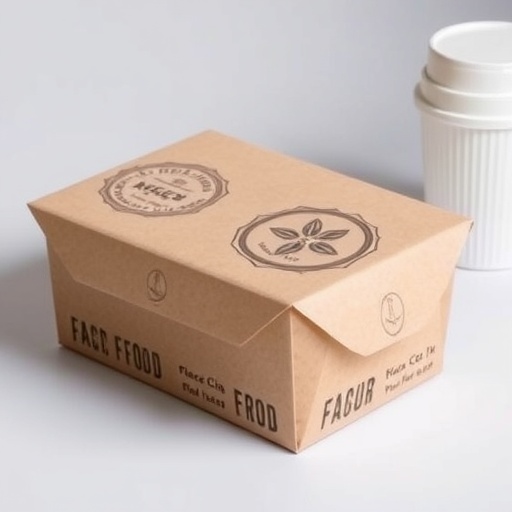

image: A new review maps multifunctional modification strategies and matrix-specific applications while warning that recyclability paradoxes and safety gaps still block the road to commercialization
view more
Credit: International Innovation Center for Forest Chemicals and Materials, Jiangsu Co-Innovation Center of Efficient Processing and Utilization of Forest Resources, Nanjing Forestry University, Nanjing, 210037, China
The global food system is confronting a dual crisis: roughly 1.3 billion tons of edible food go to waste each year, while conventional plastic packaging adds to mounting greenhouse gas emissions and microplastic pollution. Paper has long been eyed as a renewable alternative, yet its natural tendency to absorb moisture and let gases pass freely has kept it on the sidelines of serious food preservation—until now.
A sweeping review in Journal of Bioresources and Bioproducts details how researchers are transforming humble cellulose sheets into sophisticated smart packaging. Through techniques such as internal additive incorporation, surface coating, and layer-by-layer assembly, scientists are giving paper antimicrobial, hydrophobic, and gas-regulating powers that turn it from a passive wrapper into an active guardian of food quality.
The review maps out matrix-specific strategies. For fruits and vegetables, the priority is controlling respiration and scrubbing ethylene to slow ripening. For meat and seafood, the emphasis shifts to blocking oxygen and grease while embedding sensors that flag spoilage before it becomes obvious. These tailored approaches reflect a growing recognition that different foods decay through different pathways and need customized protection.
Still, the authors warn that laboratory breakthroughs do not easily translate to supermarket shelves. High-performance coatings often trap paper fibers in ways that frustrate recycling, creating a recyclability paradox. Nanomaterials and active chemicals can migrate into food under real-world humidity and temperature swings, raising safety questions that remain largely unanswered. And brittle bio-based layers frequently crack during the folding and sealing demanded by industrial packaging lines.
Looking ahead, the team calls for stimuli-responsive designs that adapt to a food’s changing condition and barrier structures that can be cleanly deconstructed for repulping. Without that balance between performance and circularity, they note, paper-based smart packaging risks remaining a promising idea rather than a practical solution.
See the article:
DOI
Original Source URL
Journal
Journal of Bioresources and Bioproducts
Journal
Journal of Bioresources and Bioproducts
DOI
10.1016/j.jobab.2026.100284
Method of Research
Literature review
Subject of Research
Not applicable
Article Title
Paper-Based Smart Packaging: Multifunctional Materials for Sustainable Food Preservation
Article Publication Date
27-Jul-2026
Media Contact
Huicong Cao
Journal of Bioresources and Bioproducts
Cell: 8259868744
Journal
Journal of Bioresources and Bioproducts
DOI
10.1016/j.jobab.2026.100284
Journal
Journal of Bioresources and Bioproducts
DOI
10.1016/j.jobab.2026.100284
Method of Research
Literature review
Subject of Research
Not applicable
Article Title
Paper-Based Smart Packaging: Multifunctional Materials for Sustainable Food Preservation
Article Publication Date
27-Jul-2026
Tags
/Physical sciences/Materials science/Materials/Organic matter/Biomass
/Physical sciences/Materials science/Materials/Organic matter/Dissolved organic matter
/Physical sciences/Materials science/Materials/Plant products
/Physical sciences/Materials science/Materials/Porous materials
/Physical sciences/Materials science/Materials engineering
/Physical sciences/Materials science/Materials/Composite materials
/Applied sciences and engineering/Food science
/Applied sciences and engineering/Food science/Food chemistry
/Applied sciences and engineering/Food science/Food resources
/Applied sciences and engineering/Food science/Food safety