Every year, mountains of fruit and vegetable peels end up in landfills around the world, discarded without a second thought by households and food processors alike. A new open-access study published in Discover Biotechnology suggests that this overlooked stream of agricultural waste may hold a surprisingly valuable secret: beta-carotene, the pigment that the human body converts into vitamin A. Led by Vidyalakshmi Alwar of Ethiraj College for Women in Chennai, India, the research systematically quantified the beta-carotene content of peels and rinds from more than twenty commonly consumed fruits and vegetables, and the results challenge assumptions about which food byproducts are worth rescuing from the bin.
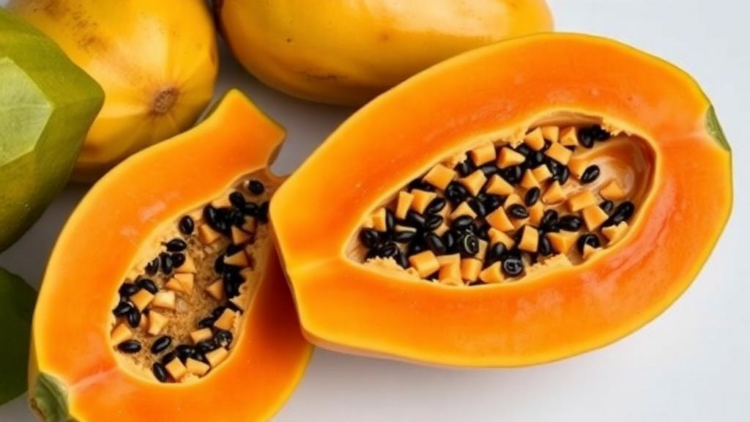
The star of the study was the papaya. Peels from Carica papaya contained 9.03 milligrams of beta-carotene per 100 grams of fresh sample, the highest concentration recorded across all the samples analyzed and well above what was measured in conventional sources such as carrots. Musk melon peels came in a distant second at 3.03 milligrams per 100 grams, while sapota peels registered just 0.67 milligrams. The differences were statistically robust: one-way analysis of variance returned an F value of 1936.623 for this group, and Tukey’s honest significant difference post-hoc test confirmed that all three fruits belonged to distinct categories at p less than 0.001.
Among vegetables, carrot peels led the pack with 1.61 milligrams of beta-carotene per 100 grams, a finding consistent with earlier reports that carrot peels are actually richer in provitamin A than the root flesh itself. German turnip, white radish, and red radish trailed far behind, with red radish registering the lowest value in the entire study at a mere 0.0087 milligrams per 100 grams. The authors attribute this dramatic gap to cellular biology: carrots sequester beta-carotene in crystalline aggregates within chromoplasts, specialized organelles derived from plastids, whereas radish and turnip tissues show limited chromoplast differentiation and low expression of carotenogenic genes such as phytoene synthase and lycopene beta-cyclase.
The banana results added an intriguing varietal twist. Four cultivars procured from a market in Tamil Nadu were compared, and the small Yelakki banana outperformed its larger cousins, delivering 1.84 milligrams of beta-carotene per 100 grams of peel against 1.50 for Red Banana, 1.32 for Nendhran, and 1.01 for Karpoora Valli. The analysis of variance yielded an F value of 63.527 with p less than 0.001. Interestingly, an earlier study on Indian banana cultivars had ranked Red Banana highest, but that work did not include Yelakki or Nendhran, underscoring how much cultivar choice matters when designing waste-valorization strategies. Ripening stage, genetics, growing conditions, and extraction method all influence the final carotenoid tally.
Citrus peels told a similar story of internal diversity. Sweet orange peels contained 1.691 milligrams of beta-carotene per 100 grams, followed by mandarin orange at 1.405, sweet lime at 0.643, and lemon at just 0.222. Every pairwise comparison was statistically significant, splitting the four citrus species into four separate groups. Prior research has shown that carotenoid levels in citrus rise during maturation, with beta-carotene accumulating most prominently in fully ripened peels, and that postharvest storage at ambient temperatures gradually degrades the pigment while controlled environments help preserve it. For food processors weighing whether citrus waste is worth collecting, variety selection and storage conditions could make the difference between a viable ingredient and a worthless one.
The thick rinds of watermelon, pomegranate, and jackfruit fared poorly by comparison, with jackfruit leading the group at only 0.050 milligrams per 100 grams, followed by watermelon at 0.039 and pomegranate at 0.017. Yet the study notes that these tissues are not nutritionally empty: watermelon rind has been reported to contain more beta-carotene than the pulp in certain varieties, and pomegranate rind is loaded with phenolic compounds that may act synergistically with its trace carotenoids. In the cucurbit family, cucumber peel surprised with 0.3713 milligrams per gram, significantly outpacing pumpkin, ash gourd, and bottle gourd, despite the peel’s green color arising from chlorophyll rather than carotenoids. Gene-expression evidence indicates that carotenoid biosynthesis is actively underway in cucumber peel tissue.
Why does any of this matter for human health? Beta-carotene is the most important plant-based precursor of vitamin A, a nutrient essential for vision, immune function, and skin integrity, and it doubles as an antioxidant that neutralizes harmful free radicals. Laboratory studies have even shown that beta-carotene can inhibit cell proliferation, arrest the cell cycle, and promote apoptosis in human breast cancer cell lines. Vitamin A deficiency remains a serious public health problem in many resource-limited regions, contributing to what experts call hidden hunger, a chronic lack of micronutrients even when calorie needs are met. The study’s authors argue that repurposing beta-carotene-rich peels into affordable supplements or food-fortification agents could directly support Sustainable Development Goals 2, 3, and 12, which target food security, well-being, and responsible consumption respectively.
Concentration alone, however, does not guarantee nutritional benefit, and the study is careful to address bioavailability, the fraction of a nutrient the body can actually absorb. Beta-carotene exists in different physical states in plant tissue: as crystals in vegetables like carrots and tomatoes, and as oil droplets in fruits like papayas and mangoes. The oil-droplet form is considerably more accessible to digestive enzymes. Remarkably, a randomized cross-over study cited in the paper found that carotenoid bioavailability from papaya is up to three times higher than from carrots or tomatoes, thanks to papaya’s softer fiber matrix and lower pectin content. Processing matters too: pureeing, chopping, and homogenizing reduce particle size and enhance enzymatic access, while mild heat treatment softens cell structures and disrupts carotenoid-protein linkages. Cooked carrots, for example, raise plasma beta-carotene levels more effectively than raw ones. Excessive heating, prolonged storage, and exposure to light and oxygen, by contrast, degrade the pigment.
The analytical approach itself was deliberately simple and reproducible. Fresh fruits and vegetables were purchased from the Guduvancheri market in Tamil Nadu, washed, manually peeled with sterile knives, and stored at minus 20 degrees Celsius overnight. One-gram samples, weighed in triplicate, were homogenized and extracted with an acetone-hexane mixture in a 4:6 ratio at room temperature under low light, following the classic Nagata and Yamashita method. Absorbance was then measured at four wavelengths, 453, 505, 645, and 663 nanometers, on a UV-Vis spectrophotometer, and beta-carotene content was calculated from a linear combination of those readings. The author acknowledges that future work should validate these spectrophotometric estimates with high-performance liquid chromatography and test how drying, enzymatic pretreatment, and incorporation into functional foods affect the bioavailability of the extracted carotenoid.
The broader significance of the study lies in its framing of food waste as a resource rather than a liability. Fruit and vegetable peels are rich not only in carotenoids but also in polyphenols and dietary fibers with antioxidant and anti-inflammatory properties, and industries ranging from nutraceuticals to cosmeceuticals are actively seeking natural alternatives to synthetic additives. Beta-carotene, in particular, has attracted attention in the cosmetic sector for its role in protecting skin from oxidative stress and reducing visible signs of aging. By demonstrating that a single papaya peel can outperform a carrot as a provitamin A source, the research makes a compelling case for circular-economy thinking in the food-processing sector: instead of paying to dispose of peels, producers could extract value from them, cut landfill burdens, and simultaneously address micronutrient deficiencies. The next challenge, the study suggests, is scaling these laboratory findings into practical extraction pipelines that preserve both the pigment and its bioavailability from farm waste to finished product.
Subject of Research: Beta-carotene content of fruit and vegetable peels as sustainable sources of provitamin A
Article Title: Sustainable waste valorization: harnessing beta-carotene from fruit and vegetable peels
Article References: Alwar, V. (2025). Sustainable waste valorization: harnessing beta-carotene from fruit and vegetable peels. Discover Biotechnology, 2(1), Article 13. https://doi.org/10.1007/s44340-025-00021-2
Image Credits: AI Generated
DOI: 10.1007/s44340-025-00021-2
Keywords: beta-carotene, food waste, fruit peels, vegetable peels, papaya, vitamin A, circular economy, nutraceuticals, carotenoids, sustainability, food waste valorization, functional foods
Cite Scienmag News
APA
MLA
Chicago
Sloane Callahan. (October 1, 2026). Papaya Peels Top the List as Fruit and Vegetable Waste Yields Provitamin A Gold. Scienmag. https://scienmag.com/papaya-peels-top-the-list-as-fruit-and-vegetable-waste-yields-provitamin-a-gold/
Sloane Callahan. “Papaya Peels Top the List as Fruit and Vegetable Waste Yields Provitamin A Gold.” Scienmag, 1 October 2026, https://scienmag.com/papaya-peels-top-the-list-as-fruit-and-vegetable-waste-yields-provitamin-a-gold/. Accessed 1 October 2026.
Sloane Callahan. “Papaya Peels Top the List as Fruit and Vegetable Waste Yields Provitamin A Gold.” Scienmag. October 1, 2026. https://scienmag.com/papaya-peels-top-the-list-as-fruit-and-vegetable-waste-yields-provitamin-a-gold/
Copy citation
Download RIS
Tags: agricultural byproduct utilizationbeta-carotenebioactive compounds in fruit peelscarotenoidsCircular economyenvironmental impact of food wastefood processing byproductsfood wastefood waste valorizationfruit and vegetable waste recyclingfruit peel nutritional analysisfruit peelsfunctional foodsnatural sources of provitamin Anutraceuticalspapayapapaya peel beta-carotene contentpotential health benefits of fruit wasteSustainabilitysustainable food waste managementvalorization of fruit peelsvegetable peelsvitamin Avitamin A-rich food sources