Psychiatric patients with post-traumatic stress symptoms experienced the most intense dissociative symptoms during the first year of the SARS-CoV-2 pandemic, and the severity of those symptoms rose and fell with the strictness of government restrictions rather than with the number of positive virus tests. That is the central finding of a longitudinal study conducted at the University Hospital Bonn in the German state of North Rhine-Westphalia, published in the journal Borderline Personality Disorder and Emotion Dysregulation. The work tracked dissociative experiences among patients and healthy controls across three survey periods between April 2020 and May 2021, using multilevel statistical models to separate the influence of lockdown measures from that of circulating infection rates.
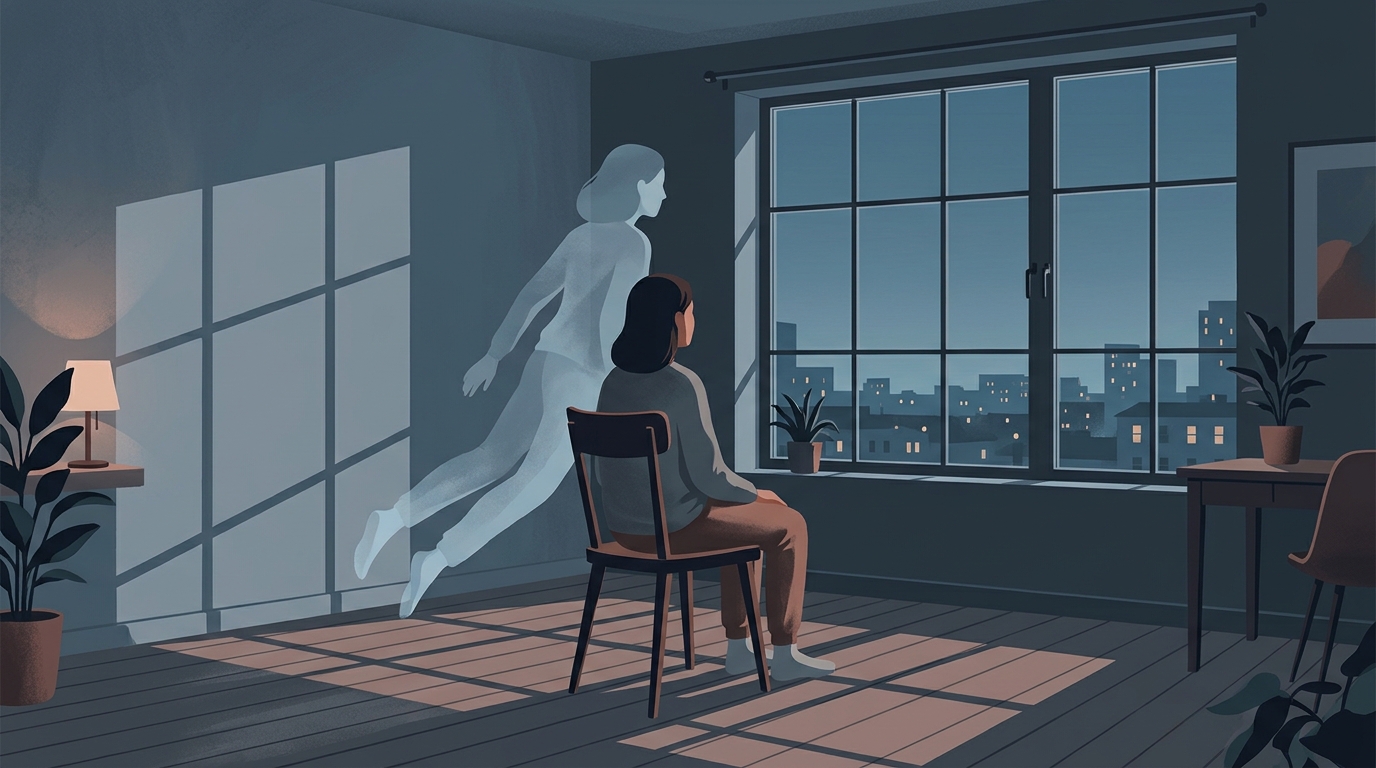
Dissociative symptoms arise in reaction to significant stress and are common in post-traumatic stress disorder. They include feelings of unreality, emotional numbing, distortions in the experience of time and space, and a sense of being separated from one’s own body or surroundings. Population-based surveys had already reported elevated states of depersonalization and derealization and altered experiences of time during the pandemic, but only one qualitative study had assessed patients with pre-existing mental health conditions.
The study recruited psychiatric inpatients, outpatients and day-care patients from the Department of Psychiatry and Psychotherapy at University Hospital Bonn, with a smaller contribution from the Department of Psychosomatic Medicine and Psychotherapy. A convenience sample of control subjects was drawn from hospital staff and their acquaintances. From 115 initially obtained datasets, 93 participants were finally analysed: 32 male and 61 female, with a mean age of 40.03 years. Of these, 69 were patients and 24 were controls. The patient group was divided using the Essen Trauma Inventory, a German self-assessment questionnaire, into 41 patients with relevant post-traumatic symptoms at study start and 28 patients without such symptoms. The researchers applied a cut-off of 17 points on the ETI-PTSD scale, which ranges from 0 to 51, while noting that this score does not qualify for a full clinical diagnosis of PTSD.
Measurements took place over three periods. The first, T0, ran from April 15 to May 17, 2020, during the first lockdown. The second, T1, ran from September 10 to October 25, 2020, after schools reopened. The third, T2, ran from April 30 to May 21, 2021, one year after the study began. Dissociative symptoms were measured with the Fragebogen zu Dissoziativen Symptomen, a 44-item adapted and extended German version of the Dissociative Experience Scale aligned with ICD-10 and DSM-5 concepts. The questionnaire yields subscales for amnesia, absorption, depersonalization and derealization, and conversion, plus a taxon score of eight items indicating severe forms of dissociation. Because the instrument is primarily suited to trait diagnostics, the team added instructions at the later time points to limit the retrospective reference period.
To quantify pandemic pressure, the researchers built two regional indicators. The first was the seven-day incidence of positive SARS-CoV-2 PCR tests published by the state Ministry of Labour, Health and Social Affairs. The second was a self-developed non-pharmacological intervention score, rated from 0 to 14 points across categories including mask mandates, contact restrictions, schools, gastronomy and retail, events, the health system, and hotels and cultural institutions. This regional score correlated strongly with the Oxford Stringency Index for Germany, with a Pearson correlation of 0.85. Both indicators were entered into multilevel linear models alongside group membership to explain variation in dissociative symptom scores over time.
The results showed a clear group hierarchy. Patients with relevant PTSD symptoms at study start consistently reported the highest dissociation values across all study periods, patients without such symptoms fell in between, and controls showed the lowest intensity. Adjusted for the pandemic indicators, the PTSD group’s average total score on the dissociation questionnaire was 9.50 points higher than that of controls and 7.33 points higher than that of other psychiatric patients. Childhood trauma, measured once at baseline with the Childhood Trauma Questionnaire, followed the same pattern: the PTSD group showed the highest trauma load with a mean of 52.38 points, followed by the non-PTSD patient group at 39.76 and the control group at 32.92, a statistically significant difference.
The dynamics over time were driven by the restriction score rather than by infection counts. For each one-point increase in the non-pharmacological intervention score, the total dissociation score rose by an average of 0.35 points. The seven-day incidence, by contrast, showed no positive influence and even a statistically significant negative correlation, which the authors interpret as a statistical artefact. A second model revealed a significant interaction between group and restriction intensity: each additional point on the intervention score was associated with an increase of 0.53 points in the PTSD group, 0.15 points in the non-PTSD patient group, and only 0.04 points in controls. The depersonalization and derealization subscale mirrored this pattern almost identically, with a significant group-by-restriction interaction concentrated in the PTSD group, while absorption showed a significant overall effect of restrictions but no differential group effect, and amnesia and conversion changed over the study independently of the restriction score.
The authors interpret these findings through the lens of stress-related disorders. Patients with PTSD symptoms may have perceived the profound changes in daily living conditions as threatening, and dissociative experiences of unreality may express that perceived threat. They note that the concept of a state of emergency as a “new normal” was broadcast widely in Germany in 2020, and suggest that patients whose previous life events taught them to detect dangers early may have reacted strongly to this shift in reality. The study also showed that no group at any time period reached a mean taxon score above 20 points, the threshold that might indicate severe dissociation, although the PTSD group surpassed 5 points at the first and third measurement periods, a value reached by less than 10 percent of the general population in Germany.
The researchers are careful about the limits of their conclusions. They emphasize that the statistical influence of restrictions on dissociative symptoms should not be conflated with causality, given the observational design and the lack of control for alternative explanations. Diagnostics relied entirely on self-report measures, no structured diagnostic interview for PTSD was conducted, and the control group’s absence of mental illness was also assessed by self-report. A potential overlap between temporal effects, pandemic progression and restriction effects may also complicate interpretation.
Nevertheless, the authors conclude that psychiatric patients, particularly those with relevant PTSD symptoms at study entry, showed considerable responsivity to the multifaceted stress of the pandemic, with restrictions of everyday living acting as an aggravating factor. They recommend careful adjustment of non-pharmaceutical interventions in future scenarios to protect vulnerable populations, and systematic screening for dissociative symptoms in mental health services, noting that such manifestations are frequently underdiagnosed despite their potential impact on psychopathological severity and treatment response.
Subject of Research: Longitudinal study of dissociative symptoms in psychiatric patients during the first year of the SARS-CoV-2 pandemic in Germany
Article Title: Dissociative symptoms during the SARS-CoV-2 pandemic situation in mental health patients
Article References: Pensel, M. C., Siems, J. M. H. L., Blazejak, A., Steinau, C., Fink, J., Schmitz, M.-T., Philipsen, A., & Rohner, H. (2026). Dissociative symptoms during the SARS-CoV-2 pandemic situation in mental health patients. Borderline Personality Disorder and Emotion Dysregulation, 13(1), Article 22. https://doi.org/10.1186/s40479-026-00363-1
Image Credits: AI Generated
DOI: 10.1186/s40479-026-00363-1
Keywords: dissociation, PTSD, SARS-CoV-2, pandemic, psychiatry, depersonalization, derealization, non-pharmaceutical interventions, lockdown, University Hospital Bonn, longitudinal study, mental health
News Source: Glenn Wilkins. (November 4, 2026). Pandemic Restrictions, Not Case Counts, Drove Dissociative Symptoms in Psychiatric Patients. Scienmag.