In a groundbreaking study published this June in Cell Death Discovery, researchers have unveiled a novel mechanism by which pancreatic cancer orchestrates immune evasion through reprogramming B cell fate, revealing new potential avenues for therapeutic intervention against one of the deadliest malignancies. The research meticulously demonstrates that pancreatic tumors can undermine the immune system’s defensive arsenal by inducing plasticity in B lymphocytes, a process fundamentally mediated by the suppression of Pax5, a critical transcription factor dictating B cell identity and function.
The immune system’s role in combating cancer is complex and often paradoxical. While immune cells typically detect and destroy malignant cells, tumors have evolved sophisticated strategies to manipulate immune components to their advantage. Among these, B cells—traditionally recognized for their antibody-producing capability—have recently emerged as pivotal players in tumor immunology, capable of assuming diverse phenotypes and functions under pathological conditions. The discovery that pancreatic cancer can inhibit Pax5 to rewire B cell lineage commitment adds a new layer of understanding to how tumors achieve sustained immunosuppression.
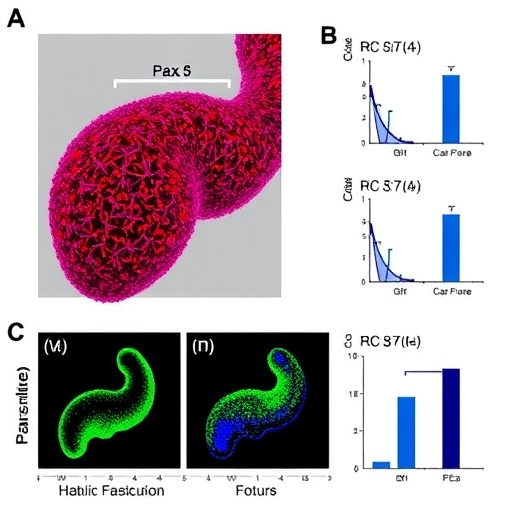
Pax5 serves as a master regulator of B cell development, enforcing lineage fidelity by ensuring that progenitor cells fully commit to the B cell fate and preventing transdifferentiation into other hematopoietic lineages. The study’s detailed molecular analyses showed that pancreatic tumors trigger a downregulation of Pax5 within infiltrating B cells. This downregulation results in a remarkable plasticity that allows these cells to adopt alternative phenotypes more favorable to the tumor microenvironment, effectively disarming the immune response.
Using a combination of single-cell RNA sequencing, chromatin accessibility profiling, and functional assays, the investigators tracked shifts in B cell populations in tumor-bearing mice and human pancreatic cancer samples. They observed marked heterogeneity emerging within the B cell compartment, with subsets losing canonical B cell markers while gaining characteristics typical of myeloid or regulatory phenotypes. This transdifferentiation is critical because it converts B cells from potential anti-tumor effectors into cells that promote immune tolerance and tumor progression.
The implications of these findings are profound. By co-opting B cell lineage plasticity, pancreatic tumors cultivate an immunosuppressive niche that blunts cytotoxic T cell activity and facilitates immune escape. This adds to the growing body of evidence pointing to the tumor microenvironment’s complexity and the multifaceted roles of immune cells beyond their classical functions. Targeting the Pax5 pathway or its downstream effectors might thus represent a promising therapeutic strategy to restore effective anti-tumor immunity in pancreatic cancer patients.
Notably, this study expands the paradigm beyond T cell-centric immunotherapies, underscoring the necessity to consider B cell dynamics and lineage stability in cancer treatment design. Current checkpoint inhibitors have shown limited efficacy in pancreatic cancer, partly due to the highly immunosuppressive milieu. Interventions aimed at stabilizing Pax5 expression or preventing B cell transdifferentiation could synergize with existing immunotherapies to overcome resistance.
Additionally, the researchers highlighted the plasticity of B cells as a dynamic process, influenced by extrinsic signals from the tumor microenvironment including cytokines, metabolic cues, and direct cellular interactions. These factors collectively orchestrate a transcriptional reprogramming landscape that dismantles the B cell identity. Understanding these upstream signals could help identify early biomarkers of immune dysfunction and guide the development of targeted therapies that modulate the microenvironment.
Moreover, the study’s approach integrates cutting-edge technology, including chromatin immunoprecipitation sequencing (ChIP-seq) for Pax5 binding sites and fate-mapping models, which provide causal evidence linking Pax5 inhibition to phenotypic shifts. This comprehensive methodology lends robustness to the conclusions and opens doors for similar investigations across other malignancies where immune evasion remains a challenge.
The evidence of B cell lineage plasticity challenges the previously held dogma that immune cells are terminally differentiated once committed. Instead, it presents a nuanced view where immune cells dynamically adapt their identity in pathological contexts, with consequences for disease progression and therapy response. This newfound plasticity emphasizes the need to revisit fundamental immunological concepts and their application in oncology.
Clinically, these insights could translate into novel diagnostic tools to stratify pancreatic cancer patients by the degree of immune evasion orchestrated via B cells. Monitoring Pax5 levels or the emergence of atypical B cell subsets in blood or tumor biopsies might serve as indicators for prognosis and therapeutic responsiveness, fostering more personalized treatment strategies.
Further research is warranted to delineate the downstream pathways activated upon Pax5 suppression and how these contribute to the immunosuppressive phenotype. For instance, identifying key cytokines secreted by transdifferentiated B cells or the molecular crosstalk with other immune cells would provide a more comprehensive understanding of tumor-immune interactions.
In summary, this pioneering work illuminates a critical mechanism of pancreatic cancer immune subversion through transcription factor-mediated B cell plasticity. The discovery that Pax5 inhibition fosters B cell lineage reprogramming to sustain immunosuppression significantly advances the field of tumor immunology, with promising implications for developing novel immunotherapeutic approaches tailored to combat pancreatic cancer’s formidable resistance.
As pancreatic cancer continues to pose significant clinical challenges due to late diagnosis and poor response to existing treatments, such molecular insights offer a beacon of hope. By targeting the immune system’s intrinsic plasticity and its hijacking by the tumor, future therapies might finally turn the tide against this devastating disease, improving survival and quality of life for patients worldwide.
The study exemplifies the power of interdisciplinary research combining molecular biology, immunology, and advanced genomics to unravel cancer’s complex biology. It underscores the critical importance of continuing to decode tumor-immune dynamics at the cellular and molecular levels to innovate effective, next-generation cancer therapies.
Subject of Research:
Pancreatic cancer-mediated immune evasion via transcription factor Pax5 inhibition inducing B cell lineage plasticity.
Article Title:
Pancreatic cancer induces B cell lineage plasticity via Pax5 inhibition to sustain immunosuppression.
Article References:
Kassem, A., Naser Al Deen, N., Yifeng, S. et al. Pancreatic cancer induces B cell lineage plasticity via Pax5 inhibition to sustain immunosuppression. Cell Death Discov. 12, 265 (2026). https://doi.org/10.1038/s41420-026-03174-z
Image Credits: AI Generated
DOI: 02 June 2026
Tags: B cell plasticity in cancerB cell transdifferentiation in malignancyB lymphocyte lineage commitmentcancer immunotherapy targetsimmune modulation by pancreatic tumorsimmune system suppression in pancreatic cancermechanisms of tumor immune escapenovel pancreatic cancer treatmentspancreatic cancer immune evasionPax5 transcription factor roletranscriptional regulation of B cellstumor-induced B cell reprogramming