


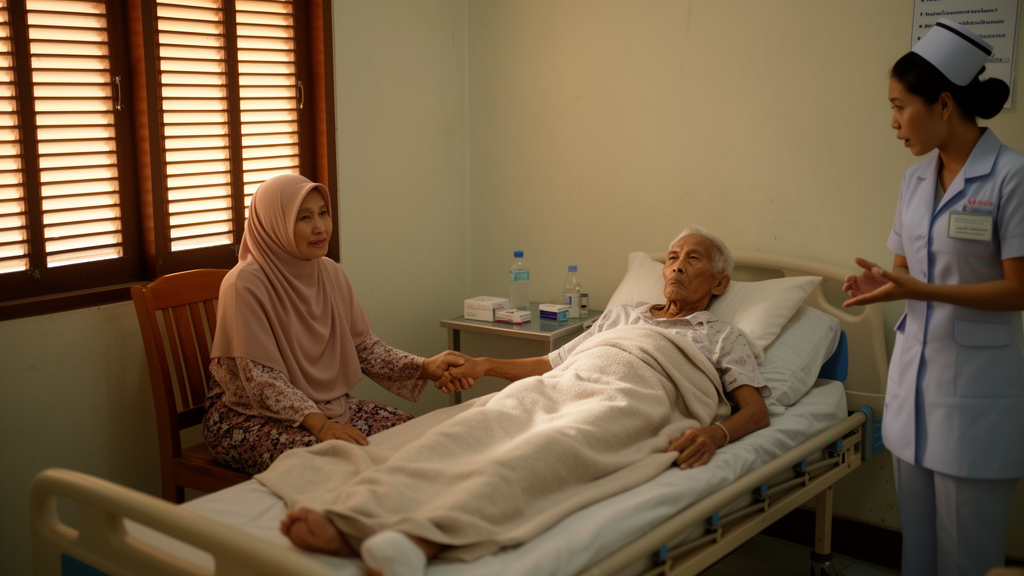
Adult Muslims living with noncommunicable diseases in southern Thailand generally show high awareness and knowledge of palliative care, but important blind spots remain around pain management, treatment limitation and artificial nutrition, according to a cross-sectional study conducted at Yaring Hospital in Pattani Province. The findings, published in BMC Palliative Care, also identify specific sociodemographic and experiential factors linked to awareness and knowledge, pointing to the need for culturally integrated education that incorporates Islamic perspectives.
The results showed relatively high levels of both awareness and knowledge across the cohort, with the strongest understanding concentrated in religious and cultural aspects of end-of-life care. This pattern is notable in a region where sociocultural and religious factors shape how illness, decision-making and end-of-life care are perceived, and where evidence on palliative care understanding among Muslim communities had previously been limited.
Despite the overall strength of awareness, the study revealed significant gaps in key clinical areas. Participants showed weaker knowledge of pain management, treatment limitation and artificial nutrition, domains that sit at the core of palliative care practice and that directly affect symptom control and end-of-life decision-making. The authors conclude that these gaps persist even among patients who are otherwise well informed about culturally and religiously related aspects of care.
The regression analysis identified distinct factors for the two outcomes. Primary education was independently associated with lower awareness, with an adjusted odds ratio of 0.31 and a 95 percent confidence interval of 0.15 to 0.65, and a p value of 0.002. In other words, participants whose highest educational attainment was primary school had markedly lower odds of being aware of palliative care than those with more education. High difficulty discussing death moved in the opposite direction, showing an adjusted odds ratio of 3.84 with a 95 percent confidence interval of 1.67 to 8.83 and a p value of 0.002, meaning participants who found it highly difficult to talk about death had nearly four times the odds of awareness.
Knowledge followed a different pattern. Coverage under Thailand’s Universal Coverage Scheme was independently associated with knowledge, with an adjusted odds ratio of 2.70, a 95 percent confidence interval of 1.03 to 7.05 and a p value of 0.043. Participants covered by the scheme had higher odds of demonstrating knowledge of palliative care than those without such coverage. No comparable association between insurance status and awareness was reported in the analysis.
The study’s design shapes how these findings should be read. As a cross-sectional survey conducted at a single hospital’s outpatient department, it captures awareness and knowledge at one point in time among a consecutive sample of patients with noncommunicable diseases. The associations identified through logistic regression describe relationships between participant characteristics and the two outcomes; they do not establish causal pathways. The confidence intervals for several estimates are wide, particularly for the Universal Coverage Scheme finding, reflecting the precision limits of the sample.
The broader context of the work is the growing burden of noncommunicable diseases and the essential role palliative care plays in improving quality of life for patients with life-limiting illnesses. Access to and understanding of palliative care remain limited in many settings, and the authors note that in Muslim populations, religious and sociocultural factors may influence perceptions of illness, decision-making and end-of-life care in ways that standard education programs do not always address.
Based on their findings, the researchers call for culturally integrated education and communication strategies that include Islamic perspectives to support appropriate, patient-centered palliative care. Such approaches, they suggest, could help close the specific gaps in end-of-life decision-making and symptom management that persist even in a population whose overall awareness and knowledge are generally high.
Subject of Research: Awareness and knowledge of palliative care among Muslim adults with noncommunicable diseases in Southern Thailand
Article Title: Awareness and knowledge of palliative care among Muslim adults with noncommunicable diseases in Southern Thailand: a cross-sectional study
Article References: Chedo, N., Sripaew, S., Fumaneeshoat, O., & Ingviya, T. (2026). Awareness and knowledge of palliative care among Muslim adults with noncommunicable diseases in Southern Thailand: a cross-sectional study. BMC Palliative Care. https://doi.org/10.1186/s12904-026-02388-3
Image Credits: AI Generated
DOI: 10.1186/s12904-026-02388-3
Keywords: palliative care, noncommunicable diseases, Muslim health, Southern Thailand, cross-sectional study, health knowledge, end-of-life care, health education, Universal Coverage Scheme, cultural competence, Awareness, knowledge
News Source: Ophelia Keating. (October 30, 2026). Palliative Care Awareness High but Gaps Persist Among Muslim Adults With Chronic Disease in Southern Thailand. Scienmag.



