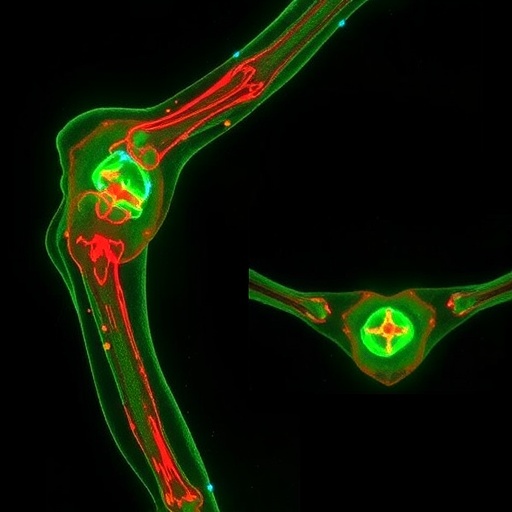
A Peony Compound Could Help Stop the Bone Erosion That Loosens Joint Implants
Artificial hips and knees can transform lives, but even successful joint replacements may eventually face a stealthy biological threat: bone disappearing around the implant. Researchers now report that oxypaeoniflorin, a compound derived from the traditional medicinal plant peony, sharply reduced this implant-associated bone loss in laboratory experiments and in a mouse model. The study identifies the antioxidant regulator Nrf2 as a central molecular target and suggests that boosting a cell’s defenses against oxidative stress could offer a new way to protect the bone–implant interface. The findings, published in the Journal of Cellular and Molecular Medicine, remain preclinical, but they point toward a possible strategy for preventing one of the most important causes of joint-replacement failure.
Total joint replacement is increasingly common as populations age and the burden of severe arthritis, traumatic injury and other disabling joint diseases grows. The procedures are highly effective, yet some implants eventually become loose without an obvious infection. This process, known as periprosthetic osteolysis, occurs when bone around the artificial joint is progressively resorbed. As the supporting bone weakens, the implant can become unstable, pain may return and revision surgery may be required. The problem is driven in part by tiny fragments shed as implant components rub against one another during movement. These particles can accumulate at the boundary between prosthesis and bone, where they activate immune cells and provoke a destructive inflammatory response.
The key executors of that destruction are osteoclasts, specialized cells whose normal job is to dissolve old bone so that tissue can be remodeled. Osteoclasts develop from bone-marrow macrophages under the influence of macrophage colony-stimulating factor and the signaling molecule RANKL. When RANKL binds to its receptor RANK on precursor cells, it activates a transcriptional program involving NFATc1 and other regulators. The precursors then fuse into large, multinucleated cells equipped to attach to bone, create a sealed resorption compartment and release acids and enzymes that digest the mineral and protein components of the skeleton. Wear particles can amplify this pathway by stimulating macrophages to release inflammatory signals and by increasing RANKL activity near the implant.
Oxypaeoniflorin, or OPF, is a derivative of paeoniflorin, one of the characteristic bioactive compounds found in peony roots and used in traditional Chinese medicine. Both compounds have attracted scientific interest because of reported anti-inflammatory and antioxidant effects, although OPF itself remains comparatively understudied. The new work tested whether OPF could interfere with the formation and destructive activity of osteoclasts. The researchers isolated bone-marrow macrophages from mice and exposed them to RANKL and M-CSF to induce osteoclast differentiation. They then examined cell survival, osteoclast formation, bone-resorption activity, gene expression, protein signaling and oxidative stress under different OPF concentrations.
At concentrations below 10 micromolar, OPF had little effect on the viability of the precursor cells, providing an experimental window in which changes could be attributed primarily to altered cell behavior rather than widespread toxicity. In cultures stimulated with RANKL, the compound reduced the appearance of tartrate-resistant acid phosphatase-positive osteoclasts in a dose-dependent fashion. It also diminished the cells’ ability to excavate pits in bovine bone slices, a standard laboratory test of osteoclast function. The strongest suppression occurred when OPF was introduced during the first one to three days of differentiation, suggesting that the compound may be particularly effective against the early molecular events that commit macrophage precursors to the osteoclast fate.
The molecular signature of osteoclasts was also weakened. OPF reduced levels of NFATc1, a master regulator that turns on the osteoclast differentiation program, along with cathepsin K, an enzyme that breaks down bone collagen, and ACP5, another widely used osteoclast marker. It lowered expression of Mmp9 and Ctsk genes, which support matrix degradation and migration, as well as Oscar and Dc-stamp, genes involved in early osteoclast signaling and the fusion of precursor cells. That fusion step is crucial: without it, macrophage-like precursors cannot form the giant multinucleated cells that efficiently resorb bone. Fluorescence imaging further showed that OPF disrupted the formation of the F-actin rings that osteoclasts use to spread across bone and seal their resorption zones.
To investigate why the compound affected this cellular architecture, the team performed RNA sequencing on RANKL-stimulated macrophages treated with or without OPF. The analysis identified 251 genes whose activity changed, with 136 increased and 115 decreased. Enrichment analyses connected many of these genes to cytoskeletal organization, a finding consistent with the observed loss of actin rings. Two proteins were especially informative: RhoA, a small GTPase that controls actin rearrangement, and DC-STAMP, a fusion regulator. Both declined after OPF exposure. At the same time, genes linked to the antioxidant response increased, including Nfe2l2, which encodes Nrf2, together with Hmox1, Nqo1, Sod1 and Sod2. The results suggested that OPF might be connecting redox control to the physical machinery required for osteoclast maturation.
Nrf2 acts as a cellular emergency-response system for oxidative stress. Under resting conditions, the protein is continually targeted for degradation, but when reactive molecules accumulate, Nrf2 can escape destruction, move into the nucleus and bind antioxidant response elements in DNA. This activates protective genes such as Hmox1 and Nqo1, while superoxide dismutases SOD1 and SOD2 help convert reactive superoxide into less damaging hydrogen peroxide and oxygen. In the OPF-treated cells, levels of Nrf2 and its downstream proteins rose, while measurements using fluorescent probes showed declines in total reactive oxygen species and mitochondrial ROS. Mitochondria are a major source of intracellular oxidants, and excessive mitochondrial ROS can intensify signaling pathways that promote osteoclast differentiation and bone resorption.
The researchers used several complementary experiments to test whether Nrf2 was merely associated with OPF’s effects or was required for them. Computer docking and 100-nanosecond molecular-dynamics simulations predicted that OPF could fit into a binding pocket on Nrf2, forming hydrogen bonds and other interactions with surrounding amino acids. Those simulations cannot by themselves prove a biological mechanism, so the team used a cellular thermal shift assay, which tests whether a compound physically stabilizes a protein when cells are heated. OPF increased the heat stability of Nrf2, supporting a direct interaction in cells. A cycloheximide-chase experiment provided additional evidence: when new protein production was blocked, Nrf2 degraded more slowly in OPF-treated cells. Microscopy also showed that OPF promoted Nrf2’s movement from the cytoplasm into the nucleus, where it could activate antioxidant genes.
The strongest functional test came from reducing Nrf2 with a targeted small interfering RNA. Knocking down Nrf2 partially reversed OPF’s effects: more mature osteoclasts formed, bone-slice resorption increased, osteoclast marker proteins and genes rebounded, and F-actin rings were restored. Oxidative and mitochondrial oxidative signals also rose, while antioxidant gene activity fell. In other words, weakening Nrf2 made the cells less responsive to OPF, tying the compound’s anti-osteoclast activity to this pathway. The results suggest a chain of events in which OPF stabilizes Nrf2, increases its nuclear activity, lowers oxidative stress and, in turn, suppresses the signaling and cytoskeletal remodeling needed to build a bone-resorbing osteoclast.
The findings extended beyond cell culture in a mouse model designed to mimic particle-driven osteolysis. The researchers placed titanium particles, each less than 5 micrometers in average diameter, onto the skull bones of mice and administered either phosphate-buffered saline or 1 milligram of OPF per kilogram each day for 14 days. Compared with sham-operated animals, mice receiving titanium developed clear erosion of the calvaria, increased porosity and reductions in bone mineral density, bone volume, bone-volume fraction and trabecular number. Local OPF treatment substantially blunted these changes. Three-dimensional micro-computed tomography showed better-preserved bone, while tissue staining revealed less erosion, reduced soft-tissue proliferation and fewer TRAcP-positive osteoclasts in the OPF-treated group.
The study’s animal experiment is an encouraging proof of concept rather than evidence that OPF is ready for patients with artificial joints. The calvarial model is useful because it is reproducible and allows researchers to study particle-induced inflammation and bone loss, but it represents an acute, localized challenge rather than the chronic, mechanically loaded environment surrounding a hip or knee implant. Human wear debris is also chemically and physically diverse, and a compound that works after local injection in mice may face major hurdles involving delivery, metabolism, dosing and safety in people. Existing antiresorptive drugs can cause complications including jaw osteonecrosis and kidney toxicity, so OPF’s safety profile and long-term effects will need rigorous testing. Even with those limitations, the work highlights an appealing therapeutic concept: instead of broadly suppressing bone turnover, a future treatment might selectively interrupt the oxidative-stress circuitry that converts implant debris into osteoclast-driven bone destruction.
Subject of Research: Oxypaeoniflorin-mediated prevention of titanium particle-induced periprosthetic osteolysis through Nrf2 regulation in osteoclasts
Subject of Research: Biology
Article Title: Oxypaeoniflorin Ameliorates Titanium Particle-Stimulated Osteolysis by Targeting Nrf2 to Reprogram Mitochondrial Homeostasis in Osteoclasts
Article References: Zhu, F., Wu, Z., Hei, J., Tao, H., Li, W., Chen, K., Wang, Q., Geng, D., Wang, Z., Xu, Y., & Lv, S. (2026). Oxypaeoniflorin Ameliorates Titanium Particle‐Stimulated Osteolysis by Targeting Nrf2 to Reprogram Mitochondrial Homeostasis in Osteoclasts. Journal of Cellular and Molecular Medicine, 30(13), Article e71266. https://doi.org/10.1111/jcmm.71266
Image Credits: AI Generated
DOI: 10.1111/jcmm.71266
Keywords: oxypaeoniflorin, periprosthetic osteolysis, joint replacement, osteoclasts, Nrf2 signaling, mitochondrial ROS, titanium wear particles, bone resorption
Cite Scienmag News
APA
MLA
Chicago
SCIENMAG. (August 28, 2026). Oxypaeoniflorin Prevents Titanium Particle-Induced Bone Loss by Reprogramming Osteoclast Mitochondria via Nrf2. https://scienmag.com/oxypaeoniflorin-prevents-titanium-particle-induced-bone-loss-by-reprogramming-osteoclast-mitochondria-via-nrf2/
SCIENMAG. “Oxypaeoniflorin Prevents Titanium Particle-Induced Bone Loss by Reprogramming Osteoclast Mitochondria via Nrf2.” Scienmag, 28 August 2026, https://scienmag.com/oxypaeoniflorin-prevents-titanium-particle-induced-bone-loss-by-reprogramming-osteoclast-mitochondria-via-nrf2/. Accessed 28 August 2026.
SCIENMAG. “Oxypaeoniflorin Prevents Titanium Particle-Induced Bone Loss by Reprogramming Osteoclast Mitochondria via Nrf2.” Scienmag. August 28, 2026. https://scienmag.com/oxypaeoniflorin-prevents-titanium-particle-induced-bone-loss-by-reprogramming-osteoclast-mitochondria-via-nrf2/
Copy citation
Download RIS
Tags: antioxidant regulation in bone tissueantioxidant strategies in orthopedic medicineinnovative therapies for joint replacement failurelaboratory and animal models of bone lossmitochondrial reprogramming in osteoclastsmolecular mechanisms of implant looseningmolecular targets for preventing joint implant looseningnatural compounds targeting bone resorptionnatural therapies for implant stabilityNrf2 pathway in bone healthNrf2 pathway in osteoclast regulationosteoclast activityoxidative stress in bone lossoxidative stress protection in bone tissuepeony-derived compounds for bone protectionpeony-derived compounds for joint healthpreclinical studies on joint implant stabilityprevention of periprosthetic osteolysisrole of mitochondria in osteoclaststitanium particle-induced osteolysis