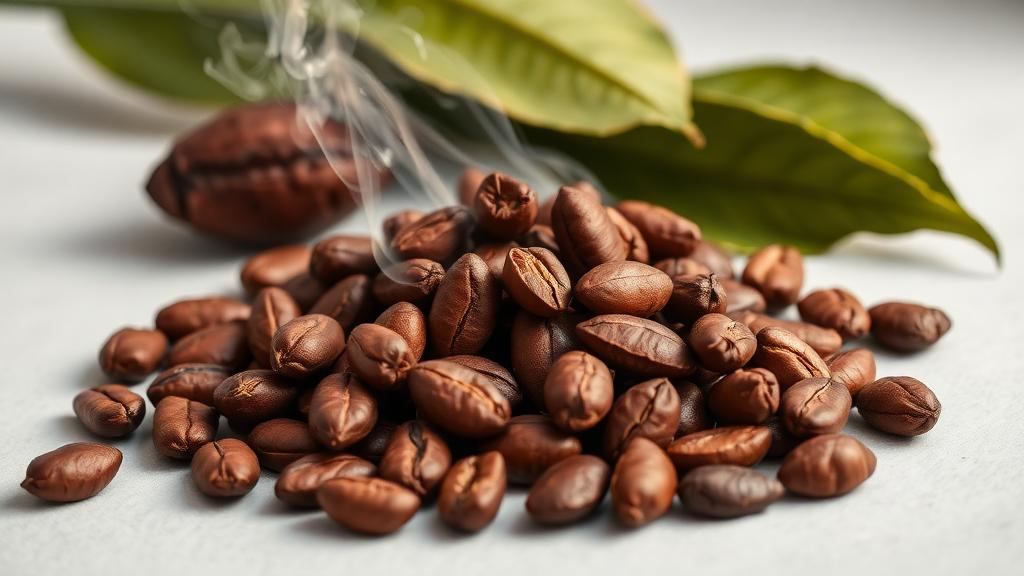
Chocolate lovers and cocoa producers alike know the disappointment of opening a batch of fermented cocoa beans only to be met with an unexpected and unwelcome aroma: smoke. For years, the industry has assumed that smoky off-flavors in cocoa are the signature of accidental exposure to wood smoke, most often during the drying of beans over open fires. A new study from Germany now overturns that assumption in a striking way. Researchers at the Leibniz Institute for Food Systems Biology at the Technical University of Munich have demonstrated, at the molecular level, that smoky off-flavors can also arise from a completely different source: overfermentation of the beans themselves. The finding, published in the Journal of Agricultural and Food Chemistry, has immediate implications for how the global cocoa industry monitors and controls one of its most critical processing steps.
The investigation was led by doctoral candidate Franziska Krause and principal investigator Martin Steinhaus, head of the Aroma Chemistry research group at the Leibniz Institute. Rather than relying on laboratory simulations alone, the team took their work into the field. Krause monitored fermentation processes on site at cocoa plantations in Nicaragua and Costa Rica, collecting samples at various stages of fermentation under real-world conditions. This field-based approach matters because cocoa fermentation is a living, microbial process that unfolds differently depending on climate, cocoa variety, and local technique. By anchoring their analytical work in genuine plantation practice, the researchers ensured that their conclusions would be relevant to the producers who actually grow and ferment the world’s cocoa.
Cocoa processing is traditionally divided into two broad stages. In tropical regions, farmers cultivate the cocoa tree, Theobroma cacao L., harvest the fruit, and extract, ferment, and dry the seeds that are commonly known as cocoa beans. The beans then travel, mostly to temperate regions, where they are transformed into chocolate and other cocoa products. The most important growing regions today lie in West Africa, Latin America, and Southeast Asia. Fermentation is the step where the raw seeds develop the precursor compounds that later give chocolate its characteristic aroma, but it is also the step where things can go wrong. Off-flavors that emerge during fermentation can compromise the quality of the final chocolate, and until recently, the odorants responsible for many of these defects were chemically unidentified.
Only in the last few years have researchers managed to pin down the specific odor-active compounds behind many cocoa off-flavors. Even so, how and under what conditions these compounds form remained poorly understood. To close that gap, Krause and Steinhaus compared samples of optimally fermented cocoa beans with samples that had been intentionally overfermented. Using modern odorant analysis techniques in the laboratory, they found that the overfermented samples contained elevated concentrations of short-chain carboxylic acids. These are not obscure molecules: they are the same class of compounds responsible for smells reminiscent of cheese, sweat, or vomit. Their presence at higher levels explains why overfermented cocoa can acquire rancid, dairy-like, and generally unpleasant aromatic notes that no chocolatier wants in their product.
The more surprising discovery concerned phenolic compounds. The overfermented samples contained significantly higher concentrations of 2-methoxyphenol and 4-ethylphenol, both of which smell smoky. The two molecules are not identical in character, however. 2-Methoxyphenol carries a rather sweet, smoky odor, while 4-ethylphenol is described as leathery and phenolic, with additional horse stable-like notes. Together, these compounds can give overfermented cocoa an aromatic profile that a trained sensory panel could easily mistake for smoke contamination. In other words, a batch of beans that never came anywhere near a smoky fire can still smell as though it did.
The comparison with genuine smoke contamination is what gives the new study its force. In an earlier investigation, the same research team had already identified and quantified the off-flavor compounds typical of wood smoke exposure in cocoa beans. That earlier work showed that when beans are dried over wood fires, smoke-derived phenols such as 2-methoxyphenol, 4-methylphenol, and 3-ethylphenol pass into the beans and penetrate deep into the cotyledons, the edible kernel of the seed. This is a crucial practical detail, because removing the shells afterwards does not significantly reduce the smoky off-flavor. The team also identified 2,6-dimethoxyphenol as a marker for smoke exposure, although that compound contributes little to the aroma itself. The new results now show that overfermented beans contain key smoke-like phenols at concentrations similar to those found in wood smoke-contaminated cocoa.
“Our results thus demonstrate for the first time, objectively and at the molecular level, that smoky off-flavors can arise not only from smoke contamination but also from overfermentation,” says food chemist Martin Steinhaus. The statement marks a conceptual shift for the industry. If smoky aromas can have two independent origins, then simply blaming open-fire drying is no longer sufficient, and quality-control strategies that focus only on drying practices may miss the real culprit. Krause adds an important nuance: “Another important finding of our study is that the quantitative spectra of the odor-active phenols differ between overfermented and wood-smoke-contaminated cocoa. These differences could help to identify the causes of smoky off-flavors more reliably in the future.” In essence, the relative pattern of phenolic compounds acts like a fingerprint, allowing analysts to distinguish whether smoke or fermentation is to blame.
Beyond diagnosis, the study offers something the industry can use immediately: a simple early-warning signal for overfermentation. At both study sites, in Nicaragua and Costa Rica, the researchers observed that the pH of the cocoa bean pulp in the fermentation mass increased significantly once the optimal fermentation duration had been reached. That means a measurement as basic as a test-strip pH reading could complement the standard checks of temperature, color, and odor that farmers and fermentary managers already perform. Detecting the onset of overfermentation early would allow producers to halt the process before cheesy, sweaty, or smoky off-flavors develop, protecting both quality and income. Notably, despite differences in climatic conditions, cocoa varieties, and fermentation methods between the two countries, the samples showed comparable results, suggesting that the pH signal may be robust across different production settings.
The work fits into a broader research program at the Leibniz Institute aimed at understanding the molecular background of cocoa quality. Previous studies by the group characterized the odorants causing smoky off-flavors in cocoa and clarified the molecular basis of a moldy-musty off-flavor, building a growing body of knowledge about the volatile compounds that make or break chocolate’s aroma. The current study adds an essential piece: a demonstration that a single sensory defect can have multiple, chemically distinguishable origins. Future research, the team says, will aim to clarify which microorganisms are involved in forming the identified compounds during fermentation, and at what concentrations these substances are actually perceived as off-flavors by consumers. Those answers could eventually translate into microbial management strategies for fermentaries.
For a commodity whose value depends so heavily on flavor, the implications are significant. Cocoa farmers, fermentary operators, chocolate manufacturers, and quality laboratories all stand to benefit from a more precise understanding of where off-flavors come from and how to catch them before they take hold. A cheap pH test strip, combined with the ability to read phenol fingerprints in suspect batches, could help ensure that the smoky notes in a chocolate bar come from intentional flavor design rather than an accident of processing. The study, published as “Off-Flavor Compounds in Fermented Cocoa: Impact of Overfermentation” in the Journal of Agricultural and Food Chemistry, was supported within the Industrial Collective Research program of the German Federal Ministry of Economic Affairs and Energy through the Research Association of the German Food Industry, with additional support for Krause through a doctoral scholarship from the Foundation of German Business. It is a reminder that in food science, as in chocolate making, the difference between delight and disappointment often comes down to chemistry measured in parts per billion.
Subject of Research: Molecular analysis of off-flavor compounds formed during overfermentation of cocoa beans
Article Title: Smoky off-flavors in cocoa aren’t caused solely by smoke
Article References: Smoky off-flavors in cocoa aren’t caused solely by smoke. (n.d.). Original publication
Image Credits: AI Generated
DOI: Not provided
Keywords: cocoa, chocolate, fermentation, overfermentation, off-flavors, food chemistry, aroma compounds, phenols, 2-methoxyphenol, 4-ethylphenol, smoke contamination, quality control
News Source: Alan Morgan. (October 7, 2026). Overfermented cocoa beans can smell smoky without any smoke at all. Scienmag.