

• HOME
  • NEWS
  • EXPLORE
    • CAREER
      • Companies
      • Jobs
    • EVENTS
    • iGEM
      • News
      • Team
    • PHOTOS
    • VIDEO
    • WIKI
  • BLOG
  • COMMUNITY
    • FACEBOOK
    • INSTAGRAM
    • TWITTER
Monday, November 2, 2026
BIOENGINEER.ORG
No Result
View All Result
  • Login
  • HOME
  • NEWS
  • EXPLORE
    • CAREER
      • Companies
      • Jobs
        • Lecturer
        • PhD Studentship
        • Postdoc
        • Research Assistant
    • EVENTS
    • iGEM
      • News
      • Team
    • PHOTOS
    • VIDEO
    • WIKI
  • BLOG
  • COMMUNITY
    • FACEBOOK
    • INSTAGRAM
    • TWITTER
No Result
View All Result
Bioengineer.org
No Result
View All Result
Home NEWS Science News Health

Over Half of Rural Households in South Wollo, Ethiopia Face Severe Food Insecurity, Survey Finds

by
October 29, 2026
in Health
Reading Time: 2 mins read
0
Over Half of Rural Households in South Wollo, Ethiopia Face Severe Food Insecurity, Survey Finds

Over Half of Rural Households in South Wollo, Ethiopia Face Severe Food Insecurity, Survey Finds

Share on FacebookShare on TwitterShare on LinkedinShare on RedditShare on Telegram

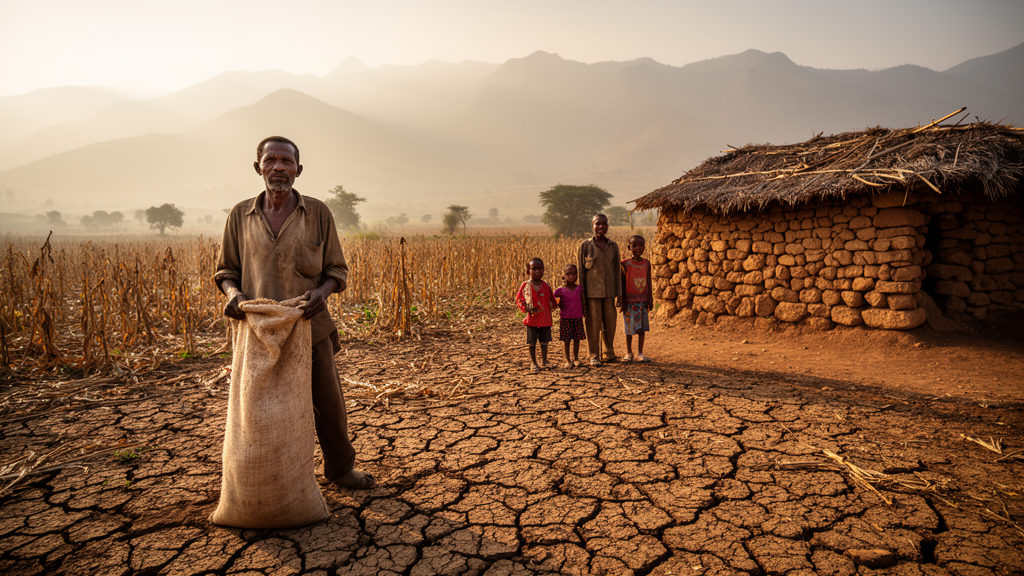
A survey of 366 randomly selected rural households in the Southwest Districts of South Wollo, Ethiopia, has found that just over half of them are severely food insecure. The study, published in BMC Nutrition, assessed food security using two internationally recognized indicators: the Household Food Insecurity Access Scale (HFIAS) and the Food Consumption Score (FCS).

According to the HFIAS measure, 51.09 percent of households were classified as severely food insecure, while only 14.48 percent were food secure. The FCS told a similar story: 57.11 percent of households fell within the poor or borderline food consumption categories, indicating that most families were not consuming an adequately diverse or sufficient diet.

The research was led by Tadsual Asfaw Dessie and Mulugeta Amsalu Mekonnen, who analyzed primary data collected from households across the district. Their assessment comes against a backdrop the authors describe as a severe national food crisis, in which conflict, drought, high living costs, and natural disasters have led to widespread acute food insecurity in Ethiopia.

The severity of food insecurity was not distributed evenly. Patterns varied across districts and household characteristics, particularly education level and the sex of the household head. Legambo district showed the highest vulnerability, as did households headed by people without education and households headed by women.

These differences matter for policy design. The authors argue that the findings demonstrate the need for geographically targeted and socially differentiated interventions, rather than uniform responses, to address chronic food insecurity and enhance rural household wellbeing in the region.

On the drivers of the crisis, the study concludes that food insecurity in the study area is driven largely by limited access to services, weak livelihood diversification, and structural socioeconomic constraints. In other words, the problem is not only a shortfall in food production but also a matter of whether households can obtain and use adequate food through their livelihoods and available services.

The authors note that the article is being shared early as a peer-reviewed, accepted version, subject to further edits before the final version of record.

Even so, the headline figures are stark: with roughly half of households severely food insecure and fewer than one in six food secure, the survey paints a picture of a rural population under sustained pressure, and it provides district-level evidence that could help direct assistance to the households and areas found to be most vulnerable.

Subject of Research: Household food insecurity measured by HFIAS and Food Consumption Scores in rural South Wollo, Ethiopia.

Article Title: Assessing the unfolding food crisis in rural South Wollo, Ethiopia: severity through HFIAS and food consumption scores

Article References: Dessie, T. A., & Mekonnen, M. A. (2026). Assessing the unfolding food crisis in rural South Wollo, Ethiopia: severity through HFIAS and food consumption scores. BMC Nutrition. https://doi.org/10.1186/s40795-026-01524-9

Image Credits: AI Generated

DOI: 10.1186/s40795-026-01524-9

Keywords: Ethiopia, food insecurity, South Wollo, HFIAS, Food Consumption Score, household survey, rural livelihoods, Amhara region, Legambo district, food access, nutrition security, BMC Nutrition

News Source: Daisy Hatcher. (October 29, 2026). Over Half of Rural Households in South Wollo, Ethiopia Face Severe Food Insecurity, Survey Finds. Scienmag.


Tags: Amhara regionBMC NutritionEthiopiafood accessFood Consumption Scorefood insecurityHFIAShousehold surveyLegambo districtnutrition securityrural livelihoodsSouth Wollo
Share12Tweet7Share2ShareShareShare1

Related Posts

ZNF207 shields glutamine transporter ASCT2 from degradation to fuel liver cancer growth

ZNF207 shields glutamine transporter ASCT2 from degradation to fuel liver cancer growth

October 30, 2026
Most Ethiopian HIV patients on dolutegravir therapy show good knowledge, survey finds

Most Ethiopian HIV patients on dolutegravir therapy show good knowledge, survey finds

October 30, 2026

Serum and urine protein biomarkers may sharpen prostate cancer detection beyond PSA

October 30, 2026

One gene locus flags atrial fibrillation risk after major surgery, UK Biobank study finds

October 30, 2026

POPULAR NEWS

  • Microbial Sources and Stress Shape the Hidden Endophytes of an Invasive Plant

    Microbial Sources and Stress Shape the Hidden Endophytes of an Invasive Plant

    29 shares
    Share 12 Tweet 7
  • Firebreaks Leave Lasting Scars in Grasslands While Wildfire Heals Fast

    29 shares
    Share 12 Tweet 7
  • ZNF207 shields glutamine transporter ASCT2 from degradation to fuel liver cancer growth

    29 shares
    Share 12 Tweet 7
  • Systematic review maps sustainability tensions in offshore wind development

    29 shares
    Share 12 Tweet 7

About

We bring you the latest biotechnology news from best research centers and universities around the world. Check our website.

Follow us

Recent News

Microbial Sources and Stress Shape the Hidden Endophytes of an Invasive Plant

Firebreaks Leave Lasting Scars in Grasslands While Wildfire Heals Fast

ZNF207 shields glutamine transporter ASCT2 from degradation to fuel liver cancer growth

Subscribe to Blog via Email

Enter your email address to subscribe to this blog and receive notifications of new posts by email.

Join 86 other subscribers
  • Contact Us

Bioengineer.org © Copyright 2023 All Rights Reserved.

Welcome Back!

Login to your account below

Forgotten Password?

Retrieve your password

Please enter your username or email address to reset your password.

Log In
No Result
View All Result
  • Homepages
    • Home Page 1
    • Home Page 2
  • News
  • National
  • Business
  • Health
  • Lifestyle
  • Science

Bioengineer.org © Copyright 2023 All Rights Reserved.
