• HOME
  • NEWS
  • EXPLORE
    • CAREER
      • Companies
      • Jobs
    • EVENTS
    • iGEM
      • News
      • Team
    • PHOTOS
    • VIDEO
    • WIKI
  • BLOG
  • COMMUNITY
    • FACEBOOK
    • INSTAGRAM
    • TWITTER
Saturday, March 28, 2026
BIOENGINEER.ORG
No Result
View All Result
  • Login
  • HOME
  • NEWS
  • EXPLORE
    • CAREER
      • Companies
      • Jobs
        • Lecturer
        • PhD Studentship
        • Postdoc
        • Research Assistant
    • EVENTS
    • iGEM
      • News
      • Team
    • PHOTOS
    • VIDEO
    • WIKI
  • BLOG
  • COMMUNITY
    • FACEBOOK
    • INSTAGRAM
    • TWITTER
  • HOME
  • NEWS
  • EXPLORE
    • CAREER
      • Companies
      • Jobs
        • Lecturer
        • PhD Studentship
        • Postdoc
        • Research Assistant
    • EVENTS
    • iGEM
      • News
      • Team
    • PHOTOS
    • VIDEO
    • WIKI
  • BLOG
  • COMMUNITY
    • FACEBOOK
    • INSTAGRAM
    • TWITTER
No Result
View All Result
Bioengineer.org
No Result
View All Result
Home Headlines

Our weight tells how we assess food

Bioengineer.org by Bioengineer.org
January 19, 2018
in Headlines, Health, Science News
Reading Time: 2 mins read
0
Share on FacebookShare on TwitterShare on LinkedinShare on RedditShare on Telegram

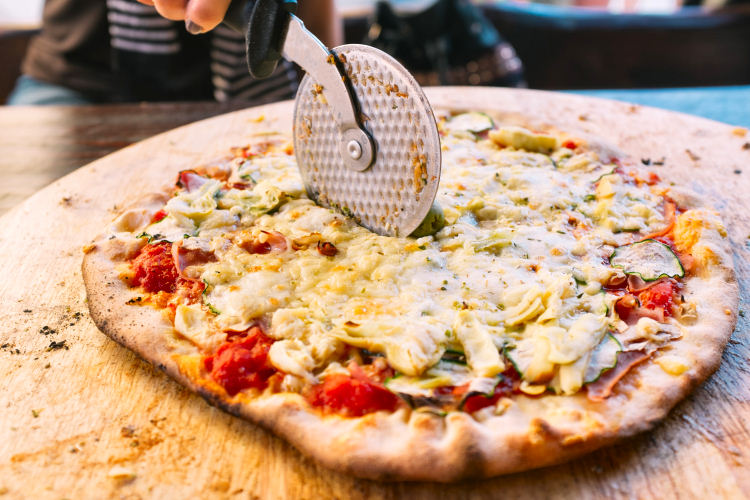
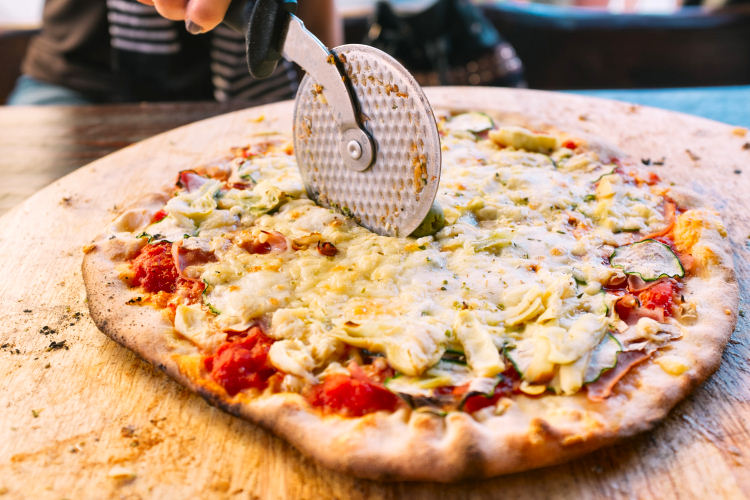
A new study demonstrated that people of normal weight tend to associate natural foods such as apples with their sensory characteristics. On the other hand, processed foods such as pizzas are generally associated with their function or the context in which they are eaten.

“It can be considered an instance of ’embodiment’ in which our brain interacts with our body”. This is the comment made by Raffaella Rumiati, neuroscientist at the International School for Advanced Studies – SISSA in Trieste, on the results of research carried out by her group which reveals that the way we process different foods changes in accordance with our body mass index. With two behavioural and electroencephalographic experiments, the study demonstrated that people of normal weight tend to associate natural foods such as apples with their sensory characteristics such as sweetness or softness.

On the other hand, processed foods such as pizzas are generally associated with their function or the context in which they are eaten such as parties or picnics. &laquoThe results are in line with the theory according to which sensory characteristics and the functions of items are processed differently by the brain», comments Giulio Pergola, the work’s primary author. They represent an important step forward in our understanding of the mechanisms at the basis of the assessments we make of food».

But that’s not all. Recently published in the Biological Psychology journal, the research also highlighted the ways in which underweight people pay greater attention to natural foods and overweight people to processed foods. Even when subjected to the same stimuli, these two groups show different electroencephalography signals. These results show once again the importance of cognitive neuroscience also in the understanding of extremely topical clinical fields such as dietary disorders.

###

USEFUL LINK:

Full paper: http://www.sciencedirect.com/science/article/pii/S0301051117302302

Media Contact

Chiara Saviane – SISSA
[email protected]
39-040-378-7230

http://www.sissa.it

https://www.sissa.it/news/natural-vs-tranformed

Related Journal Article

http://dx.doi.org/10.1016/j.biopsycho.2017.09.001

Share12Tweet8Share2ShareShareShare2

Related Posts

Two Salk Scientists Honored as 2025 AAAS Fellows

Two Salk Scientists Honored as 2025 AAAS Fellows

March 27, 2026
Starburst Winds Drain Supernova Energy Quickly

Starburst Winds Drain Supernova Energy Quickly

March 26, 2026

Decoding the Phosphorus Puzzle: How Microplastics and Hydrochar Transform Nutrient Dynamics in Rice Paddies

March 26, 2026

Microtubules Found to Actively Ensure Accurate Chromosome Distribution During Cell Division

March 25, 2026
Please login to join discussion

POPULAR NEWS

  • blank

    Revolutionary AI Model Enhances Precision in Detecting Food Contamination

    96 shares
    Share 38 Tweet 24
  • Imagine a Social Media Feed That Challenges Your Views Instead of Reinforcing Them

    1003 shares
    Share 397 Tweet 248
  • Uncovering Functions of Cavernous Malformation Proteins in Organoids

    54 shares
    Share 22 Tweet 14
  • Promising Outcomes from First Clinical Trials of Gene Regulation in Epilepsy

    51 shares
    Share 20 Tweet 13

About

We bring you the latest biotechnology news from best research centers and universities around the world. Check our website.

Follow us

Recent News

In-Sensor Cryptography Links Physical Process to Digital Identity

Can Psychosocial Factors Influence Cancer Risk?

Depression Factors in Elderly: Pre vs. Post-COVID Analysis

Subscribe to Blog via Email

Success! An email was just sent to confirm your subscription. Please find the email now and click 'Confirm' to start subscribing.

Join 78 other subscribers
  • Contact Us

Bioengineer.org © Copyright 2023 All Rights Reserved.

Welcome Back!

Login to your account below

Forgotten Password?

Retrieve your password

Please enter your username or email address to reset your password.

Log In
No Result
View All Result
  • Homepages
    • Home Page 1
    • Home Page 2
  • News
  • National
  • Business
  • Health
  • Lifestyle
  • Science

Bioengineer.org © Copyright 2023 All Rights Reserved.