• HOME
  • NEWS
  • EXPLORE
    • CAREER
      • Companies
      • Jobs
    • EVENTS
    • iGEM
      • News
      • Team
    • PHOTOS
    • VIDEO
    • WIKI
  • BLOG
  • COMMUNITY
    • FACEBOOK
    • INSTAGRAM
    • TWITTER
Saturday, February 7, 2026
BIOENGINEER.ORG
No Result
View All Result
  • Login
  • HOME
  • NEWS
  • EXPLORE
    • CAREER
      • Companies
      • Jobs
        • Lecturer
        • PhD Studentship
        • Postdoc
        • Research Assistant
    • EVENTS
    • iGEM
      • News
      • Team
    • PHOTOS
    • VIDEO
    • WIKI
  • BLOG
  • COMMUNITY
    • FACEBOOK
    • INSTAGRAM
    • TWITTER
  • HOME
  • NEWS
  • EXPLORE
    • CAREER
      • Companies
      • Jobs
        • Lecturer
        • PhD Studentship
        • Postdoc
        • Research Assistant
    • EVENTS
    • iGEM
      • News
      • Team
    • PHOTOS
    • VIDEO
    • WIKI
  • BLOG
  • COMMUNITY
    • FACEBOOK
    • INSTAGRAM
    • TWITTER
No Result
View All Result
Bioengineer.org
No Result
View All Result
Home NEWS Science News Biology

OU research team identify genetic structure of Painted Bunting

Bioengineer by Bioengineer
June 27, 2018
in Biology
Reading Time: 2 mins read
0
Share on FacebookShare on TwitterShare on LinkedinShare on RedditShare on Telegram
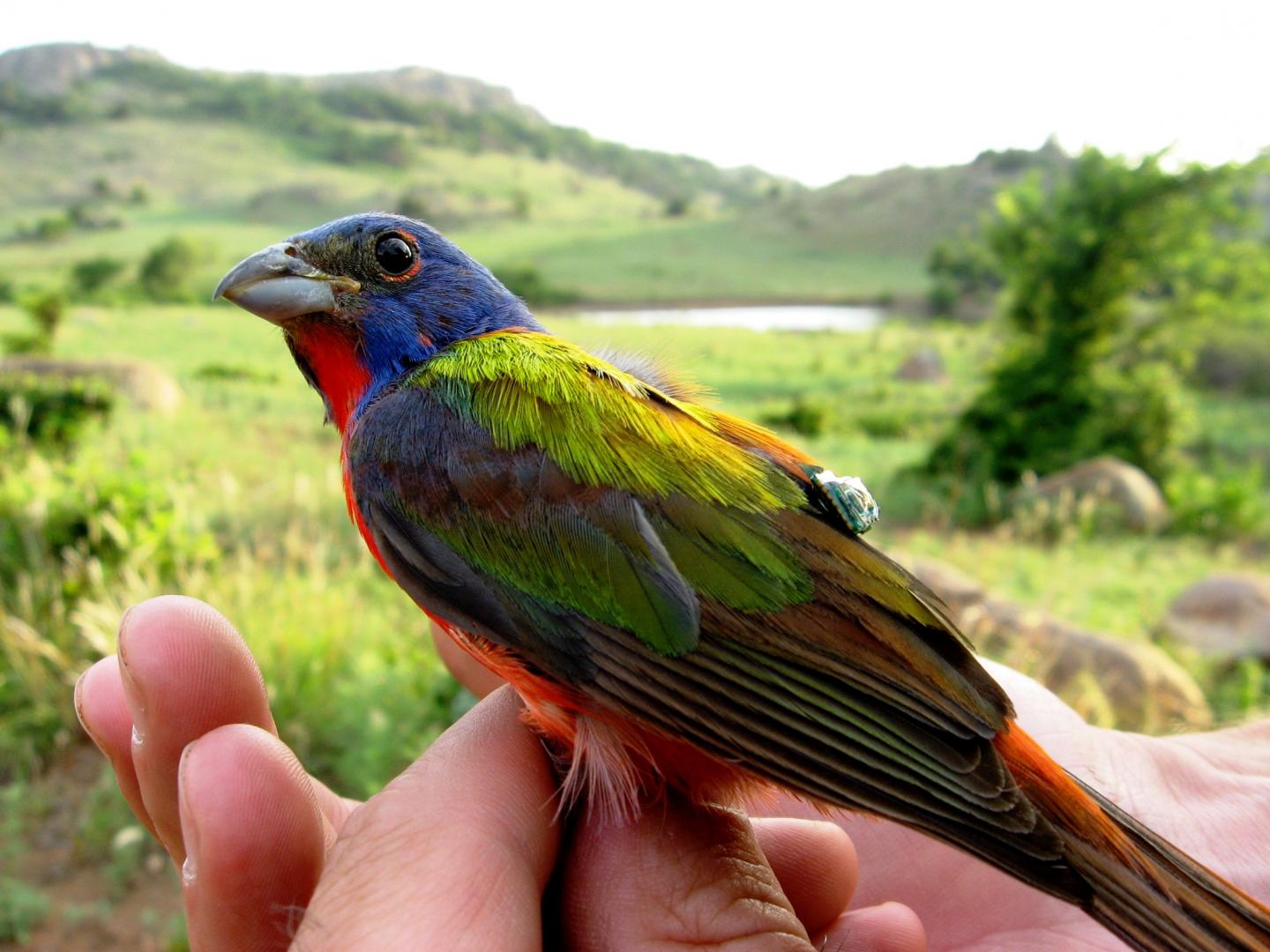
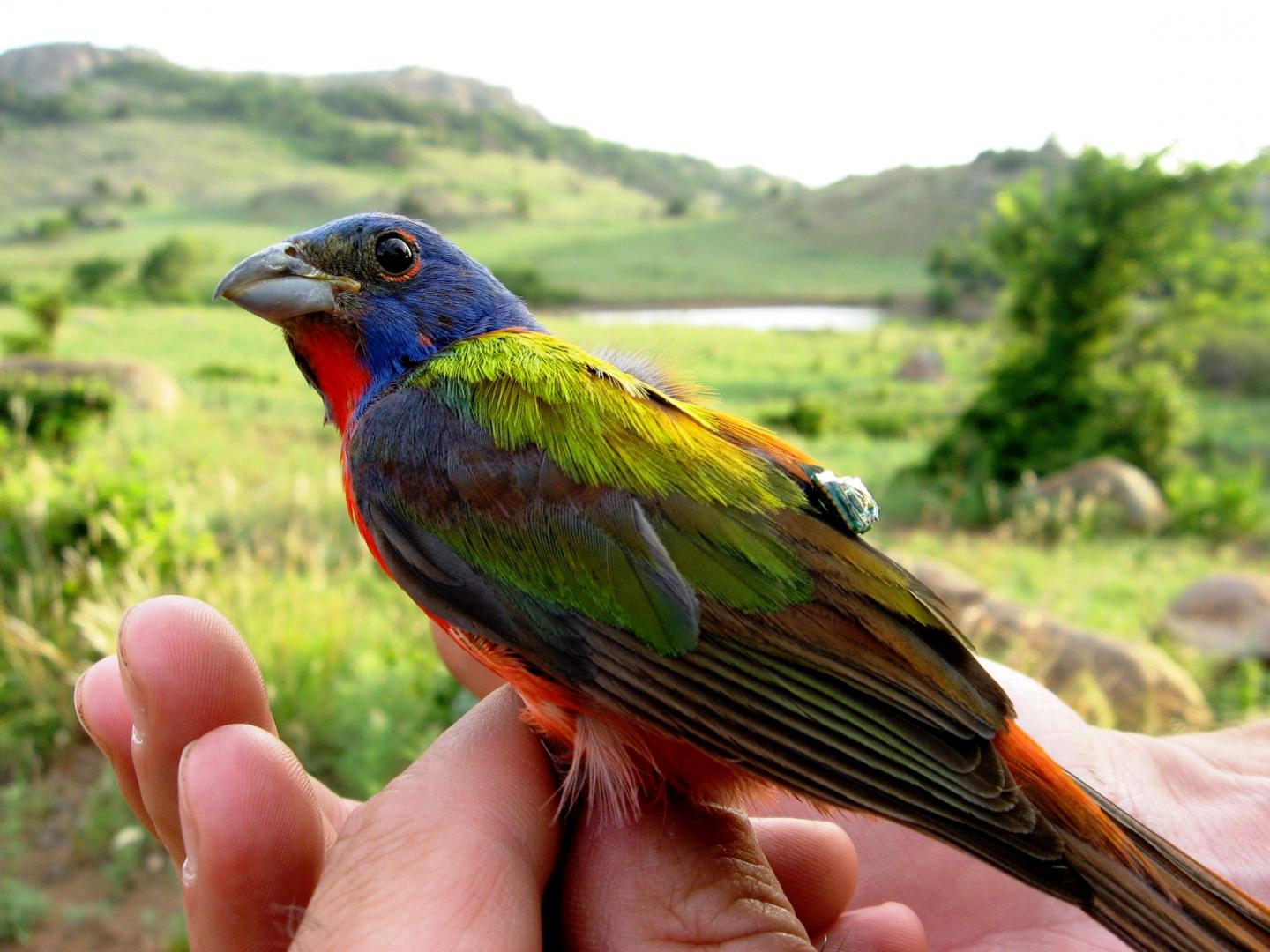
IMAGE

Credit: University of Oklahoma

A University of Oklahoma researcher, Andrea Contina, and his team have identified the genetic structure of the Painted Bunting, a neotropical migratory songbird, using microsatellite DNA and single nucleotide polymorphisms to develop high-resolution markers to differentiate between individual birds breeding in different Oklahoma populations and across the United States. Through this research, Contina and his team now can differentiate between the eastern and western Painted Buntings and identify the species pattern of migration and population of origin.

"We combine molecular genetic research and conservation biology to differentiate between Painted Bunting populations and individual birds that migrate across several countries for breeding in the United States during the summer, then migrate to Central America for wintering where often they are captured and sold in the international avian pet market," said Contina, a National Science Foundation, National Research Traineeship postdoctoral fellow. "Genetic markers allow us to differentiate where the birds come from after they are sold."

Contina and team members from the Oklahoma Biological Survey; OU Department of Biology; Colegio de Postgraduados, Mexico; Department of Ecology and Evolutionary Biology at the University of California Santa Cruz; and University of California Los Angeles are working in collaboration to better understand why certain Painted Bunting populations are declining. The genetic research conducted by the inter-institutional team has international relevance and can be used in future investigative studies.

The Painted Bunting breeds primarily in the United States during the summer and migrates to Mexico, Central America, southern Florida and the Caribbean over the winter. Male Painted Buntings are brightly colored, which makes them highly sought after as pets, particularly in Mexico, Central America and Europe. Pet market birds examined in the published study are most likely from the Central breeding population in the United States. One bird can sell for as much as $800 in the international avian pet market.

###

An OU research paper, "Genetic structure of the Painted Bunting and its implications in conservation of migratory population," has been published in IBIS–International Journal of Avian Science. Support for this research is provided by the National Science Foundation (Grant Nos. IDBR 1014891 and DEB 0946685) and the United States Department of Agriculture (Grant No. NIFA-AFRI-003536).

Media Contact

Jana Smith
[email protected]
405-325-1322
@ouresearch

http://www.ou.edu

Original Source

https://bit.ly/2N4X1nK http://dx.doi.org/10.1111/ibi.12641

Share12Tweet8Share2ShareShareShare2

Related Posts

New Study Uncovers Mechanism Behind Burn Pit Particulate Matter–Induced Lung Inflammation

New Study Uncovers Mechanism Behind Burn Pit Particulate Matter–Induced Lung Inflammation

February 6, 2026

DeepBlastoid: Advancing Automated and Efficient Evaluation of Human Blastoids with Deep Learning

February 6, 2026

Navigating the Gut: The Role of Formic Acid in the Microbiome

February 6, 2026

AI-Enhanced Optical Coherence Photoacoustic Microscopy Revolutionizes 3D Cancer Model Imaging

February 6, 2026
Please login to join discussion

POPULAR NEWS

  • Robotic Ureteral Reconstruction: A Novel Approach

    Robotic Ureteral Reconstruction: A Novel Approach

    82 shares
    Share 33 Tweet 21
  • Digital Privacy: Health Data Control in Incarceration

    63 shares
    Share 25 Tweet 16
  • Study Reveals Lipid Accumulation in ME/CFS Cells

    57 shares
    Share 23 Tweet 14
  • Breakthrough in RNA Research Accelerates Medical Innovations Timeline

    53 shares
    Share 21 Tweet 13

About

We bring you the latest biotechnology news from best research centers and universities around the world. Check our website.

Follow us

Recent News

Neg-Entropy: The Key Therapeutic Target for Chronic Diseases

Multidisciplinary Evidence-Based Guidelines for Therapeutic Drug Monitoring of Biologics in Inflammatory Bowel Disease

Early Tuberculosis Treatment Lowers Sepsis Mortality in People with HIV

Subscribe to Blog via Email

Enter your email address to subscribe to this blog and receive notifications of new posts by email.

Join 73 other subscribers
  • Contact Us

Bioengineer.org © Copyright 2023 All Rights Reserved.

Welcome Back!

Login to your account below

Forgotten Password?

Retrieve your password

Please enter your username or email address to reset your password.

Log In
No Result
View All Result
  • Homepages
    • Home Page 1
    • Home Page 2
  • News
  • National
  • Business
  • Health
  • Lifestyle
  • Science

Bioengineer.org © Copyright 2023 All Rights Reserved.