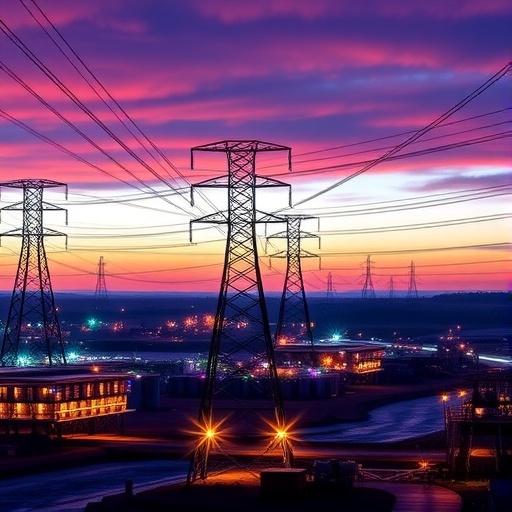
A pioneering cybersecurity framework designed to safeguard the electric grid has been developed at the Department of Energy’s Oak Ridge National Laboratory (ORNL) and recently licensed by GridForge Energy Solutions, an emerging startup positioned to commercialize cutting-edge energy technologies. This innovative system, known as Cyber Grid Guard, represents a significant advancement in the real-time defense and verification of grid operations, addressing critical vulnerabilities that could lead to widespread power outages and infrastructure damage. Leveraging the unique integration of custom hardware and sophisticated software, Cyber Grid Guard enables instantaneous detection of anomalous activities, data breaches, and unauthorized configuration changes within grid devices, thus enhancing the resilience and reliability of modern electricity networks.
At the core of Cyber Grid Guard’s technology lies the application of blockchain, the tamper-resistant digital ledger famously utilized in cryptocurrencies, to secure data communications between grid devices. By redundantly distributing configuration and operational data— including voltage levels, frequency, breaker status, and power quality—across multiple nodes, this platform ensures that every data packet reflects an authenticated and verified state. The blockchain continuously validates these datasets, cross-referencing current device settings against historic records. Any attempts to manipulate data or alter device parameters are detected and logged with meticulous provenance, allowing for precise identification of security breaches and compromised components within the grid infrastructure.
Raymond Borges Hink, a cybersecurity expert from ORNL who spearheaded the development of Cyber Grid Guard, emphasizes the transformative nature of this technology. Previously, energy operators faced profound uncertainty regarding the trustworthiness of grid monitoring data, a challenge that significantly hindered efforts to ensure secure grid management. By introducing a verifiable and decentralized layer of data validation, Cyber Grid Guard fundamentally shifts this paradigm, delivering unprecedented transparency and assurance that the grid’s operational data is both genuine and tamper-free. This breakthrough holds profound implications for grid security, as it provides a robust shield against sophisticated cyberattacks that aim to undermine energy delivery systems.
The practical effectiveness of Cyber Grid Guard was rigorously demonstrated in ORNL’s Grid Research Integration and Deployment Center (GRID-C), a state-of-the-art test facility combining real hardware with advanced modeling environments. Within a substation test bed at GRID-C, the framework was subjected to a battery of simulated cyber threats, including complex multi-stage denial-of-service attacks designed to intercept and alter data flows. These controlled experiments validated the system’s capability to maintain data integrity and operational continuity under hostile conditions. Notably, performance evaluations also included real-world testing in an operational substation, evidencing the technology’s readiness for deployment in critical infrastructure settings.
One of the standout features of Cyber Grid Guard is its ability to provide real-time alerts to grid operators concerning unusual behaviors or unauthorized adjustments to device configurations. Unlike traditional methods that rely on post-incident analysis, this system proactively notifies personnel, enabling immediate intervention to mitigate potential cascading failures. Additionally, by tracing every data packet to a verified hardware asset within an inventoried blockchain registry, the solution streamlines the forensic process in the event of a breach, enhancing incident response capabilities. This meticulous accounting fosters a more secure environment for grid management, where operators can quickly identify and isolate compromised nodes to prevent widespread disruption.
Beyond enhancing security within electrical substations, Cyber Grid Guard offers profound benefits in verifying electrical measurements across complex energy landscapes such as private microgrids. These localized grids, commonly deployed to improve reliability and accelerate startup sequences for large-scale projects like AI data centers, necessitate reliable interoperability with the broader transmission system. Cyber Grid Guard’s blockchain-based verification transparently validates power transfers and monitors power quality at interconnection points, providing confidence to both grid operators and microgrid owners. This transparency not only protects proprietary operational data but also fosters trust among diverse grid stakeholders, an essential ingredient for unlocking latent grid capacity.
The practical applications of Cyber Grid Guard extend into the realm of demand response programs, where utilities incentivize consumers to reduce or shift energy usage during periods of peak demand. Currently, participation in these programs is hampered by delays and uncertainties in measuring and verifying consumption reductions, especially when multiple entities are involved. GridForge envisions leveraging Cyber Grid Guard’s near-instantaneous verification capabilities to provide accurate, trustworthy feedback to energy aggregators and grid operators. This advancement stands to accelerate response times, improve market efficiency, and enhance the overall effectiveness of demand response initiatives, thereby contributing to more dynamic and resilient electricity markets.
From a technical perspective, the integration of blockchain into grid cybersecurity represents a novel approach to reinforcement of data integrity in critical infrastructure. Unlike centralized security mechanisms vulnerable to single points of failure, the distributed ledger ensures that information remains consistent and incorruptible despite potential attack vectors. This decentralization enhances trust across a highly interconnected and complex system, where data must be shared securely between utilities, independent power producers, and end-users. Moreover, the modular design of Cyber Grid Guard enables seamless deployment on custom hardware platforms, providing scalability and adaptability to diverse grid configurations and future technological evolutions.
GridForge’s dedication to commercializing Cyber Grid Guard is supported by its incubation through LabStart, a nonprofit organization facilitating the transition of national laboratory innovations into market-ready solutions. This pathway not only provides essential funding but also offers strategic mentorship to align the technology with industry needs. The collaboration underscores the importance of bridging federal research excellence with entrepreneurial agility to tackle pressing challenges in modern energy systems. As the energy transition accelerates, technologies like Cyber Grid Guard will play a pivotal role in safeguarding the grid’s stability while enabling advanced functionalities critical for integrating renewables, distributed energy resources, and emerging loads.
The development of Cyber Grid Guard is a testament to the interdisciplinary expertise at ORNL, involving specialists in cybersecurity, electrical engineering, and systems integration. Alongside Raymond Borges Hink, researchers including Gary Hahn, Aaron Werth, and Emilio Piesciorovsky contributed key insights and technical leadership to refine the framework’s architecture and validate its operational soundness. Their collective efforts have resulted in a patented innovation that exemplifies the power of national laboratories to drive breakthrough advances with significant societal impact. As the US power system confronts increasingly sophisticated threats, initiatives like this exemplify proactive measures to fortify foundational infrastructure.
Looking forward, the adoption of Cyber Grid Guard is poised to reshape trust dynamics in grid operations across the nation and potentially worldwide. By enabling verified and secure data exchange, the platform lays the groundwork for smarter grids capable of autonomous defense and enhanced situational awareness. These capabilities are essential as grids become more distributed, digitized, and interdependent. Moreover, by unlocking underutilized flexible capacity, this technology can help alleviate grid congestion, defer costly infrastructure upgrades, and support the integration of clean energy resources, aligning with broader climate and energy policy goals. The fusion of cybersecurity innovation with grid modernization positions Cyber Grid Guard as a cornerstone for the future energy landscape.
This emerging technology exemplifies a paradigm shift in electrical grid cyber defense, introducing blockchain as the bedrock for authenticating complex device communication and system states in real-time. Such advanced cyber protections are critical in an era marked by escalating cyberthreat sophistication and grid vulnerabilities. As GridForge and other industry partners work to bring Cyber Grid Guard into widespread operation, the energy sector gains a powerful instrument to defend against disruption, enhance operational trust, and facilitate the next generation of grid innovations. The convergence of national laboratory research, entrepreneurship, and applied engineering signifies a remarkable stride toward resilient, intelligent, and trustworthy electricity infrastructure for decades to come.
Subject of Research: Cybersecurity and verification framework for electric power grid protection
Article Title: Cyber Grid Guard: Blockchain-Based Cybersecurity Revolutionizes Electric Grid Protection
News Publication Date: 2024
Web References: https://www.ornl.gov/technology/202305366, https://www.ornl.gov/gridc, https://energy.gov/science
Image Credits: Carlos Jones/ORNL, U.S. Department of Energy
Keywords
Power systems, cybersecurity, electric grid, blockchain, energy resources, electrical engineering, grid resilience, demand response, real-time monitoring, energy verification, microgrid technology, grid modernization
Tags: advanced grid operation monitoringanomaly detection in power networksblockchain in energy securitycybersecurity framework for power gridelectric grid protection technologyGridForge commercial energy solutionsORNL energy cybersecurity researchpower grid cyberattack preventionprotecting electricity networks from cyber threatsreal-time grid defense systemsecuring critical infrastructure with blockchaintamper-resistant grid data verification