Credit: Thor Balkhed
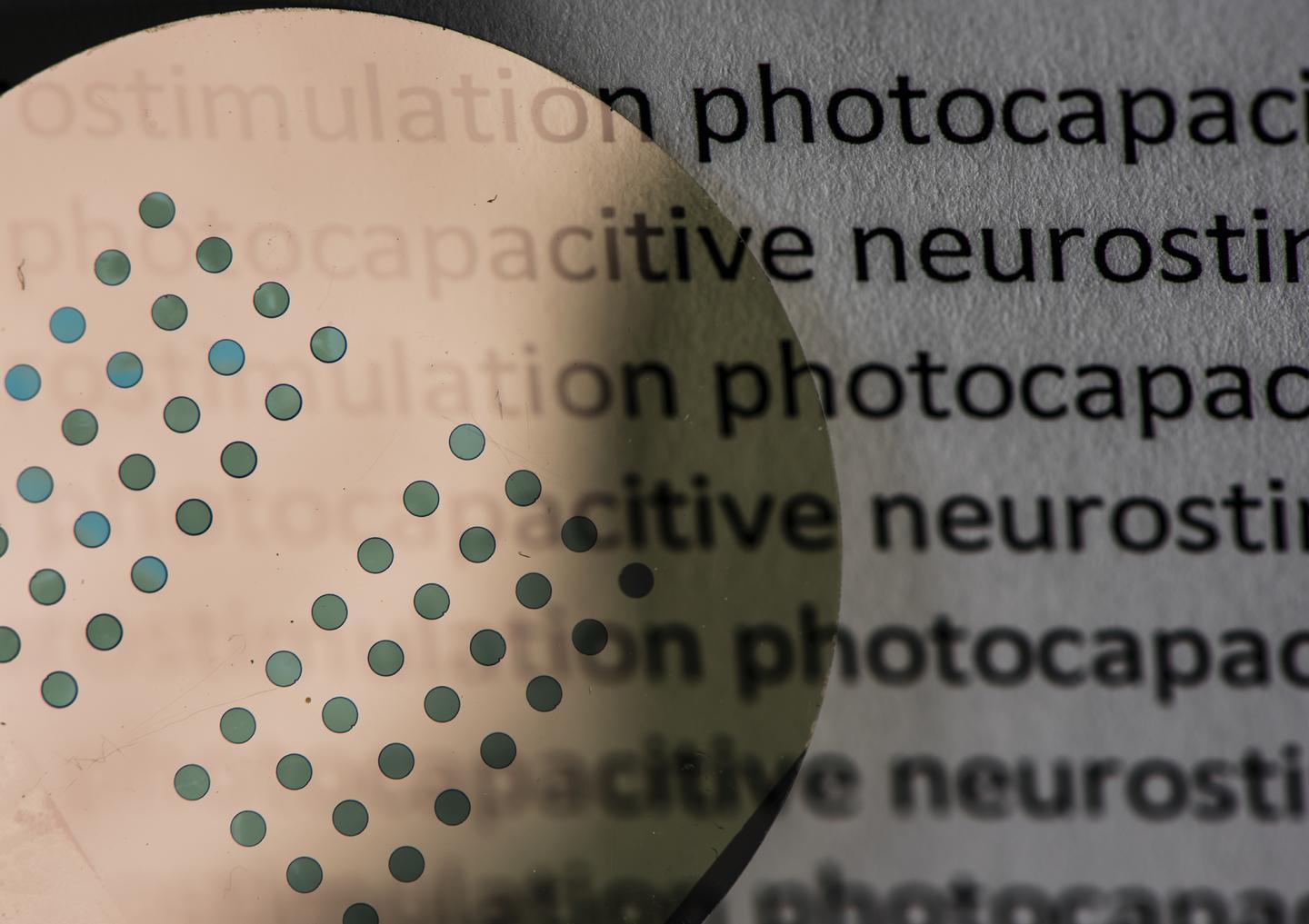
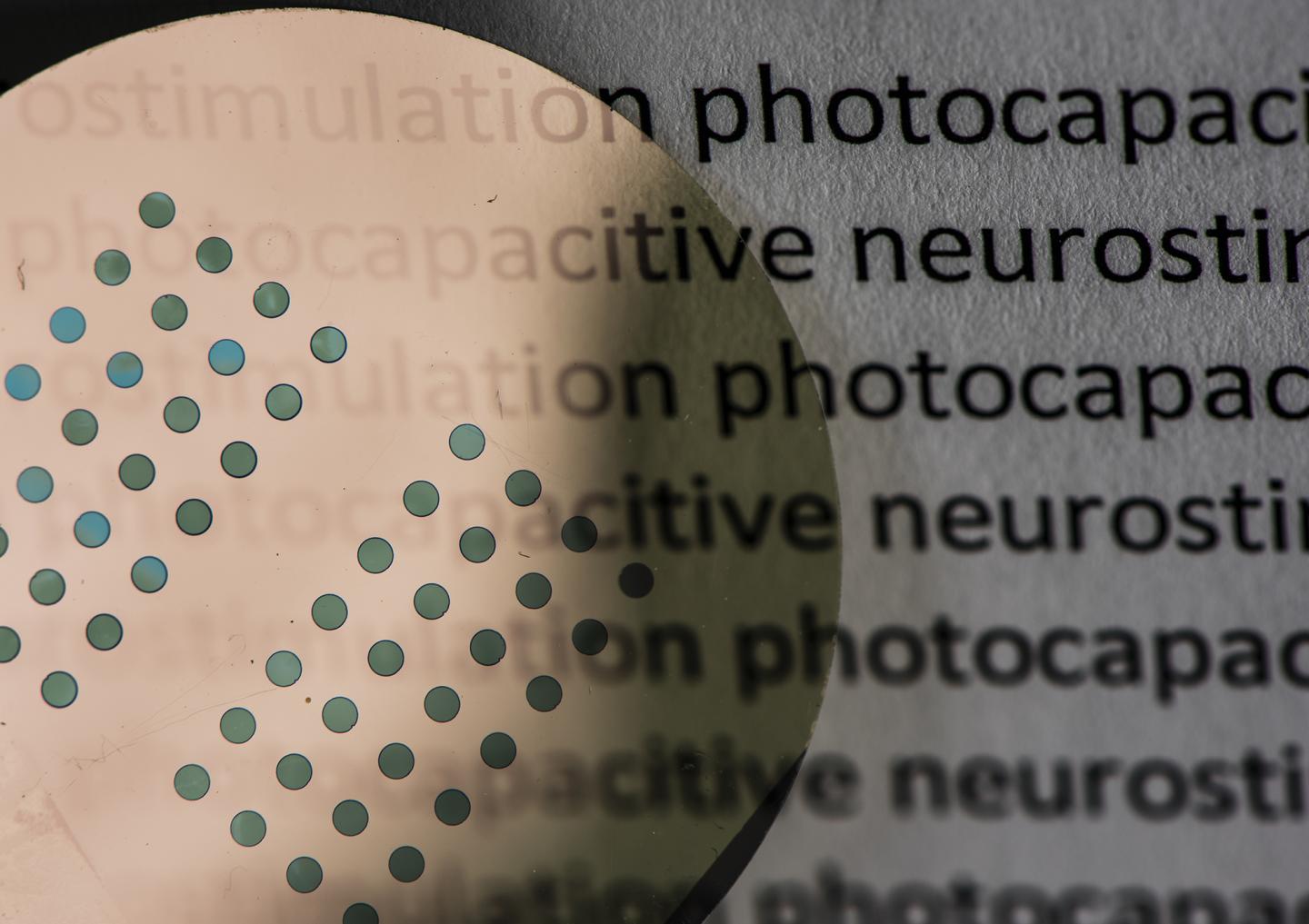
A simple retinal prosthesis is being developed in collaboration between Tel Aviv University in Israel and Linköping University in Sweden. Fabricated using cheap and widely-available organic pigments used in printing inks and cosmetics, it consists of tiny pixels like a digital camera sensor on a nanometric scale. Researchers hope that it can restore sight to blind people.
Researchers led by Eric Glowacki, principal investigator of the organic nanocrystals subgroup in the Laboratory of Organic Electronics, Linköping University, have developed a tiny, simple photoactive film that converts light impulses into electrical signals. These signals in turn stimulate neurons (nerve cells). The research group has chosen to focus on a particularly pressing application, artificial retinas that may in the future restore sight to blind people. The Swedish team, specializing in nanomaterials and electronic devices, worked together with researchers in Israel, Italy and Austria to optimise the technology. Experiments in vision restoration were carried out by the group of Yael Hanein at Tel Aviv University in Israel. Yael Hanein's group is a world-leader in the interface between electronics and the nervous system.
The results have recently been published in the prestigious scientific journal Advanced Materials.
The retina consists of several thin layers of cells. Light-sensitive neurons in the back of the eye convert incident light to electric signals, while other cells process the nerve impulses and transmit them onwards along the optic nerve to an area of the brain known as the "visual cortex". An artificial retina may be surgically implanted into the eye if a person's sight has been lost as a consequence of the light-sensitive cells becoming degraded, thus failing to convert light into electric pulses.
The artificial retina consists of a thin circular film of photoactive material, and is similar to an individual pixel in a digital camera sensor. Each pixel is truly microscopic – it is about 100 times thinner than a single cell and has a diameter smaller than the diameter of a human hair. It consists of a pigment of semi-conducting nanocrystals. Such pigments are cheap and non-toxic, and are commonly used in commercial cosmetics and tattooing ink.
"We have optimised the photoactive film for near-infrared light, since biological tissues, such as bone, blood and skin, are most transparent at these wavelengths. This raises the possibility of other applications in humans in the future," says Eric Glowacki.
He describes the artificial retina as a microscopic doughnut, with the crystal-containing pigment in the middle and a tiny metal ring around it. It acts without any external connectors, and the nerve cells are activated without a delay.
"The response time must be short if we are to gain control of the stimulation of nerve cells," says David Rand, postdoctoral researcher at Tel Aviv University. "Here, the nerve cells are activated directly. We have shown that our device can be used to stimulate not only neurons in the brain but also neurons in non-functioning retinas."
###
Eric Glowacki and his research group work at the Laboratory of Organic Electronics in Norrkoping, Sweden. The research group is part of a larger research initiative called the Wallenberg Center for Molecular Medicine, WCMM, at Linköping University. This initiative has created the unique environment necessary to develop this technology in a collaboration between nanomaterials scientists, biomedical engineers, and biologists. https://liu.se/en/research/wallenberg-centre-for-molecular-medicine
Direct electrical neurostimulation with organic pigment photocapacitors, David Rand, Marie Jakesova, Gur Lubin, Ieva Vebraite, Moshe David Pur, Vedran Derek, Tobias Cramer, Serdar Sariciftci, Yael Hanein, Eric Daniel Glowacki, Advanced Materials 2018. DOI: 10.1002 adma.201707292R1
Media Contact
Eric Glowacki
[email protected]
46-113-63477
@liu_universitet
http://www.liu.se
Original Source
https://liu.se/en/news-item/organiska-ledande-pigment-kan-ge-blinda-synen-ater http://dx.doi.org/10.1002/adma.201707292