

• HOME
  • NEWS
  • EXPLORE
    • CAREER
      • Companies
      • Jobs
    • EVENTS
    • iGEM
      • News
      • Team
    • PHOTOS
    • VIDEO
    • WIKI
  • BLOG
  • COMMUNITY
    • FACEBOOK
    • INSTAGRAM
    • TWITTER
Tuesday, July 7, 2026
BIOENGINEER.ORG
No Result
View All Result
  • Login
  • HOME
  • NEWS
  • EXPLORE
    • CAREER
      • Companies
      • Jobs
        • Lecturer
        • PhD Studentship
        • Postdoc
        • Research Assistant
    • EVENTS
    • iGEM
      • News
      • Team
    • PHOTOS
    • VIDEO
    • WIKI
  • BLOG
  • COMMUNITY
    • FACEBOOK
    • INSTAGRAM
    • TWITTER
  • HOME
  • NEWS
  • EXPLORE
    • CAREER
      • Companies
      • Jobs
        • Lecturer
        • PhD Studentship
        • Postdoc
        • Research Assistant
    • EVENTS
    • iGEM
      • News
      • Team
    • PHOTOS
    • VIDEO
    • WIKI
  • BLOG
  • COMMUNITY
    • FACEBOOK
    • INSTAGRAM
    • TWITTER
No Result
View All Result
Bioengineer.org
No Result
View All Result
Home NEWS Science News Chemistry

Oregon State receives $7.5 million grant to build state of the art zebrafish biomedical research facility

Bioengineer by Bioengineer
September 18, 2023
in Chemistry
Reading Time: 2 mins read
0
Zebrafish
Share on FacebookShare on TwitterShare on LinkedinShare on RedditShare on Telegram

CORVALLIS, Ore. – Oregon State University has received a $7.5 million National Institutes of Health grant to modernize a lab focused on using zebrafish to address pressing human health challenges.
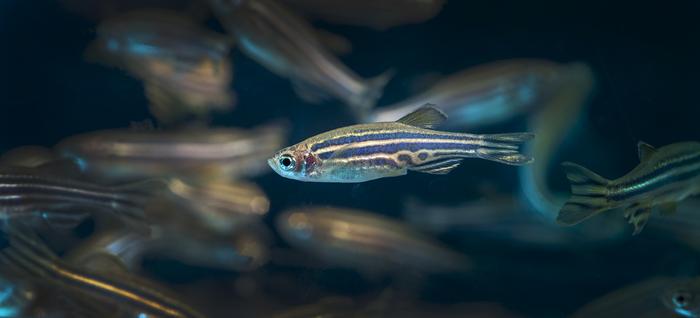
Zebrafish

Credit: Stephen Ward, Oregon State University.

CORVALLIS, Ore. – Oregon State University has received a $7.5 million National Institutes of Health grant to modernize a lab focused on using zebrafish to address pressing human health challenges.

The Sinnhuber Aquatic Research Laboratory, led by Distinguished Professor Robyn Tanguay, a molecular toxicologist in the College of Agricultural Sciences, exploits the unique advantages of zebrafish to protect and improve human and environmental health. Zebrafish and humans have similar developmental processes and are similar on a genomic level, meaning zebrafish research can easily be applied to humans.

“Completing this modernization project will address bottlenecks limiting further growth of the OSU zebrafish biomedical research enterprise,” Tanguay said. “This is part of the long-term commitment to developing and maintaining advanced aquatic biomedical research facilities at Oregon State University, in the region and nationally.”

Researchers in the lab study how chemicals in the environment interact with genomes to produce disease and dysfunctions. The lab uses chemical and nanomaterial structural information, coupled with the biological responses they produce in zebrafish, as anchors for the research.

The lab has evaluated thousands of chemicals and mixtures including ethanol, flame retardants, nicotine, pesticides and pharmaceuticals. Recent studies from the lab have focused on everything from the toxicity of sunscreen to the health impacts of 5G wireless networks.

The NIH grant will allow for the replacement of an obsolete and undersized zebrafish life support system; installation of modern zebrafish housing enhanced by automated cleaning, feeding and remote monitoring; construction of specialty zebrafish rooms to support short- and long-term studies; addition of high-capacity tank washing capabilities; and addition of engineering space to further seed technological innovations.

“Our NIH biomedical research base has grown exponentially over the past decade and renovation and modernization will ensure that it remains a critical resource to support research growth for well-established NIH Centers, NIH-supported investigators and other partners,” Tanguay said.



Share12Tweet8Share2ShareShareShare2

Related Posts

Salt adaptation linked to higher disease risk, Mizzou study finds

Salt adaptation linked to higher disease risk, Mizzou study finds

July 6, 2026
Intelligent Microgrid Management Promises Lower Household Energy Bills and Reduced Diesel Emissions — Chemistry

Intelligent Microgrid Management Promises Lower Household Energy Bills and Reduced Diesel Emissions

July 4, 2026

Graz University of Technology Deciphers the Structural Secrets of MOF Thin Films

July 2, 2026

Breaking Thermodynamic Limits: Wavelength-Driven Catalysis Advances Ammonia Synthesis

July 2, 2026

POPULAR NEWS

  • Detection of EDCs in Breast Milk and Infant Urine Up to Six Months Highlights Early Exposure Risks

    77 shares
    Share 31 Tweet 19
  • New Drug Candidate Developed at McMaster Shows Potential for Treating Brain Cancer

    58 shares
    Share 23 Tweet 15
  • Saying Goodbye to PGY-6: Pediatric Fellowship Realities

    103 shares
    Share 41 Tweet 26
  • KTU Researchers Explore Ultrasound’s Role in Enhancing Blood Flow Beyond Diagnostics

    53 shares
    Share 21 Tweet 13

About

We bring you the latest biotechnology news from best research centers and universities around the world. Check our website.

Follow us

Recent News

Flame retardant BDE-209 targets molecularly linked to ulcerative colitis

Ultra-high frequency particle impacts mimic rockbursts to shatter hard rock

Kidney transplant outcomes in older adults studied by German researchers

Subscribe to Blog via Email

Enter your email address to subscribe to this blog and receive notifications of new posts by email.

Join 83 other subscribers
  • Contact Us

Bioengineer.org © Copyright 2023 All Rights Reserved.

Welcome Back!

Login to your account below

Forgotten Password?

Retrieve your password

Please enter your username or email address to reset your password.

Log In
No Result
View All Result
  • Homepages
    • Home Page 1
    • Home Page 2
  • News
  • National
  • Business
  • Health
  • Lifestyle
  • Science

Bioengineer.org © Copyright 2023 All Rights Reserved.