


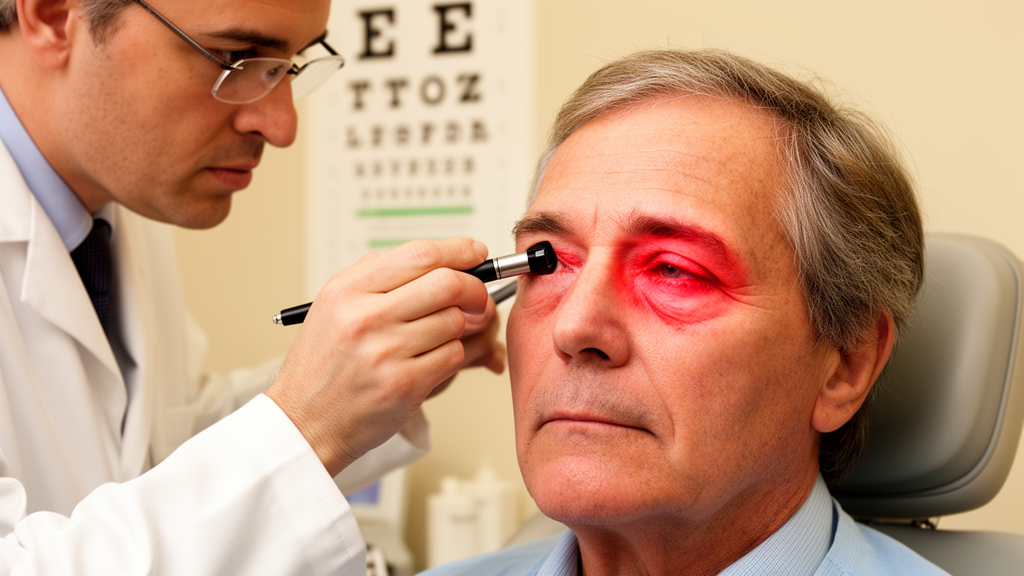
Patients presenting with orbital disease at one hospital during the peak of the COVID-19 Omicron wave were markedly more likely to have orbital inflammatory pseudotumor than those seen in the same months of the previous three years, according to a clinical case analysis published in BMC Ophthalmology. Of 62 patients diagnosed with orbital diseases from December 2022 to January 2023, 13 cases, or 20.97 percent, involved orbital inflammatory pseudotumor, a proportion the authors report as significantly higher than in the control group drawn from the corresponding periods of the preceding three years.
The study used the abbreviation OIP for orbital inflammatory pseudotumor. The researchers set out to compare the proportion of OIP among orbital disease cases during the Omicron peak with earlier years and to describe the clinical features of OIP in patients with recent COVID-19 infection. The study group comprised the 62 orbital disease patients seen during the two-month wave period, while the control group consisted of OIP patients from the same months in the previous three years, allowing a direct seasonal comparison.
The 13 OIP cases showed a consistent pattern of single-eye involvement. Six occurred in the right eye and seven in the left eye, with no apparent preference between the two sides. Eight patients were male and five were female, a slight male predominance, and ages ranged from 16 to 65, with the authors characterizing the condition as showing middle-aged prevalence in this cohort.
All cases had acute onset clinical features. Eyelid swelling and conjunctival hyperemia with chemosis were each present in 61.54 percent of patients, making them the most common signs. Ocular motility disorders affected 53.85 percent, while eye pain and diplopia each occurred in 46.15 percent. Less frequent findings included proptosis in 23.08 percent, ptosis in 15.38 percent, and decreased vision in 7.69 percent. The reported features included eyelid swelling, conjunctival hyperemia and chemosis, ocular motility disorders, eye pain, diplopia, proptosis, ptosis, and decreased vision.
OIP was confirmed through ocular ultrasound, orbital CT, and MRI scans.
The study reported that glucocorticoid therapy resulted in excellent treatment outcomes.
Summarizing their findings, the researchers report that the proportion of OIP among orbital disease cases presenting to their hospital increased significantly from December 2022 to January 2023 compared with the corresponding periods of the preceding three years. They describe the condition in this setting as featuring single-eye onset, no significant difference between the eyes, a slightly higher incidence rate in males than females, and middle-aged prevalence, with acute onset symptoms including eyelid swelling, conjunctival hyperemia and chemosis, ocular motility disorders, and eye pain.
The authors are careful to flag the limits of the evidence. The study group was relatively small, they write, and it requires further research to provide more reliable evidence. The study group consisted of 62 patients diagnosed with orbital diseases at one hospital from December 2022 to January 2023, and the control group comprised OIP patients from the same months in the previous 3 years. The authors note that the study group was relatively small and that further research is required to provide more reliable evidence.
Subject of Research: Orbital inflammatory pseudotumor cases among patients with recent COVID-19 infection during the Omicron wave
Article Title: Clinical case analysis of orbital inflammatory pseudotumor with COVID-19 infection
Article References: Wang, L., Jiang, Y., Gu, R., Sun, K., & Chen, L. (2026). Clinical case analysis of orbital inflammatory pseudotumor with COVID-19 infection. BMC Ophthalmology. https://doi.org/10.1186/s12886-026-05494-1
Image Credits: AI Generated
DOI: 10.1186/s12886-026-05494-1
Keywords: orbital inflammatory pseudotumor, COVID-19, Omicron, orbital disease, ocular ultrasound, orbital CT, MRI, glucocorticoid therapy, eyelid swelling, diplopia, case series, BMC Ophthalmology
News Source: Kristina Jarvis. (October 30, 2026). Orbital inflammatory pseudotumor cases rose during COVID-19 Omicron wave. Scienmag.



