


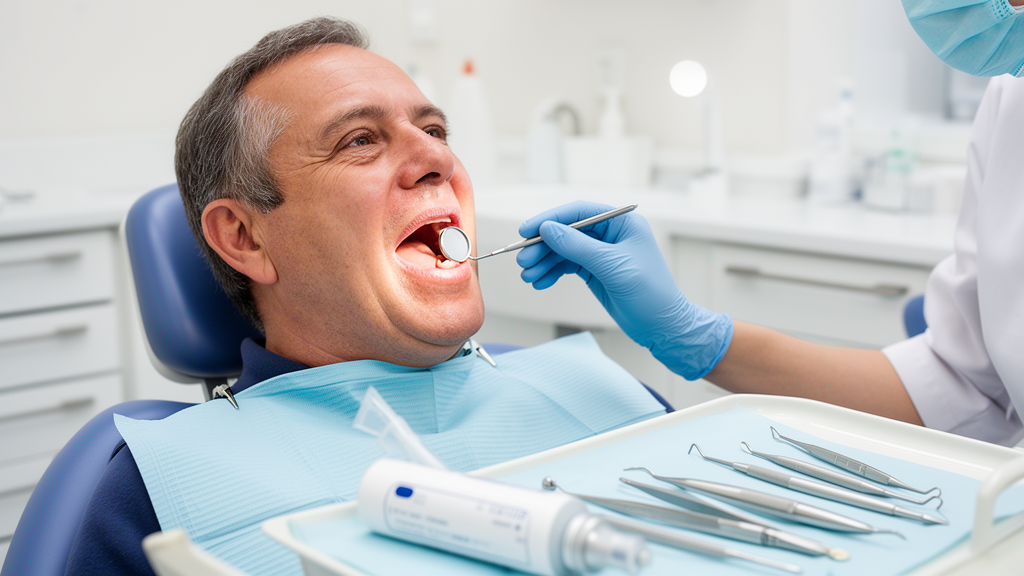
The study enrolled adults diagnosed with COPD who applied to the chest diseases outpatient clinic and inpatient clinic between December 2023 and January 2024. A power analysis set the minimum sample size at 52 participants, assuming an alpha of 0.05 and statistical power of 0.80, and the team completed data collection with 61 patients who met the inclusion criteria. Information was gathered through face-to-face interviews using a structured questionnaire together with the Oral Assessment Guide, an instrument whose validity and reliability had previously been tested.
The participants were predominantly male, at 68.85 percent, and nearly half were aged between 57 and 69 years. Most were married, and 68.85 percent had at least a primary school education. Regarding inhaler devices, most patients used combinations rather than a single device: metered-dose inhaler plus nebuliser and metered-dose inhaler plus dry powder inhaler plus nebuliser were each the most common patterns, at 26.23 percent apiece. Notably, the researchers found no statistically significant relationship between the type of inhaler device used and the Oral Assessment Guide score, reporting a Kruskal-Wallis statistic of 8.054 with a p value of 0.234.
The behavioural findings were striking. A total of 88.52 percent of patients did not brush their teeth regularly, 95.08 percent did not periodically assess their oral health, and 62.3 percent had no oral hygiene practices at all, such as gargling with water, after using their inhaled medications.
The mean Oral Assessment Guide score across the cohort was 13.73, with a standard deviation of 2.30, which the authors characterise as a moderate level on the 8-to-24 scale. Because higher scores indicate poorer oral health, this midpoint suggests measurable deterioration in oral condition relative to the best possible score of 8, though the cross-sectional design means the study cannot determine how much of this reflects inhaler use versus age, smoking history, comorbidities, or general neglect of dental care.
Statistical analysis did reveal one meaningful association: Oral Assessment Guide scores differed significantly according to whether patients brushed their teeth regularly and whether they had periodic oral health assessments. The analysis used the Shapiro-Wilk test to check normality, t tests and analysis of variance for group comparisons, and the Mann-Whitney U and Kruskal-Wallis tests for small subgroups, with a p value below 0.05 considered significant.
The near-total absence of professional guidance is perhaps the most actionable finding. At 93.44 percent, the proportion of patients who had not been trained on oral health by healthcare personnel before using inhaled medications was among the study's notable findings. The authors recommend that COPD patients using inhalers be informed about oral health before, during, and after treatment, and they call for further studies evaluating the correlation between inhaler use and oral health over time.
Several limitations frame the conclusions. The study was observational and cross-sectional, conducted at a single state hospital in one province, with a modest sample of 61 patients, so the results describe this group rather than establishing causal relationships or general prevalence. The authors explicitly note that the study involved no clinical intervention and therefore required no trial registration. Even so, the combination of moderate oral health scores, very low rates of tooth brushing and professional assessment, and minimal post-inhaler rinsing paints a consistent picture: an older, largely male patient population managing a chronic respiratory disease with multiple inhaled devices while receiving almost no structured support for the oral consequences of that therapy.
For clinicians and nurses working in pulmonary care, the message is practical rather than dramatic.
Subject of Research: Oral health assessment of COPD patients using inhaled medications
Article Title: Assessment of oral health of patients using inhalers for chronic obstructive pulmonary disease
Article References: Kaplan, F., Ovayolu, N., & Güzel, H. (2026). Assessment of oral health of patients using inhalers for chronic obstructive pulmonary disease. BMC Pulmonary Medicine. https://doi.org/10.1186/s12890-026-04910-y
Image Credits: AI Generated
DOI: 10.1186/s12890-026-04910-y
Keywords: COPD, oral health, inhalers, metered-dose inhaler, dry powder inhaler, nebuliser, Oral Assessment Guide, patient education, cross-sectional study, pulmonary medicine, tooth brushing, Turkey
News Source: Barbara Leach. (October 28, 2026). Oral Health Gaps Found in COPD Patients Using Inhalers. Scienmag.



