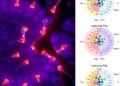
In a groundbreaking advancement for vision science, a team of researchers has unveiled astonishing insights into the rapid movement of rod photoreceptors triggered by rhodopsin activation. This pioneering study, published in the 2026 edition of Light: Science & Applications, leverages the cutting-edge imaging technique known as optoretinography to illuminate, quite literally, the dynamics of the eye’s most sensitive photoreceptive cells. Rods, responsible for vision in dim light, have long been studied for their biochemical responses to light, yet the physical movements these cells undergo during activation have remained elusive until now.
The crux of this discovery hinges on the ability to directly observe the swift biomechanical responses of rod photoreceptors once rhodopsin, their light-sensitive pigment, is stimulated. Rhodopsin plays a fundamental role in the visual transduction cascade—transforming photon absorption into electrical signals that communicate with the brain. However, the spatial and temporal scales at which rods physically move during this process have been challenging to capture. The research team surmounted this barrier by employing optoretinography, a non-invasive, high-resolution optical imaging technique capable of detecting nanometer-scale movements within the retina in real time.
By focusing a low-intensity light stimulus onto the retina and recording the ensuing cellular responses, the researchers detected a rapid contraction of rod outer segments, suggesting a physical deformation that coincides with the activation of rhodopsin molecules. This structural deformation was measurable within milliseconds of light exposure, underscoring a much faster and more dynamic mechanical behavior than previously hypothesized. These findings not only validate the responsiveness of rods beyond biochemical signaling but also introduce a potential new dimension of photoreceptor function involving mechanical modulation.
The implications of this discovery are multifaceted. At the cellular level, the observed movement suggests that phototransduction is coupled with physical changes that could influence membrane tension, protein interactions, or downstream signaling complexes. Understanding these mechanical aspects may reshape our comprehension of visual sensitivity and the initial steps of vision. Furthermore, these insights have profound potential for medical science, especially in diagnosing and monitoring retinal diseases where photoreceptor function deteriorates.
Traditionally, the study of rod photoreceptors and their responses relied heavily on electrophysiological techniques and biochemical assays, which, while informative, lack the capability to capture minute physical changes as they occur. Optoretinography bridges this gap by harnessing intrinsic optical signals to reveal dynamic cellular morphology changes, providing a non-invasive window into the live retina. The present study represents one of the first applications of this modality to rod photoreceptors, bringing unprecedented clarity to their immediate physical response to light stimuli.
The technical finesse of the experiment is noteworthy. Researchers designed their optoretinography system to detect phase shifts in reflected light from retinal structures, translating these into precise measurements of outer segment displacement. The sensitivity of this approach allows differentiation between movements induced by phototransduction and other retinal dynamics such as blood flow. This specificity was essential to conclusively link rhodopsin activation to observed mechanical changes in rods.
Moreover, the speed of the rod photoreceptor movement unveiled here—occurring within a few milliseconds—raises intriguing questions about the biological function of these rapid deformations. It’s posited that these movements could enhance photoreceptor performance by modulating the biochemical environment or influencing signal propagation speed. Alternatively, they could be protective, minimizing molecular damage caused by photon absorption. Future research will be critical in elucidating these potential roles.
The method’s non-invasive nature also holds promise for clinical translation. Current retinal diagnostics often assess structural abnormalities or gross functional deficiencies. Incorporating optoretinographic assessments of photoreceptor mechanics could provide novel biomarkers, especially for early-stage retinal diseases like retinitis pigmentosa or age-related macular degeneration, where subtle dysfunction precedes overt structural damage. This could revolutionize both screening and therapeutic monitoring.
Furthermore, the study enriches the fundamental understanding of vision by highlighting a mechanical element intertwined with biochemical pathways. This bridging of disciplines opens a new frontier in sensory biology, encouraging collaborative exploration among biophysicists, neuroscientists, and clinicians. Incorporating mechanical phenomena into models of phototransduction could yield more comprehensive frameworks of how light is detected and processed.
Another fascinating aspect is the potential to investigate cone photoreceptors using similar methodologies. Cones, responsible for color and high-acuity vision, also contain photopigments that might induce mechanical responses analogous to rods. Comparing mechanical dynamics across photoreceptor types could shed light on their functional specializations and vulnerabilities, deepening vision science’s granularity.
The authors of this study emphasize the necessity for further investigations into how photoreceptor movements correlate with visual perception and how pathological alterations in these mechanical responses might manifest clinically. They suggest exploring integrated imaging alongside electrophysiological data to establish causal links between physical deformations and signal processing efficacy.
This research also invites exploration of pharmacological interventions targeting the mechanics of rods. Modulating photoreceptor motility could enhance retinal resilience or restore impaired function in degenerative conditions. The revelation of physical rod movements thus opens translational horizons that converge bioengineering, pharmacology, and ophthalmology.
In essence, this landmark work melds advanced optical imaging with retinal physiology to reveal a previously hidden rapid movement of rod photoreceptors initiated by rhodopsin activation. The discovery enriches fundamental biological knowledge and holds the transformative potential to influence clinical practice and therapeutic development, making it a pivotal milestone in vision science.
As worldwide populations age and retinal diseases increasingly affect quality of life, innovations that elucidate retinal function at the microscale become invaluable. This study’s breakthrough using optoretinography positions it at the forefront of such innovations, promising not only to redefine scientific understanding but also to stimulate technological and clinical advances that safeguard vision.
In summary, the unveiling of high-speed rod photoreceptor motility via optoretinography signals a paradigm shift, illuminating an intricate biological dance between light, chemistry, and mechanics within the eye. The journey towards fully deciphering the mechanical aspects of vision has just begun, fueled by this visionary research that sets new standards for retinal imaging and photoreceptor biology.
Subject of Research: Rod photoreceptor movement upon rhodopsin activation revealed by optoretinography
Article Title: Optoretinography reveals rapid rod photoreceptor movement upon rhodopsin activation
Article References:
Li, H., Weiss, C.E., Pandiyan, V.P. et al. Optoretinography reveals rapid rod photoreceptor movement upon rhodopsin activation. Light Sci Appl 15, 58 (2026). https://doi.org/10.1038/s41377-025-02149-6
Image Credits: AI Generated
DOI: 07 January 2026
Tags: advanced vision science studiesbiomechanics of rod cellscellular responses to lightlight-sensitive pigment behaviorlow-light vision researchnon-invasive retinal imagingoptoretinography imaging techniquephotoreceptor movement trackingreal-time retinal observationsrhodopsin activation effectsrod photoreceptor dynamicsvisual transduction process