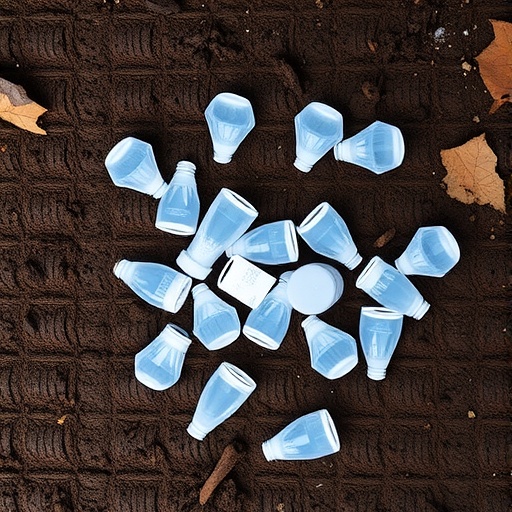
In the relentless pursuit to understand the hidden threats posed by plastic pollution, scientists have turned their attention underground—to the soil beneath our feet, where nanoplastics stealthily reside. A groundbreaking study recently published in Microplastics & Nanoplastics sheds new light on the elusive presence of nanoplastics in terrestrial environments. This work presents innovative methodologies to extract and purify these minute particles from soil samples without compromising their physical integrity, marking a significant leap forward in environmental nanoscience.
Nanoplastics, defined as plastic particles smaller than 100 nanometers, represent a particularly insidious category of pollutants. Unlike larger plastic debris, their minuscule size allows them to infiltrate ecosystems, potentially impacting soil microbiomes and entering food chains with unknown consequences. Despite their importance, the detection and analysis of nanoplastics in soil have been hindered by methodological challenges, primarily due to their close size range to natural soil particles and their tendency to agglomerate or degrade during extraction.
The study, led by Forsyth, Gnoffo, Oh, and their team, addresses these technical hurdles head-on. Their approach optimizes extraction protocols to maximize yield and purity of nanoplastics recovered from soil matrices. By carefully tuning chemical reagents, physical agitation methods, and filtration techniques, the researchers have developed a procedure that maintains the nanoparticle’s structural and chemical characteristics intact. This preservation is crucial for accurate downstream analyses such as spectroscopy and electron microscopy.
A critical innovation highlighted in the research involves minimizing the mechanical stress exerted on soil samples during extraction. Excessive physical forces can fragment nanoplastic particles or induce aggregation, fundamentally altering their morphology and size distribution. The team utilizes gentle sonication paired with tailored surfactants that assist in dislodging particles from the complex soil matrix while preventing coalescence or degradation.
The purification stage also received meticulous attention in this work. Differentiating nanoplastics from organic and mineral soil constituents demands advanced separation techniques. The researchers employ density gradient centrifugation combined with chemical treatments that selectively dissolve organic matter, effectively isolating nanoplastics based on their unique buoyancy and chemical resistance. This dual strategy ensures that the isolated particles are free from confounding material, allowing unambiguous identification.
Furthermore, the team emphasizes the necessity of rigorous controls throughout the process to avoid contamination or loss of nanoparticles. Procedural blanks and replicate extractions confirm the reproducibility and sensitivity of the method, establishing a framework for standardized protocols in environmental nanoplastic research. This methodological transparency is anticipated to facilitate interlaboratory comparisons and accelerate the collective understanding of soil nanoplastic pollution.
The implications of these optimized techniques extend beyond mere detection. Understanding the concentration, types, and physical states of nanoplastics within soil can shed light on their environmental fate. For instance, these methods enable the assessment of how nanoplastics interact with soil organic matter, influence microbial communities, or possibly mobilize toxic additives embedded within plastics. Such insights are critical to gauge ecological risks and inform remediation strategies.
Moreover, the research underscores the urgency to evaluate the potential bioavailability of nanoplastics to soil fauna. Given their size and chemical nature, nanoparticles could be ingested by organisms ranging from earthworms to microbes, leading to bioaccumulation or toxicity that reverberates through trophic levels. The capacity to extract and analyze intact particles is foundational to studying these biological interactions and modeling exposure pathways.
This advancement also highlights gaps in current environmental monitoring frameworks. Traditional soil pollution assessments often overlook nanoplastic contamination due to detection limitations. The novel extraction and purification methodology championed by Forsyth and colleagues could integrate into broader surveillance programs, equipping policymakers with robust data to legislate plastic pollution more effectively.
The study additionally contributes to the ongoing debate about the origin and transformation of nanoplastics in terrestrial ecosystems. By retrieving intact particles, researchers can perform chemical fingerprinting to discern whether these nanoplastics stem from the degradation of larger plastics, industrial processes, or other sources. Such provenance information is pivotal for targeted mitigation efforts and tracking environmental plastic fluxes.
Addressing the global challenge of plastic pollution calls for innovation at the intersection of environmental chemistry, materials science, and ecology. This research exemplifies that synergy by refining laboratory techniques to expose the invisible pollution increasingly threatening soil health worldwide. As these methods disseminate, we can expect a surge in high-resolution data, better risk assessments, and informed sustainable practices.
In conclusion, the optimized approach to extracting and purifying nanoplastics from soil developed by Forsyth, Gnoffo, Oh, and their collaborators marks a transformative step in environmental detection technology. The ability to preserve particle integrity and obtain uncontaminated samples opens new horizons for research into the environmental behavior and biological impact of nanoplastics. This breakthrough comes at a critical time when addressing micro- and nanoscale plastic pollution is essential to safeguarding ecosystem function and human health.
As the scientific community builds on these foundational techniques, the hidden world of soil nanoplastics will become increasingly transparent, revealing patterns and processes previously obscured. This progress empowers researchers, regulators, and the public alike to confront plastic pollution with greater precision and efficacy, paving the way toward cleaner, healthier environments globally.
Subject of Research: Nanoplastics extraction and purification from soil while preserving particle integrity
Article Title: Unearthing nanoplastics in soil: optimising extraction and purification while preserving particle integrity
Article References:
Forsyth, H., Gnoffo, C., Oh, S., et al. Unearthing nanoplastics in soil: optimising extraction and purification while preserving particle integrity. Microplastics & Nanoplastics (2026). https://doi.org/10.1186/s43591-026-00172-x
Image Credits: AI Generated
Tags: advancements in environmental research methodsagglomeration of nanoplastics in soilchallenges in detecting nanoplasticsenvironmental nanoscience advancementsimpact of nanoplastics on soil microbiomesimplications of plastic pollution in ecosystemsinnovative soil sampling methodologiesmethods for purifying nanoplasticsnanoplastic extraction techniquesoptimizing extraction protocols for pollutantsrisks of nanoplastics in food chainssoil pollution analysis