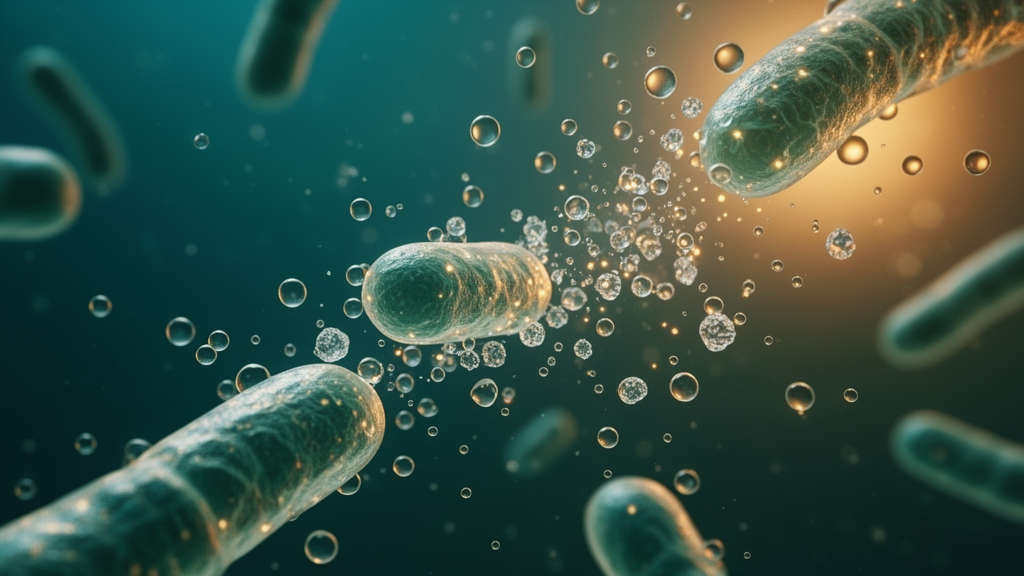
Biochemical engineers have established an optimized fed-batch fermentation strategy that enables the soil bacterium Pseudomonas putida KT2440 to produce high concentrations of 3-(3-hydroxyalkanoyloxy)alkanoic acids using acetate as a sole carbon source. Biosurfactants represent sustainable candidates to replace petroleum- and palm-oil-derived surfactants in industrial and chemical formulations, yet their scalable microbial manufacturing often encounters substantial operational obstacles, including severe foaming, feedstock costs, and cellular toxicity. By integrating a bubble-free membrane aeration bioreactor, selecting an appropriate producer strain, and replacing standard ammonium salts with urea in a self-regulating pH-coupled feeding strategy, the research team achieved a biosurfactant titer of 1,080 milligrams per liter. This process prevented product degradation, maintained culture stability, and demonstrated the feasibility of utilizing carbon-dioxide-derived feedstocks to support renewable biochemical manufacturing without competing with food supplies.
The target molecules, 3-(3-hydroxyalkanoyloxy)alkanoic acids, commonly known as HAAs, are amphiphilic biosurfactants composed of two hydroxy fatty acids linked by an ester bond. Naturally, HAAs serve as direct metabolic precursors in the enzymatic pathway leading to rhamnolipid biosynthesis. Because of their amphiphilic molecular configuration, these compounds exhibit strong surface-active properties, positioning them as functional emulsifiers and biochemical building blocks. Beyond basic chemical surfactant applications, HAAs can be co-polymerized into partially biobased poly(amide-urethanes) for bioplastic synthesis or converted into specialty biofuels. In nature, opportunistic pathogenic bacteria such as Pseudomonas aeruginosa synthesize HAAs through a condensation reaction catalyzed by acyltransferase A, encoded by the rhlA gene, using 3-hydroxyacyl-acyl carrier protein intermediates originating from de novo fatty acid synthesis. However, the pathogenicity and regulatory complexity of Pseudomonas aeruginosa make large-scale industrial cultivation undesirable. To facilitate a non-pathogenic platform, the heterologous rhlA gene from Pseudomonas aeruginosa PAO1 was previously integrated under constitutive promoters into the genome of the industrial workhorse Pseudomonas putida KT2440.
Transitioning industrial bioprocesses from first-generation feedstocks such as glucose toward circular carbon sources is essential for establishing sustainable biomanufacturing. Acetate, a two-carbon carboxylate, is an attractive alternative substrate because it can be produced sustainably through syngas fermentation, biomass depolymerization, or chemocatalytic conversion of carbon dioxide. Furthermore, acetate is highly water-soluble, avoiding mass-transfer limitations during microbial cultivation. Within bacterial cells, acetate is converted into acetyl-coenzyme A, which directly feeds central metabolic circuits including the tricarboxylic acid cycle, the glyoxylate shunt, and the fatty acid synthesis machinery necessary for HAA assembly. Despite these advantages, acetate exhibits substantial antimicrobial toxicity at elevated concentrations. High external concentrations induce weak acid stress, leading to passive diffusion of uncharged acetic acid across cellular membranes, subsequent cytosolic acidification, and severe growth inhibition. Consequently, operating acetate fermentations requires precise feeding strategies that supply sufficient substrate without provoking inhibitory spikes.
To establish baseline cultivation conditions, the researchers initially evaluated four constant pH values ranging from 7.0 to 7.8 in surface-aerated batch fermentations with an initial acetate concentration of 5 grams per liter. These initial trials utilized Pseudomonas putida TALE_rhlA, a strain previously subjected to tolerance adaptive laboratory evolution under increasing acetate concentrations. Elevating the cultivation setpoint to pH 7.8 markedly improved bacterial growth, yielding a final biomass concentration of 1.5 grams per liter cell dry weight and a maximum specific growth rate of 0.56 per hour, compared to 1.05 grams per liter and 0.49 per hour at pH 7.0. At higher alkaline setpoints, acetate exists predominantly in its dissociated, negatively charged state, reducing the concentration of protonated acetic acid that can passively permeate the cell membrane and thereby mitigating weak acid stress. Although HAA formation remained stable between 35 and 42 milligrams per liter across all tested pH setpoints, surface aeration required manual antifoam additions at high cell densities due to agitation-induced microbubble formation.
To overcome foaming without chemical antifoaming agents, all subsequent fed-batch fermentations employed a specialized membrane aeration and stirring system called MemStir, which supplies bubble-free oxygen directly through gas-permeable membranes. The team initially investigated a carbon-limiting feeding strategy triggered by dissolved oxygen signals. In this setup, bacterial acetate depletion caused the dissolved oxygen level to spike above 70 percent, triggering feed pulses of a neutral 200 gram per liter sodium acetate solution until dissolved oxygen decreased to 40 percent. Although the culture reached a cell dry weight of 5.0 grams per liter after 17 hours, HAA concentrations peaked at 82 milligrams per liter at hour nine and declined steadily thereafter. Because rhlA expression relies on sigma70 promoters that operate during active growth, the intermittent starvation phases inherent to dissolved oxygen-triggered feeding provoked carbon limitation. Under carbon starvation, Pseudomonas putida enzymatically cleaves accumulated HAAs into 3-hydroxyalkanoic acids and metabolizes them through beta-oxidation to generate acetyl-coenzyme A and cellular energy, mirroring polyhydroxyalkanoate mobilization.
Seeking to eliminate periodic carbon starvation, the investigators evaluated a pH-coupled feeding strategy using pure glacial acetic acid as both titrant and carbon feedstock. Because cellular uptake and consumption of acetate ions raise the culture pH, an automated feedback loop pumped glacial acetic acid whenever the culture exceeded pH 7.8. In an initial fed-batch trial using ammonium sulfate as the nitrogen source, the culture sustained growth up to 3.9 grams per liter cell dry weight. However, acetate concentrations hovered near zero grams per liter throughout the feeding phase, and HAA production reached only 130 milligrams per liter before entering degradation after nine hours. Mechanistic analysis revealed that microbial assimilation of ammonium releases protons into the fermentation medium, causing culture acidification that directly counteracts the alkalinizing effect of acetate consumption. Consequently, the pH failed to increase sufficiently to trigger the necessary volume of acetic acid addition, leaving the growing culture under perpetual carbon limitation.
Recognizing the need for better carbon allocation, the authors compared the evolved TALE_rhlA strain with Pseudomonas putida KS3, a producer strain derived directly from wild-type Pseudomonas putida KT2440. Microtiter plate cultivations with online oxygen transfer rate monitoring demonstrated that while the evolved strain grew faster and accumulated higher biomass, strain KS3 allocated significantly more carbon toward biosurfactant synthesis, doubling the product-to-substrate yield and achieving a maximum HAA titer of 39 milligrams per liter compared to 21 milligrams per liter for the evolved strain. Applying strain KS3 in a combined pH- and dissolved-oxygen-coupled fed-batch fermentation with a feed solution acidified to pH 2.0 successfully prevented carbon depletion and raised HAA concentrations to 545 milligrams per liter. Nevertheless, this dual-variable control strategy generated erratic pH fluctuations throughout the fermentation broth, prompting the researchers to explore an alternative nitrogen chemistry capable of stabilizing autonomous pH-coupled feeding.
The researchers subsequently investigated urea as an alternative nitrogen source to replace ammonium sulfate. Urea metabolism proceeds without releasing excess protons into the growth medium, avoiding the culture acidification associated with ammonium uptake. This metabolic neutrality preserves the tight coupling between acetate utilization and broth alkalinization, enabling predictable, self-regulating pH-coupled feeding. Initial shake-flask cultivations confirmed that Pseudomonas putida KS3 utilized urea and ammonium with equivalent efficiency, exhibiting identical specific growth rates of 0.36 per hour, matching biomass accumulation of 0.9 grams per liter cell dry weight, and identical final biosurfactant concentrations of 44 milligrams per liter. As anticipated, the final broth pH rose higher under urea nutrition, reaching 8.7 compared to 8.2 under ammonium nutrition.
Armed with these findings, the team conducted fed-batch bioreactor fermentations with Pseudomonas putida KS3 utilizing a single feed solution containing glacial acetic acid and urea adjusted to pH 2.0. The membrane-aerated fermentation proceeded smoothly over 21 hours without any observed biosurfactant degradation. The culture exhibited uninterrupted exponential growth for the first twelve hours with a specific growth rate of 0.45 per hour, accompanied by a steady climb in offgas carbon dioxide concentrations up to 5.8 volume percent, while broth pH remained tightly locked near the 7.8 setpoint. The process achieved an exceptional maximum HAA concentration of 1,080 milligrams per liter, representing the highest titer reported to date for acetate-based HAA production. The volumetric space-time yield reached 51 milligrams per liter per hour, representing a 1.6-fold enhancement over the dual-parameter control scheme, alongside more than two-fold increases in both product-to-substrate and product-to-biomass yields.
Despite these outstanding productivity metrics, distinct physiological shifts emerged during the latter stages of the urea-based fermentation. After approximately twelve hours of cultivation, exponential growth ceased, leading to gradual accumulation of residual acetate up to 8.9 grams per liter and urea up to 2.7 grams per liter by the end of fermentation. Analytical monitoring showed rising ammonium levels in the final phase, which likely inhibited active urea uptake systems. Furthermore, the extensive accumulation of HAAs—which possess terminal carboxyl groups with an estimated pKa near 5.5—likely released protons into the culture at pH 7.8, influencing overall acid-base dynamics.
They first assessed crude acetic acid produced via palladium-catalyzed isomerization of methyl formate. In initial screening, unpurified reaction mixtures completely inhibited bacterial growth due to cellular toxicity from residual palladium catalysts, phosphine ligands, and phosphine oxide breakdown products. To resolve catalyst toxicity without complex separation, the team turned to a biphasic ruthenium-catalyzed hydrogenation system in which carbon dioxide was reduced to formate in the presence of sodium acetate, utilizing dodecanol as an immiscible solvent that intrinsically retained the metal catalyst. Biocompatibility tests confirmed that side products and residual organics from this biphasic process did not impair cell viability, allowing the aqueous acetate-formate mixture to support robust bacterial growth with specific growth rates of 0.34 per hour.
In a concluding evaluation, the researchers synthesized an entirely carbon-dioxide-derived feed mixture by combining distilled methyl-formate-derived acetate with the ruthenium-catalyzed carbon dioxide hydrogenation process, yielding a 5:1 acetate-to-formate mixture. Tested at concentrations of 2.5 and 5.0 grams per liter in shake flasks with the acetate-tolerant TALE_rhlA strain, the synthetic mixture supported biosurfactant accumulation identical to commercial acetate controls, achieving 17 milligrams per liter at the lower substrate concentration and 33 milligrams per liter at the higher concentration. Although higher feed concentrations lengthened the initial adaptation lag phase, the demonstration confirms that chemocatalytic carbon dioxide conversion can interface directly with microbial cell factories. By harmonizing membrane aeration, urea-stabilized pH-coupled feeding, and renewable carbon inputs, this study provides a concrete framework for sustainable, land-free biosurfactant manufacturing that circumvents agricultural land use while valorizing captured greenhouse gases.
Subject of Research: Optimization of fed-batch fermentation for acetate-based biosurfactant production in Pseudomonas putida
Article Title: Enhancing acetate-based biosurfactant production by Pseudomonas putida KT2440 through fermentation optimization
Article References: Michel, C. V., Weike, C., Breuer, L. N., Hampe, L. A. I., Schneider, M., Franciò, G., Leitner, W., Tiso, T., & Blank, L. M. (2026). Enhancing acetate-based biosurfactant production by Pseudomonas putida KT2440 through fermentation optimization. Microbial Cell Factories, 25(1), Article 195. https://doi.org/10.1186/s12934-026-03129-0
Image Credits: AI Generated
DOI: 10.1186/s12934-026-03129-0
Keywords: Pseudomonas putida KT2440, biosurfactants, 3-(3-hydroxyalkanoyloxy)alkanoic acids, acetate fermentation, fed-batch bioprocess, urea nitrogen source, pH-coupled feeding, bubble-free membrane aeration, MemStir, rhamnolipid precursors, rhlA acyltransferase, carbon dioxide valorization, chemocatalytic hydrogenation, formate co-substrate, adaptive laboratory evolution, space-time yield, fermentation optimization, sustainable biochemicals
News Source: Drew Townsend. (November 20, 2026). Optimized Acetate Fermentation With Urea Boosts Biosurfactant Production in Pseudomonas putida. Scienmag.