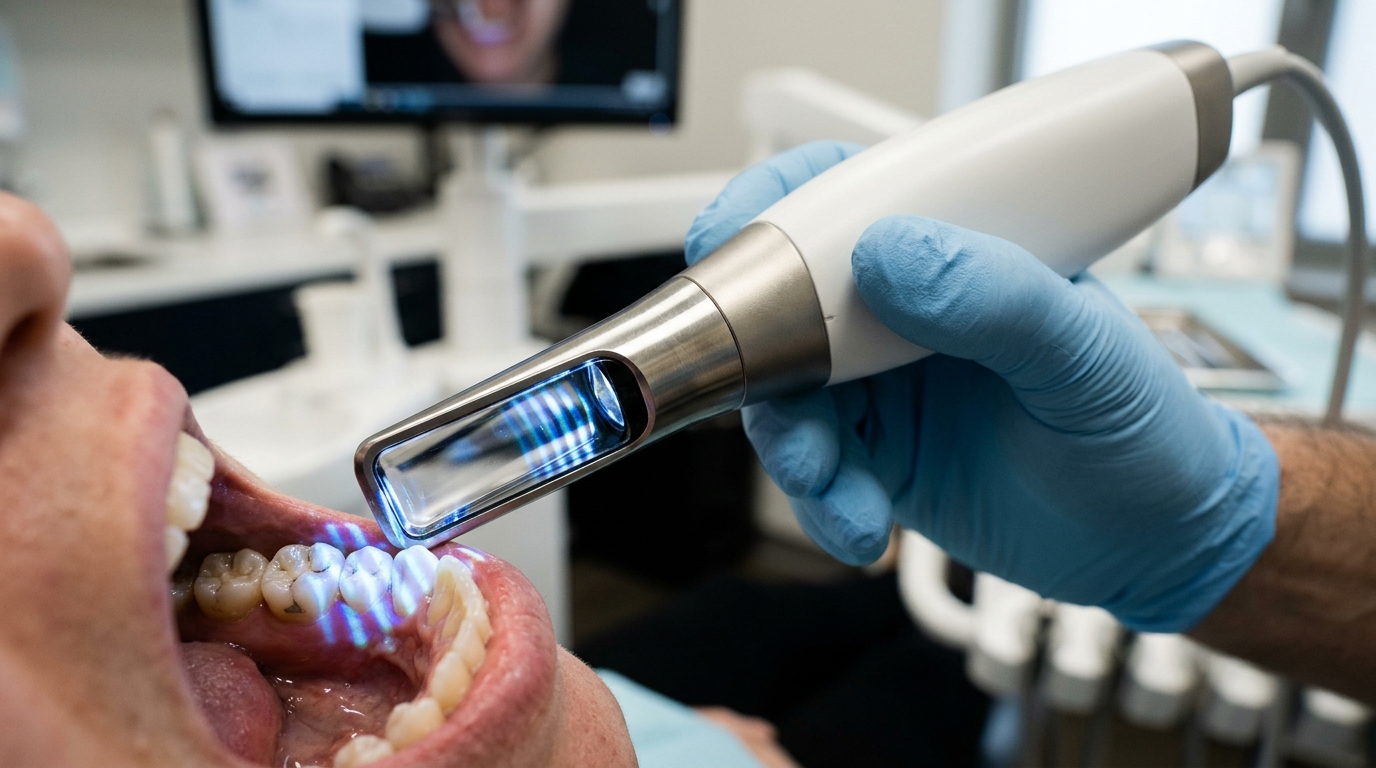
A systematic review and meta-analysis evaluating digital impression workflows has found that operator experience significantly reduces intraoral scanning time, although its influence on dimensional accuracy remains highly variable and dependent on scanner hardware. Synthesizing evidence across prospective clinical trials, crossover studies, and experimental laboratory evaluations, researchers investigated how clinical familiarity, procedural repetition, and technical training alter chairside scanning performance. While intraoral scanners have increasingly replaced conventional elastomeric impressions across prosthodontic dentistry, digital acquisition remains sensitive to handling technique, scanning trajectory, and software interaction. The quantitative synthesis demonstrated that clinicians with advanced scanning experience completed digital impressions substantially faster than novice or intermediate operators across commercial scanner platforms. However, this measurable gain in procedural efficiency did not correspond to a uniform improvement in metric trueness or precision. The analysis revealed that while experienced practitioners frequently avoid unnecessary rescanning and interruptions, scanner-specific software algorithms, automated stitching functions, and optical hardware architectures introduce substantial heterogeneity that complicates broad assumptions regarding operator-dependent dimensional fidelity.
Conducted in adherence to PRISMA guidelines and registered prospectively in PROSPERO, the systematic review explored clinical and experimental records published between January 2010 and December 2025. The research team searched PubMed, Scopus, Web of Science, and Google Scholar using structured Medical Subject Headings and targeted keyword strings covering digital impression devices, operator proficiency, learning curve progression, scanning time, trueness, and precision. An initial identification across databases yielded 1023 total citations, which was refined to 979 distinct records following the removal of duplicate entries. Screening of titles and abstracts subsequently directed the full-text assessment of 257 retrieved reports against predefined inclusion criteria. After excluding 247 reports due to incompatible methodologies, absent operator comparisons, focus on removable prosthodontics, or insufficient quantitative data, 10 investigations were selected for qualitative synthesis. Among these, seven studies published between 2013 and 2025 provided sufficiently standardized numerical datasets to permit inclusion in the quantitative random-effects meta-analysis of scanning duration.
The included investigations encompassed prospective clinical designs, randomized trials, crossover studies, and in vitro models conducted across diverse geographic settings, including Hungary, India, Turkey, Korea, Japan, Australia, Lebanon, Iran, and the United States. Across human clinical investigations, a total of 154 participants were evaluated alongside experimental dental casts and reference models. To systematically evaluate procedural background, the review categorized operators into three exposure tiers based on documented scanning history. Novice operators possessed limited digital clinical exposure or fewer than 20 prior scans, intermediate operators had performed between 20 and 99 scans, and experienced operators possessed at least 100 documented scans, over two years of routine scanner use, or specialist prosthodontic credentials. Across the analyzed literature, operators evaluated contemporary and established scanning hardware, including the TRIOS 3, TRIOS 4, Medit i500, iTero, Primescan, and Aoralscan 3 systems, alongside industrial coordinate-measuring reference scanners used to establish true baseline geometries in controlled benchtop configurations.
The pooled random-effects meta-analysis of seven investigations demonstrated an overall reduction in scanning duration that favored experienced practitioners over novice counterparts. Across the combined clinical and experimental datasets, the pooled standardized mean difference in scanning time reached -1.34, with a 95 percent confidence interval extending from -2.61 to -0.08, achieving statistical significance at p equals .039. Despite this statistically significant average effect, the investigators identified severe statistical heterogeneity across the included literature, reflected in an I-squared statistic of 91.8 percent, a between-study variance tau-squared of 1.7928, and a chi-squared value of 97.98 with p less than .00001. Reflecting this substantial dispersion, the calculated prediction interval spanned from -4.62 to 1.93. Because this prediction interval comfortably crosses the null threshold of zero, the findings indicate considerable uncertainty regarding whether experienced operators will universally achieve shorter scanning times under every specific clinical circumstance, scanning protocol, or hardware environment encountered in dental practice.
To investigate the extensive heterogeneity present within the pooled efficiency results, the authors performed scanner-specific subgroup analyses focusing on platforms with multiple comparable datasets, specifically the TRIOS and iTero ecosystems. Within the TRIOS platform subgroup, which aggregated investigations utilizing TRIOS 3 and TRIOS 4 devices, the random-effects synthesis revealed a statistically significant reduction in scanning duration favoring experienced operators, yielding a pooled standardized mean difference of -1.44 with a 95 percent confidence interval from -2.76 to -0.12. In contrast, the pooled analysis for the iTero platform demonstrated a smaller, statistically nonsignificant reduction in scanning duration, with a standardized mean difference of -1.12 and a confidence interval spanning from -3.18 to 0.94. However, a formal statistical test for subgroup differences yielded a between-subgroup Q statistic of 0.07 at p equals .80. This interaction test confirmed that the difference between scanner subgroups was not statistically meaningful, disproving assertions that iTero hardware is intrinsically less operator-dependent than TRIOS devices.
Specific clinical studies included in the review provided direct empirical measurements of chairside time savings achieved through operator proficiency. In an investigation conducted by Thomas and Jain, experienced operators recorded a mean scanning time of 96.75 seconds using the TRIOS 3 system, compared to 150.50 seconds for less experienced practitioners, representing an approximate 35.7 percent reduction in chairside duration. On the Medit i500 platform within the same study, experienced clinicians achieved an average duration of 107.05 seconds versus 175.05 seconds for novices, achieving a 38.8 percent efficiency gain and showing that Medit i500 operated slower overall than TRIOS 3. Similarly, Yilmaz and colleagues observed that experienced clinicians completed complete-arch digital scans on the TRIOS 3 in an average of 9.13 minutes compared to 15.38 minutes required by novice dental students, reflecting an approximate 40.6 percent procedural improvement. In a prospective clinical evaluation by Róth and colleagues, novice operators reduced scanning times on the TRIOS 3 from 23 minutes 9 seconds on their initial scan to 15 minutes 28 seconds by their tenth session, documenting a 33.2 percent efficiency gain.
The review examined learning curve progressions, emphasizing that repeated sequential scanning sessions document longitudinal skill acquisition rather than cross-sectional group disparities. Data from Róth and collaborators indicated that novice operators using the TRIOS 4 reached a procedural learning plateau at approximately the 11th scan, with mean scanning durations falling from 205 seconds to 133.6 seconds, reflecting a 34.8 percent improvement. Conversely, novice operators utilizing the Primescan system required approximately 14 sequential scans to reach a plateau, decreasing mean scanning time from 289.8 seconds to 147 seconds, representing a 49.3 percent reduction. The slower stabilization trajectory observed with Primescan was attributed in part to the ergonomic weight of its heavier handpiece compared to more compact scanner designs. When mathematical exponential decay models were applied to reconstruct scanning time trajectories across published datasets, overall procedural stabilization generally materialized between the 15th and 20th sequential iterations. Notably, earlier trials revealed that while novices accelerated their pace during initial training, excessive haste frequently triggered an unintended increase in total image count due to fragmented tracking.
In stark contrast to procedural efficiency, the influence of operator experience on digital scan accuracy exhibited substantial discordance across metrics, hardware, and anatomical spans. In the clinical trial by Thomas and Jain, no statistically significant difference in intermolar linear accuracy was observed across experience groups on the TRIOS 3, with experienced operators achieving an intermolar width of 34.77 millimeters compared to 35.32 millimeters for novice operators. Farook and colleagues similarly identified no statistically significant interaction between operator skill and scanner brand when measuring root-mean-square error values across dental casts, reporting comparable deviations of 33.10 millimeters and 33.70 millimeters. Conversely, Lim and associates observed that operator experience significantly altered metric trueness when hygienists utilized iTero systems, where long-career clinicians achieved a trueness of 88.6 micrometers compared to 86.5 micrometers for short-career clinicians, whereas TRIOS maintained greater consistency across cohorts alongside superior precision. In benchtop evaluations of full-arch implant models by Natsubori and colleagues, scanning errors escalated markedly over extended distances and inflection points, indicating that cumulative image-stitching distortion remains driven by spatial distance rather than clinician handling alone.
Methodological quality assessments conducted by the review authors revealed notable variability across study designs and reporting conventions. The randomized in vivo clinical trial by Róth and colleagues was judged to have an overall low risk of bias using the Cochrane Risk of Bias 2 tool across all five assessment domains, although operator blinding was structurally unfeasible given the physical nature of intraoral scanner hardware. Observational clinical investigations assessed through the Newcastle-Ottawa Scale consistently demonstrated good methodological quality, with studies by Róth, Yilmaz, Thomas and Jain, Lim, and Ismail each attaining scores of 6 out of 9 stars. For experimental benchtop investigations, the authors implemented a customized seven-domain framework evaluating methodological standardization, reference model calibration, scanner protocols, operator consistency, dimensional measurement procedures, independent blinding, and reporting reproducibility. While benchtop studies demonstrated robust standardization through high-precision coordinate-measuring reference models, reporting regarding examiner calibration, interobserver reproducibility, and blinded outcome assessment remained inconsistent across several laboratory reports, underscoring the need for more standardized experimental reporting in digital prosthodontics.
Synthesizing the broader evidence, the review emphasized that although clinician experience consistently shortens scanning duration, technical skill cannot be assumed to guarantee superior dimensional accuracy across every clinical restorative scenario. Digital impression accuracy is governed by a multifactorial matrix encompassing optical scanner hardware, acquisition algorithms, patient movement, intraoral moisture, scan-body geometry, and environmental illumination alongside operator handling. Furthermore, the systematic review identified critical limitations within the current body of literature, including pronounced methodological heterogeneity, small study sample sizes, inconsistent reporting of dispersion statistics, and an absence of publication bias or formal GRADE certainty evaluations. Crucially, existing studies focused almost exclusively on immediate technical parameters, such as scanning time, linear deviation, and metric trueness, rather than long-term clinical outcomes such as prosthetic survival rates, mechanical complications, or biological tissue responses. While structured preclinical training and repeated clinical practice remain essential for accelerating scanning efficiency and stabilizing digital workflows, rigorous multicenter trials are needed to determine whether faster scanning times translate into meaningful long-term clinical success.
Subject of Research: Influence of operator experience on intraoral scanning efficiency and accuracy
Article Title: Influence of operator experience on intraoral scanning efficiency and accuracy: A systematic review and meta-analysis
Article References: Gupta, A. K., Gupta, R., Tiwari, B., & Singh, R. K. (2027). Influence of operator experience on intraoral scanning efficiency and accuracy: A systematic review and meta-analysis. Digital Dentistry Journal, 5(1), Article 100135. https://doi.org/10.1016/j.ddj.2026.100135
Image Credits: AI Generated
DOI: 10.1016/j.ddj.2026.100135
Keywords: intraoral scanning, digital dentistry, operator experience, systematic review, meta-analysis, scanning efficiency, dimensional accuracy, trueness, precision, learning curve, TRIOS, iTero, Primescan, prosthodontics, dental impressions, digital workflow
News Source: Ophelia Keating. (November 22, 2026). Operator Experience Accelerates Intraoral Scanning but Shows Variable Dimensional Accuracy. Scienmag.