In the crowded neighborhoods of Salvador, one of Brazil’s largest tropical cities, the yellow fever mosquito Aedes aegypti has found ideal conditions to thrive. A new study published in PLOS Neglected Tropical Diseases has mapped, with unusual precision, exactly where and why this vector of dengue, Zika, and chikungunya proliferates in disadvantaged urban communities. The findings point to a deceptively simple conclusion: the battle against arboviral disease is being won or lost not inside homes, but in the messy, water-holding spaces just beyond the front door.
The research, led by Eimear Griffin and colleagues, combined entomological fieldwork, household surveys, and satellite-based remote sensing to build a detailed picture of mosquito infestation in two disadvantaged communities of Salvador. Between March and December 2023, the team deployed ovitraps—small containers designed to attract egg-laying female mosquitoes—in 174 households, while conducting visual inspection surveys in 119 of them to catalogue every potential breeding site in the peri-domestic environment. The result was one of the most granular datasets yet assembled on how environmental and behavioral factors shape mosquito density in tropical urban settings.
The numbers tell a striking story. Of the 303 ovitraps recovered at the end of the study period, 55.6 percent of those placed indoors and a remarkable 82.0 percent of those placed outdoors tested positive for Aedes aegypti eggs. In total, the researchers recorded 11,211 eggs across the study area. That outdoor positivity rate, far exceeding the indoor figure, underscores a central theme of the work: the peri-domestic zone—the patios, alleys, and yards immediately surrounding dwellings—serves as the principal engine of mosquito production in these communities.
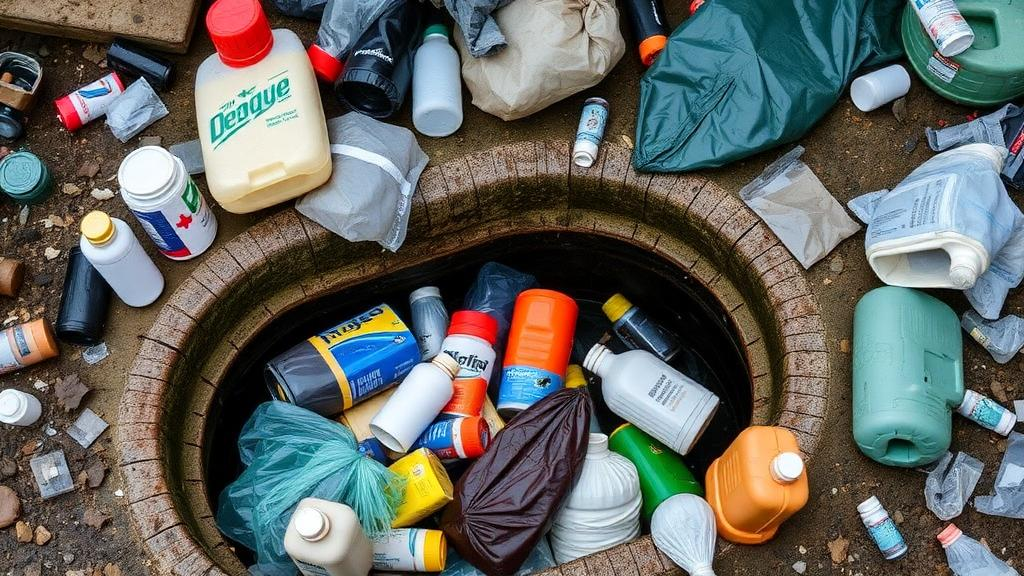
Using multivariate statistical modeling, the team identified a set of environmental factors strongly associated with egg abundance. Ovitrap location was itself a key predictor, confirming the indoor-outdoor gradient. Beyond location, three household and neighborhood characteristics stood out: garbage deposited in front of the house, proximity within ten meters of an open sewer, and the presence of open plastic containers in the peri-domestic environment. Each of these features creates or sustains the standing water that female mosquitoes require for oviposition, and each is amenable to targeted intervention.
The open sewer finding deserves particular attention. In many rapidly growing tropical cities, informal drainage channels carry untreated wastewater through residential streets, and households often live within a few meters of them. The study demonstrates that this proximity is not merely an aesthetic or olfactory nuisance but a measurable driver of vector density. Standing water in and around poorly maintained sewer infrastructure, combined with the organic richness of such sites, appears to create productive larval habitats that conventional indoor-focused control programs never reach.
Discarded and open plastic containers represent another modifiable risk factor with clear behavioral roots. Plastic waste accumulates quickly in neighborhoods with limited collection services, and even a small bottle cap or food container can hold enough rainwater for a complete mosquito life cycle. The visual inspection surveys conducted by the research team systematically documented these potential breeding sources, linking them directly to the egg counts recorded in nearby ovitraps. This connection between observed household practices and measured vector density is what gives the study its practical force: it does not simply describe where mosquitoes are abundant, but identifies the specific, changeable conditions that produce that abundance.
Perhaps the most surprising result, however, is what the researchers did not find. Despite the intense transmission potential of Aedes aegypti in urban Brazil, the spatial analysis revealed no significant clustering of mosquito egg density across the study area. Infestation was not concentrated in particular blocks or hotspots that could be targeted with area-wide spraying. Instead, the drivers of proliferation were distributed at the scale of individual households and their immediate surroundings. This has profound implications for control strategy, suggesting that broad, undifferentiated interventions may be less effective than fine-grained, community-led actions tailored to the conditions of each home and street.
To contextualize these household-level findings, the team also performed landcover classification of the study area using remote sensing data, quantifying vegetation coverage and other landscape features. While the multivariate models ultimately pointed to proximate environmental factors—waste, sewers, containers—as the dominant predictors, the integration of satellite imagery with ground-based entomology reflects a growing methodological trend in vector surveillance. Combining these data streams allows public health authorities to characterize urban environments at scale and to prioritize neighborhoods where disadvantaged conditions intersect with favorable mosquito habitat.
The study’s authors argue that their evidence supports a shift toward integrated strategies that combine improved waste disposal, better water storage practices, and upgraded sanitation infrastructure. In disadvantaged communities characterized by overcrowding, poor sanitation, and limited access to formal vector control, these structural improvements could amplify the effectiveness of conventional measures such as insecticide application and larval source management. Crucially, because the identified risk factors are visible and actionable at the household level, residents themselves can play a direct role—clearing garbage from front areas, covering or removing open plastic containers, and advocating for sewer maintenance—making community-led intervention a realistic complement to municipal programs.
As dengue and other arboviruses continue to expand their footprint across tropical cities, driven by urbanization, climate change, and interconnected travel, studies of this kind offer a template for precision public health. By identifying the peri-domestic environment as the decisive battleground and by pinpointing garbage, open sewers, and unmanaged containers as the key modifiable drivers, the Salvador study converts a diffuse and daunting problem into a set of concrete, local actions. For the millions of people living in similar conditions worldwide, the message is both sobering and empowering: the mosquitoes that threaten them are bred in their own backyards, and the tools to stop that breeding are, to a remarkable degree, already in their hands.
Subject of Research: Environmental and behavioral drivers of Aedes aegypti mosquito infestation in disadvantaged tropical urban communities
Article Title: Household and community drivers of Aedes aegypti infestation in tropical cities: Guiding community-led interventions
Article References: Griffin, E., da Mata Barreto, T., Ward, Z., Santana, J. O., Khalil, H., Begon, M., Reis, M. G. G., Cremonese, C., Costa, F., Argibay, H. D., & Howard, G. (2026). Household and community drivers of Aedes aegypti infestation in tropical cities: Guiding community-led interventions. PLOS Neglected Tropical Diseases, 20(10), e0014728. https://doi.org/10.1371/journal.pntd.0014728
Image Credits: AI Generated
DOI: 10.1371/journal.pntd.0014728
Keywords: Aedes aegypti, arboviruses, dengue, vector control, ovitraps, urban sanitation, peri-domestic environment, open sewers, plastic waste, Salvador Brazil, public health, remote sensing
News Source: Ophelia Keating. (October 11, 2026). Open Sewers and Discarded Plastic: The Urban Breeding Grounds Fueling Mosquito-Borne Disease. Scienmag.