


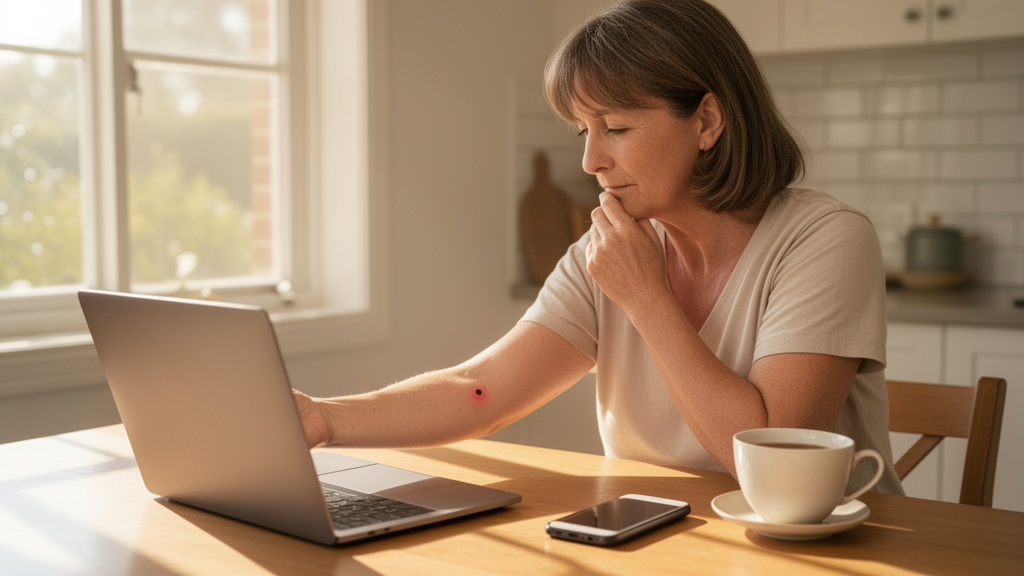
The research team, led by investigators including Gillian Reyes-Marcelino and Anne E Cust, evaluated two validated melanoma risk prediction tools, one designed for people who have never had a melanoma and one for those who have already had a first primary melanoma. Rather than testing the tools in a controlled trial setting, the researchers recruited people who had already found and used the tools on their own, which gives an unusually direct window into real-world engagement. Between July 2023 and July 2024, the team invited existing users of the online tools, via a website invitation, to take part from every state and territory in Australia.
Of those who responded, 268 people, or 84 percent of participants, completed a questionnaire, and 30 went on to take part in semi-structured individual phone interviews lasting an average of 20 minutes. The qualitative responses were then analysed thematically, allowing the researchers to map recurring patterns in how people interpreted their risk scores. The demographic profile of the respondents is telling.
Most participants were women, at 72 percent, and 55 percent were aged 50 or older. A quarter of the group, 26 percent, had previously been diagnosed with melanoma, and an overwhelming 84 percent had already had a clinical skin check at some point. How and why people used the tools emerged clearly from the data.
The vast majority, 85 percent, completed the risk assessment at home, while only 5 percent used it as part of a consultation with a doctor. The single most common motivation, cited by 76 percent of participants, was simply to understand their own risk of getting a melanoma. The acceptability findings were strongly positive.
Some 88 percent of participants found the melanoma risk tool helpful, and the qualitative feedback indicated that people generally regarded the tools as user-friendly and useful for making sense of personal risk. More provocative is the behavioural finding: 37 percent of participants reported that using the tool would lead them to change their prevention or skin check behaviours. The interview data added nuance to that number.
For many users, the tools did not so much create new habits as reinforce existing melanoma prevention practices, strengthening sun protection routines and vigilance that were already in place. Not every reaction was uncritically positive. Some participants expressed uncertainty about the accuracy of the risk estimates, and this scepticism was particularly pronounced when the estimated risk came back lower than the person had expected.
The study's authors conclude that the risk prediction tools were found by community members and patients to be user-friendly and helpful for understanding personal melanoma risk and for guiding prevention behaviours. Because the sample was self-selected from people already using the tools, and because the questionnaire and interview data reflect self-reported perceptions rather than objectively measured behaviour change, the findings describe user experience rather than clinical effectiveness. Even so, the work fills an important gap, showing that validated melanoma risk calculators are not just academic exercises but tools that Australians actively seek out, largely at home, and largely find worth their time.
Subject of Research: Use, acceptability and usability of online melanoma risk prediction tools among Australian community members and patients
Article Title: Evaluating the use, acceptability, usability, and perceptions of melanoma risk prediction tools for estimating melanoma risk among the community and patients in Australia: a mixed methods study
Article References: Reyes-Marcelino, G., Smit, A. K., Salam, R. A., Espinoza, D., Watts, C. G., Steinberg, J., Kang, Y.-J., Martin, L. K., Guitera, P., Lo, S. N., Varey, A. H. R., Scolyer, R. A., Long, G. V., & Cust, A. E. (2026). Evaluating the use, acceptability, usability, and perceptions of melanoma risk prediction tools for estimating melanoma risk among the community and patients in Australia: a mixed methods study. BMC Public Health. https://doi.org/10.1186/s12889-026-29644-8
Image Credits: AI Generated
DOI: 10.1186/s12889-026-29644-8
Keywords: melanoma, risk prediction tools, skin cancer, Australia, mixed methods study, risk communication, public health, digital health, sun protection, skin checks, patient acceptability, BMC Public Health
News Source: Nathaniel Bowman. (October 28, 2026). Online Melanoma Risk Tools Found Helpful by Most Australian Users, Study Shows. Scienmag.



