Healthcare Utilization in China Remains Suppressed Years After COVID-19 Policy Shifts
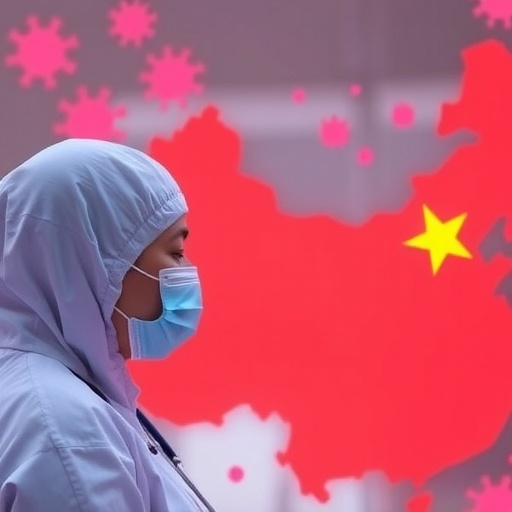
As the world moves further away from the height of the COVID-19 pandemic, questions continue to swirl about the broader, long-term impacts of pandemic-era public health policies on healthcare systems. A detailed new analysis published in PLOS Medicine illuminates just how enduring these impacts have been in China, where stringent COVID-19 control measures—the notorious “Dynamic Zero-Covid” policy—were among the toughest globally and extended longer than in most countries. The research, spearheaded by scientists from the Fred Hutchinson Cancer Center, quantifies the lingering decline in healthcare service utilization several years after China dismantled its strictest pandemic restrictions.
China’s unique journey through the COVID-19 crisis, as the initial epicenter and one of the last nations to relax stringent containment strategies, has provided a real-world laboratory for assessing the complex interplay between strict public health interventions and routine healthcare delivery. Leveraging extensive aggregated data spanning hospital outpatient visits and admissions across the entire Chinese hospital system between 2020 and 2024, the team uncovered a staggering drop—approximately 7% fewer outpatient visits (totaling 1.2 billion missed encounters) and 13% fewer hospital admissions (141 million fewer hospitalizations)—compared to pre-pandemic expectations.
Notably, despite the formal cessation of the Zero-Covid policy in late 2022, healthcare utilization showed a sluggish and incomplete recovery as of April 2024. The study found that outpatient visits remain below anticipated levels in nearly two-thirds (65%) of China’s provinces and regions, while inpatient admissions continue to lag in about three-quarters (74%) of these areas. This prolonged suppression of healthcare engagement underscores a worrying and likely multifactorial disruption of access to critical health services, even two years post-policy relaxation.
The ramifications extend beyond sheer numbers; these findings reflect profound systemic challenges in re-establishing healthcare service equilibrium amidst residual public caution, infrastructural strains, and perhaps shifts in patient health-seeking behavior. “Understanding how COVID-19 policies reshaped health systems in aggregate helps chart informed pathways toward fortification and rebound,” explains Hong Xiao, PhD, the study’s lead author and a senior scientist at Fred Hutch’s Public Health Sciences Division. According to Xiao, retracing these healthcare utilization trends forms an essential foundation for both recovery and future pandemic preparedness.
A striking element of the analysis pertains to geographic and socioeconomic disparities in healthcare disruption and recovery. While metropolitan hubs such as Shanghai and Beijing experienced the highest absolute volume declines, relative reductions in service use were most acute in rural and less-developed regions. These findings echo global patterns where lower-resourced areas disproportionately bear the brunt of healthcare access shortfalls, exacerbated by logistical hurdles like distance to specialized care facilities. Joseph Unger, PhD, a senior health services researcher at Fred Hutch and co-investigator on the study, draws parallels with rural healthcare inequities seen during the pandemic in the United States, emphasizing a shared global thematic of vulnerable populations facing “disproportionate lack of access, especially to higher-quality, specialized care.”
It is important to note that while the study harnessed comprehensive aggregated hospital data across China, the absence of granular demographic variables limits differentiation according to socioeconomic status, ethnicity, or other social determinants of health. This gap signals a critical direction for future research aimed at disentangling the nuanced drivers and consequences of healthcare inequities exacerbated or unveiled during the pandemic era.
The broader context of healthcare recovery following pandemics sheds further light on the uneven rebound observed in China. For example, Liberia’s healthcare utilization recovered within a year after the 2014-15 Ebola outbreak, while Guinea’s recovery was more protracted. Similarly, in the COVID-19 context, Japan experienced slower inpatient volume recovery compared to California, whereas South Korea’s healthcare use rapidly reverted to pre-pandemic norms. Such disparities underscore that healthcare system resilience is intricately linked to local policy choices, infrastructure robustness, public trust, and adaptive capacity.
In response to these insights, the authors advocate for robust future pandemic preparedness strategies incorporating healthcare surge capacity, innovative models of care such as telemedicine, and finely tuned public communication campaigns to sustain essential healthcare access during public health emergencies. Targeted interventions in regions with pre-existing healthcare disparities are especially critical, as these areas are less resilient to the shocks induced by stringent control measures.
Xiao stresses the imperative of balancing aggressive infectious disease containment with the uninterrupted provision of essential healthcare services to mitigate collateral damage. This balancing act is no trivial pursuit; overzealous constraints risk widening healthcare gaps and triggering downstream adverse population health effects. As countries rebuild and strengthen healthcare infrastructure in the aftermath of COVID-19, these lessons from China furnish a cautionary yet invaluable blueprint for safeguarding equitable healthcare continuity against future global health crises.
The meticulous interrupted time-series analysis deployed in this investigation draws upon one of the largest aggregated hospital datasets ever compiled, covering outpatient visits and inpatient admissions over a five-year trajectory from 2020 through early 2024. This robust methodological approach enables precise quantification of deviations from expected utilization trends, contextualized against the timeline of evolving public health policies, most notably the Dynamic Zero-Covid approach and its subsequent abandonment.
This research occupies a pivotal space within a growing literature exploring the unintended consequences of rigorous pandemic containment policies—not just on excess mortality and infection control but on longitudinal healthcare system functioning and population health outcomes. As the first country to implement widespread COVID-19 measures and among the last to relax them, China’s healthcare utilization trajectory offers a cautionary tale, highlighting how swift policy decisions to curb viral spread might inflict sustained disruptions on routine healthcare delivery infrastructures.
In an era where pandemic preparedness plans are under intense global scrutiny, this study serves as a clarion call for nuanced policy designs that anticipate and mitigate adverse collateral impacts on health services. The interplay of infectious disease control and healthcare system sustainability demands sophisticated, equity-centered approaches, especially in nations with diverse regional capacities and pre-existing disparities in healthcare accessibility.
In summary, the enduring downturn in healthcare service utilization across China from 2020 to 2024 revealed by this study adds critical depth to our understanding of the multifaceted impact of COVID-19 policies. As China, and indeed the world, continue to move forward in pandemic recovery and resilience building, policymakers must reckon with and address these silent, pervasive reverberations to safeguard public health comprehensively.
Subject of Research: People
Article Title: Policy stringency during the COVID-19 pandemic and healthcare services utilization in China: An interrupted time-series analysis
News Publication Date: May 20, 2026
Web References:
https://journals.plos.org/plosmedicine/article?id=10.1371/journal.pmed.1004672
References:
Xiao H, Unger J, et al., PLOS Medicine, 2026
Keywords: Public policy, Quarantines, SARS CoV 2
Tags: aggregated hospital data China 2020-2024analysis of healthcare access in ChinaCOVID-19 public health interventions Chinadecline in outpatient visits ChinaDynamic Zero-Covid policy effectsFred Hutchinson Cancer Center studyhealthcare service suppression post-COVIDhealthcare system disruptions after COVID-19hospital admissions drop post-pandemiclong-term impacts of COVID-19 policies on healthcarepandemic-era healthcare challengespost-COVID healthcare utilization in China